Crochet Rose Blanket Pattern with Green Leaves and Red Roses
Create a floral crochet blanket with a soft beige base, textured green leaves, and red roses that curl into shape by hand.
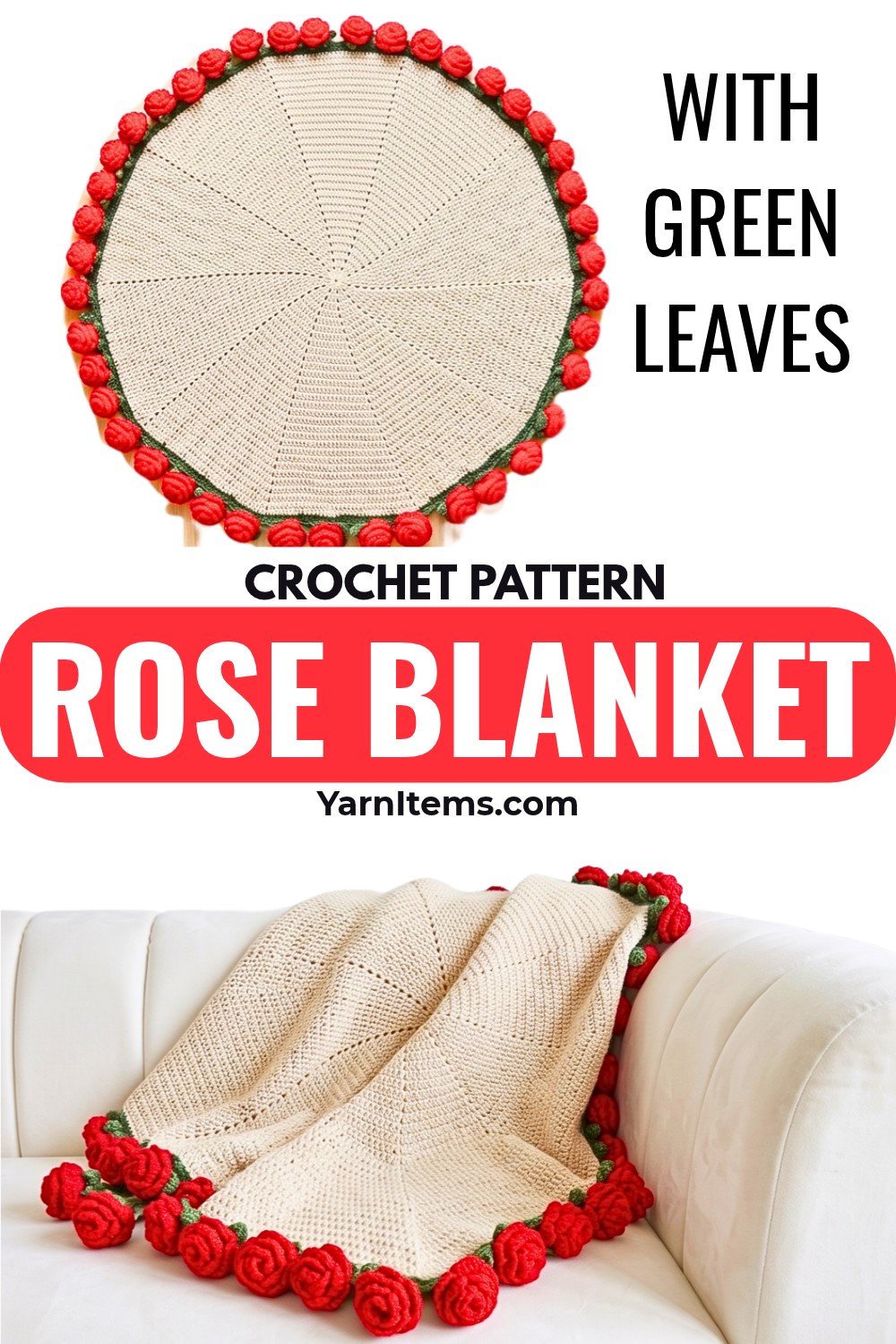
Soft beige crochet gets a completely different character when bright red roses and leafy green details are added across its surface. The floral crochet pieces stand out from the base, creating texture and color while keeping the blanket itself as the quiet background for the decoration.
This crochet pattern breaks the floral design into manageable sections, so you first complete the beige blanket, then build the green leaf foundation and clusters before shaping the red roses. Along the way, the stitch placement, repeated 11-single-crochet sections, rose shaping, and final flower placement are explained so you know what each part is doing and where it belongs.
Credit Xuxu Crochet
Materials Needed
- Milk cotton yarn, size 5, 2 mm fiber thickness
- Beige for the blanket base
- Green for the leaves
- Red for the roses
- 3.0 mm crochet hook
- Yarn needle for securing the roses
- Scissors
Abbreviations
- ch – chain
- sc – single crochet
- hdc – half double crochet
- dc – double crochet
- tr – treble crochet
- sl st – slip stitch
- sk – skip

Complete the Beige Blanket First
Begin with the main blanket base in beige, following the supplied blanket pattern instructions. The creator works 32 rows to achieve a size of approximately 60 cm.
Since the stitch-by-stitch instructions for this base are not included here, follow the original base pattern rather than substituting another stitch pattern. The important point for this floral design is to have the beige blanket completed before adding the green layer.
Once the base is ready, the floral work can be built directly onto it.
Begin the Green Leaf Layer
The green details start with a short attachment at the beginning of the row. Attach the green yarn with a sl st, ch 1, and make 1 sc in the first st.
This first single crochet anchors the green yarn to the blanket and gives the mesh row a clear starting point. From here, the open chain spaces create the foundation for the fuller leaf details that follow.

Mesh Foundation
Row 1: Ch 3, sk 2 sts, 1 sc in 3rd st; repeat (ch 3, sk 2 sts, 1 sc in 3rd st) across the entire row, finish with a sl st.
Keep the skip pattern consistent across the row. Each chain-3 space becomes important in the next row, so avoid accidentally working into a skipped stitch instead of the intended 3-chain space.
Fill the Mesh
Row 2: Ch 1, 1 sc in first st, 3 sc in each ch-3 space across, finish with a sl st.
The three single crochets worked into each chain-3 space fill the open foundation and prepare the surface for the leaf clusters. When checking your work, look for the repeated groups rather than trying to count the entire row at once.
Shape the Twin Leaf Clusters
The third green row changes the flat foundation into recognizable leaves. Each leaf begins with 8 chains, then the stitches are worked back down the chain using progressively different stitch heights.
First Leaf
Row 3: Ch 8, sk 1 ch, 1 sc, 1 hdc, 1 dc, 1 tr, 1 dc, 1 hdc, 1 sc in final ch, then sl st into the base.
The stitch progression creates the leaf shape: the treble crochet sits toward the middle and gives the leaf its higher point, while the shorter stitches toward the ends taper it back down.
Pay particular attention to the direction of your work when crocheting back along the chain. The stitches are not all the same height, so keeping their order intact is what gives the leaf its intended shape.

Add the Second Leaf
After the first leaf is completed, slip stitch into the base and make another identical leaf from the same base stitch.
This shared base is the detail that creates the twin-leaf cluster. If the second leaf is started from a different stitch, the pair will not sit together in the same way.
After completing the two leaves, work the next 11 sc in the subsequent stitches.
Repeat the Leaf Rhythm Across the Row
Continue alternating between the two main elements: Twin leaf cluster → 11 sc → twin leaf cluster → 11 sc.
Repeat this arrangement across the row, then finish with a sl st and weave in the ends.
The 11 single crochets are more than filler between the leaves; they create the spacing that separates one floral cluster from the next. Keeping this count consistent helps the later roses line up naturally with their corresponding leaves.
Crochet the Red Rose
With the green details complete, make the roses separately in red yarn. Each flower begins as a flat strip, so don’t expect the rose shape to appear immediately. Its three-dimensional form comes during the rolling step.
Rose Foundation
Foundation: Ch 23.
The 23-chain foundation establishes the length of the strip that will later be curled into the flower.
Build the Petal Base
Row 1: Sk 2 ch, work 3 dc in the same st, ch 1; sk 1 ch and repeat (3 dc in next st, ch 1) across the row.
Work carefully around the repeated skipped chains and double-crochet groups. These raised groups provide the sections that will become the rose’s petals, while the chain spaces separate them.

Shape the Petals
Row 2: Ch 2, turn; for each cluster, work 1 dc, 2 dc in next st, 1 dc, ch 2, 1 sl st into the gap; repeat for all petal clusters, fasten off and leave a long yarn tail for sewing.
The additional double crochets give the petal sections more fullness. The chain-2 and slip-stitch portion then separates one petal area from the next.
When you reach the end, leave a long tail. This tail is needed to secure the finished rose to its rolled shape and later attach it to the blanket.
Roll the Rose Into Shape
The rose becomes three-dimensional by rolling the completed strip tightly from the inside out.
Start at the inner end and gradually curl the strip around itself. As the petal sections overlap, they create the layered appearance of a rose.
Once the rolled flower has the desired shape, use a yarn needle and the long leftover tail to secure the base. Concentrate the sewing at the bottom of the flower so the layers stay together while the petal edges remain visible.
Shape Check
Before securing the base completely, look at the rose from the side as well as from above. The strip should remain rolled rather than opening back into a flat shape, while the petal sections should stay visible around the outside.
Position the Roses Between the Leaves
Now bring the separately finished roses and the green leaf clusters together.
Place each red rose directly between the twin green leaves on the blanket. The paired leaves provide a natural position for the flower, so use them as your placement guide rather than attaching the rose randomly on the blanket surface.
Once the rose is centered, use its leftover yarn tail to stitch the rose base securely between the leaves.
The sewing should hold the base firmly against the blanket while leaving the raised rose petals free. Avoid stitching through the visible outer petals unnecessarily, as the goal is to keep the dimensional flower shape noticeable.
Check the Floral Arrangement
Before moving on from each flower, take a quick look at three things:
- Leaf position: the rose should sit between its twin leaves.
- Rose base: the flower should be securely stitched down.
- Petal shape: the rolled portion should remain raised rather than being flattened against the blanket.
Repeating the same placement relationship across the blanket gives the floral details a cohesive appearance without requiring you to measure every flower separately.

Finish the Floral Blanket
Once all the roses have been positioned between their corresponding green leaves and their bases are securely stitched down, weave in any remaining loose ends.
The finished design combines the approximately 60 cm beige blanket base with green mesh-and-leaf details and red roses that have been individually rolled into three-dimensional flowers. The contrast between the three colors and the raised floral elements gives the blanket its garden-inspired character.