Simple & Fun Crochet Rainbow Beanie Pattern
A playful and cozy rainbow beanie made flat with simple stitches, ribbed texture, seamless color changes, and finished with a pom-pom for cheerful winter charm.
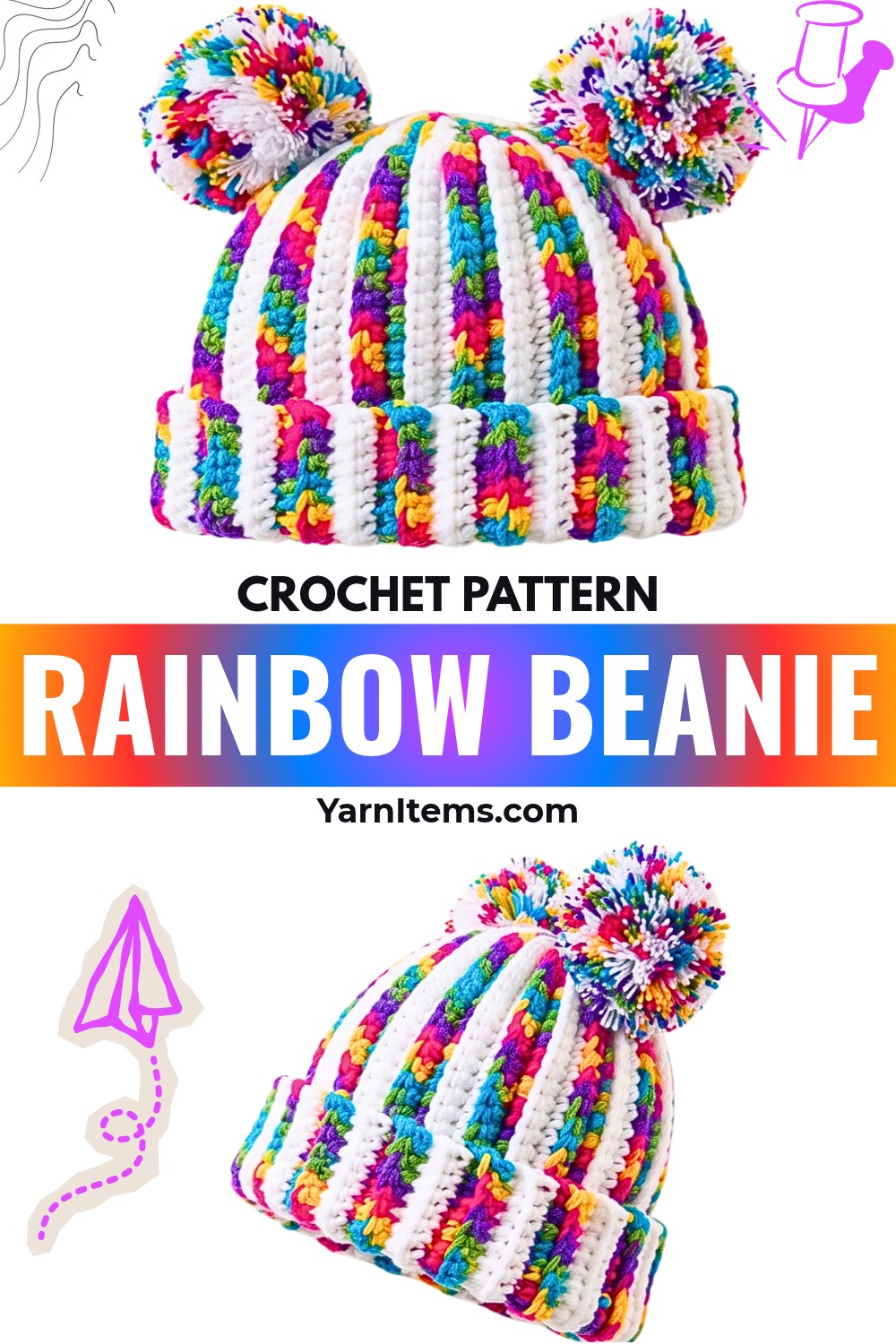
A rainbow beanie is a cheerful, colorful hat perfect for adding a pop of brightness to your day. This cozy accessory stands out because of its vibrant design, combining all the colors of the rainbow in one wearable item. It’s not just a hat, it’s a fun way to express yourself with a splash of personality while keeping warm. Whether it’s for staying snug on a cool day or gifting someone a handmade piece, its uniqueness makes it extra special.
Playful Crochet Rainbow Winter Beanie
Making this crochet beanie is a delightful and straightforward process for crochet lovers. Even if you’re new, the gradual pattern of bright stripes makes it enjoyable. You’ll get to play with colors, and watching the shades come together is part of the fun. Once finished, the crochet beanie is versatile; it suits any season, brightens your wardrobe, and is a thoughtful, handmade gift for friends or family.
Credit anxin_crochet[
Key Features and Construction Summary:
- Beginner-friendly design created using simple stitches like single crochet and slip stitches.
- Worked flat in a rectangular shape, with ribbing texture achieved through the Back Loop Only (BLO) technique.
- Adjustable sizing by varying the starting chain length or width of the rectangle.
- Color-changing details add a bright, multi-hued rainbow and a crisp white section near the top.
- Drawstring closure cinches the crown for shaping, while a pom-pom acts as the perfect finishing touch.
- Offers room for creative personalization, such as appliques, embroidery, or decorative buttons.
How To Make:
This delightful rainbow winter beanie combines classic crochet techniques with bold color choices to create a cheerful cold-weather staple. The pattern begins with a slipknot and a measured chain, tailored to the size of the wearer. For a toddler, you’ll work a base chain measuring 24 cm long, but this can be adjusted to fit teens, adults, or smaller children simply by increasing or decreasing the chain length.

After building the foundation chain, you’ll evenly work single crochet (sc) stitches across the row to establish the beanie texture. What makes this pattern fun is the ribbed stitch pattern, achieved by working exclusively into the Back Loop Only (BLO) of each stitch beginning on the second row. The repeat rows of BLO single crochet create a stretchy, textured fabric that’s cozy and functional.

The shaping technique is both clever and simple! At the crown of the beanie, you’ll crochet slip stitches along the last row, leaving seven stitches open to form a drawstring mechanism. This allows you to cinch the rectangle into a gathered shape that forms a smooth, snug-fitting top. The addition of white yarn near the crown provides a crisp contrast to the colorful rainbow stripes, highlighting the playful design.

After folding the rectangle in half lengthwise, you’ll sew the side edges together. By alternating between BLO and Front Loop Only (FLO) stitches, you’ll create a nearly invisible seam that maintains the ribbing pattern for a polished look. Once the edges meet, the drawstring is tightened to close the top of the hat. The finishing touch? A rainbow pom-pom created with leftover yarn, adding a whimsical topper that enhances the overall theme of the beanie.

Video Tutorial
Step-by-Step Pattern
Materials
To crochet this colorful beanie, you will need:
- Yarn:
- White yarn for the main accent.
- Rainbow spinning yarn (or yarn with gradient colors).
- Crochet Hook:
- Use a hook that matches the yarn thickness. Typically, a 4.0mm (G/6) or 5.0mm (H/8) hook works well for this pattern.
- Pom-Pom Maker (Optional): For finishing off the hat with a playful pom-pom.
- Scissors: To cut the yarn.
- Stitch Marker: To keep track of row beginnings or critical stitches.
- Measuring Tape: For checking the hat’s gauge and dimensions.
Pattern Instructions
Follow these detailed steps to create your very own rainbow winter beanie:
Step 1: Creating the Base
- Begin with a slipknot.
- Chain 35 stitches if you’re making a hat for a two-year-old. Adjust the starting chain length based on desired size.
- Measure the vertical braid — this should be approximately 24 cm for a toddler hat.
Step 2: Building the Foundation Rows
- Insert hook into the chain and make a single crochet (sc) stitch for each chain.
- Crochet until you complete the row.
- Mark the last stitch of the row using a stitch marker.
Step 3: Adding Texture
- Turn your work. Start a single crochet (sc) row using Back Loop Only (BLO) stitches to create a ribbed texture.
- Repeat this method for all consecutive rows until the beanie reaches your desired width.
Step 4: Shaping the Top
- Leave seven stitches at the top of the pattern for creating the drawstring section.
- When working the top, continue crocheting with Back Loop Only (BLO) stitches while making slip stitches for additional shape.
Step 5: Changing Colors
- Switch to white yarn at the top of the hat. Insert hook and pull the new yarn color through the loop.
- Continue working using Back Loop Only (BLO) stitches with the new color.
Step 6: Closing the Hat
- Fold the pattern in half lengthwise.
- Use the white yarn to sew the edges together using matching stitches. Alternate between Back Loop Only (BLO) and Front Loop Only (FLO) stitches.
- Once the edges meet at the top, use the yarn to cinch the opening closed. Leave one stitch empty between tightening steps to avoid puckering.
Step 7: Adding the Pom-Pom
- Use a pom-pom maker to create a decorative topper. Wrap the rainbow yarn around the pom-pom maker several times for a full appearance.
- Tie the pom-pom securely, trim any uneven threads, and attach it to the top of the hat.
Step 8: Finishing Touches
- Tie off and weave in all loose ends using your crochet hook or a needle.
- Turn the hat inside-out to reveal the finished shape.
Decorative Optional Elements
- Add a colorful applique or embroidery to the side of the hat for personalization.
- Use buttons or beads at the base of the hat for added charm.
Pattern Question
Question: How do I adjust the beanie size for different ages?
Answer: To adjust the size, alter the starting number of stitches. For example, 35 stitches are ideal for a 2-year-old, and you can add or reduce stitches incrementally to suit other ages. Use a consistent height measurement as a guide for balance.
Troubleshooting and Suggestions:
- Achieving consistent ribbing: When working BLO stitches, it’s important to keep consistent tension to ensure the ribbing doesn’t look uneven. Practice controlling your stitch tension on a small swatch before starting the full pattern.
- Color changes: For clean color transitions, tie the new yarn securely to the old yarn and hide the knot within the stitches. Alternatively, weave in loose ends for a neater finish.
- Crown shaping: Be patient when cinching the drawstring at the top of the hat. If you tighten it too abruptly, it may cause puckering or uneven gathering. Pull slowly while leaving one stitch empty between each adjustment.
- Playful modifications: Embrace personalization by using beads, buttons, or embroidered appliques at the base of the hat. You can also skip the pom-pom for a minimalist look or use gradient yarn for a softer rainbow effect.
- Sizing adjustments: To make the hat fit larger or smaller heads, adjust the base chain length and repeat rows until the rectangle reaches the required width for the wearer’s head circumference.