Tunisian Crochet Gingham Blanket Pattern with Color Blocks
Looking for a cozy checkered blanket? Three coordinating colors and Tunisian crochet blocks create a soft gingham effect with plenty of room to customize the size.
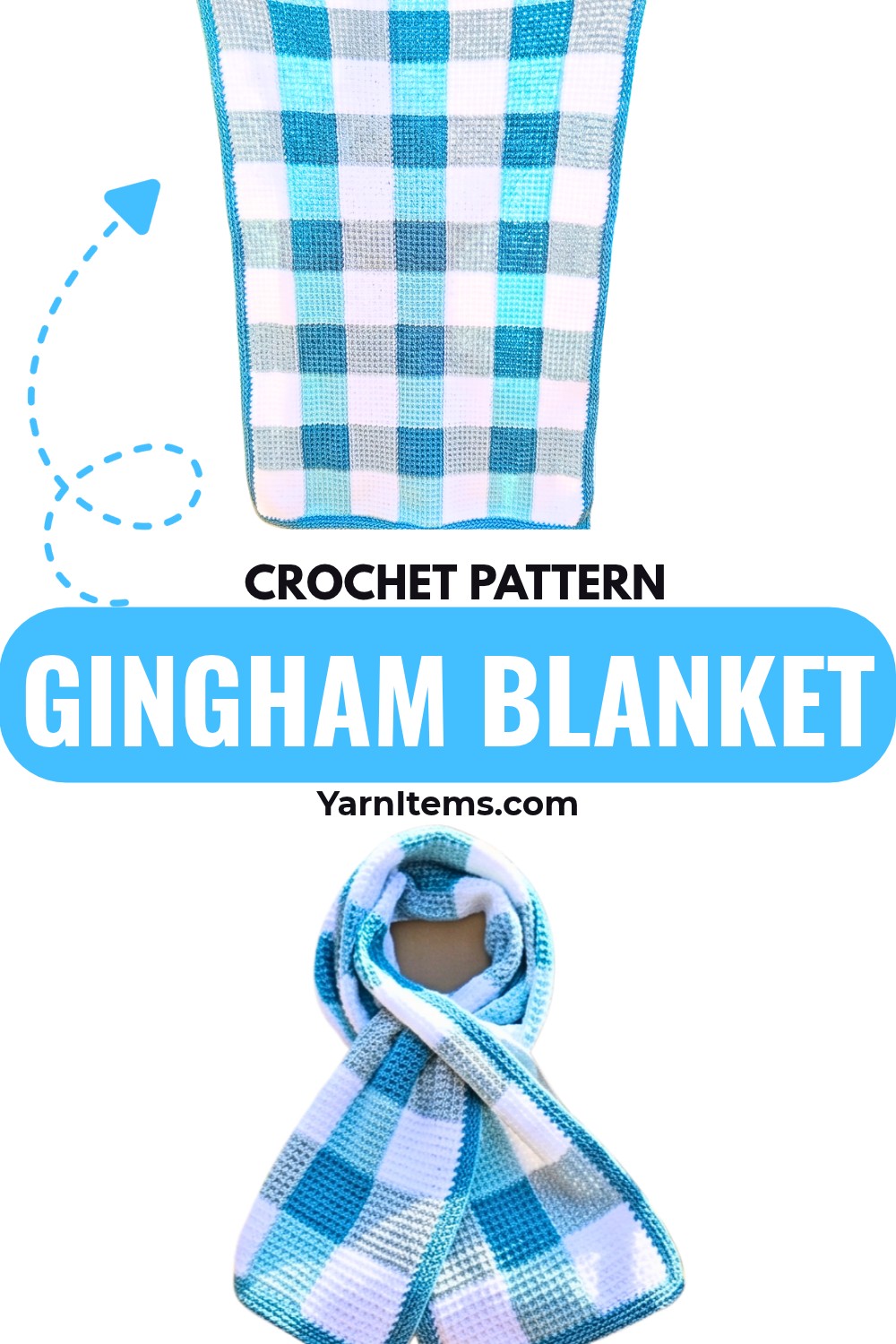
Blocks of color give this Tunisian Crochet Gingham Blanket its unmistakable checkerboard character, while the Tunisian texture adds another layer of detail to the fabric. Working with three coordinating shades lets the colors blend into a gentle crochet gingham effect rather than looking like flat, separate squares.
What makes this pattern especially flexible is the way the crochet blanket grows through repeatable sections. You can adjust the starting chain and the number of rows or squares used within each block to change the overall size. Along the way, the tutorial explains the forward and return passes, color changes, block joining, and finishing border so you can see how each section connects to the next.
Credit Needy Cat Crafts
Choose Your Colors and Hooks
You will need three different yarn colors for the gingham effect, such as white, light mint green, and dark teal. The blanket body is worked with an 8 mm Tunisian crochet hook, while the border uses a smaller 5.5 mm standard crochet hook.
The three colors are important to the appearance of the blanket. The gingham effect comes from rotating the shades through horizontal and vertical blocks, so choose colors that coordinate well enough to create a soft visual transition.
Materials & Tools
- 3 colors of yarn
- 8 mm Tunisian crochet hook
- 5.5 mm standard crochet hook
Abbreviations
- Ch: Chain
- St(s): Stitch(es)
- Sl st: Slip stitch
- Sc: Single crochet
- FwP: Forward Pass
- RetP: Return Pass
- FP: Front Post
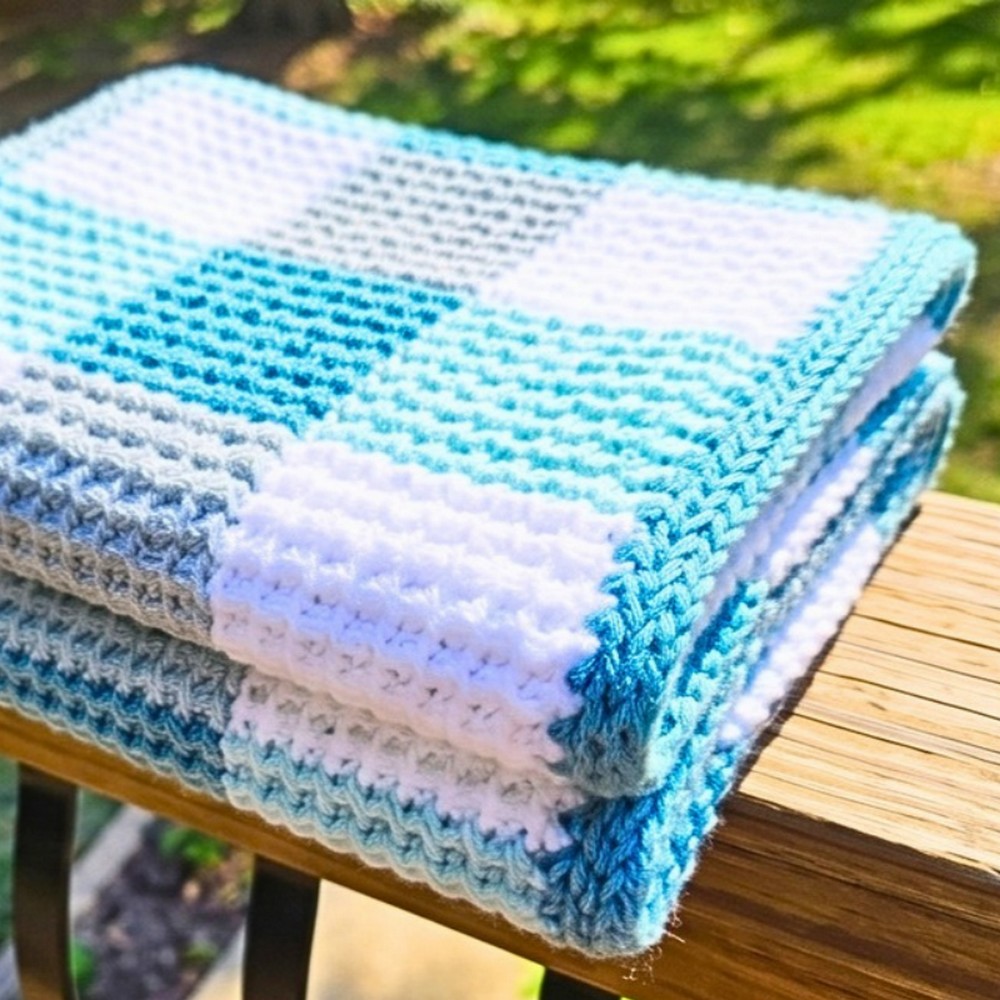
Begin the First Tunisian Block
Start with the first color and make the foundation for your first square. The unusual part comes immediately: the foundation chain is worked through its back loops rather than the standard top loops.
Foundation Chain: Using the 8 mm Tunisian hook and Color 1, ch 10.
First Row – FwP: Insert the hook into the back loop of the second chain from the hook, yarn over and pull up a loop, then repeat across every chain to the end; you should have 10 loops on the hook.
Working through the back loops gives the foundation edge a particular look and keeps the first row consistent with the texture that follows. Take care not to accidentally switch to the usual top chain loop while picking up these first loops.
First Row – RetP: Yarn over and pull through 1 loop, then yarn over and pull through 2 loops repeatedly across the row until only 1 loop remains on the hook.
That completes the first Tunisian row. From this point forward, each row uses the familiar two-part rhythm: pick up loops during the Forward Pass, then work those loops off during the Return Pass.
Build the Square With Tunisian Rows
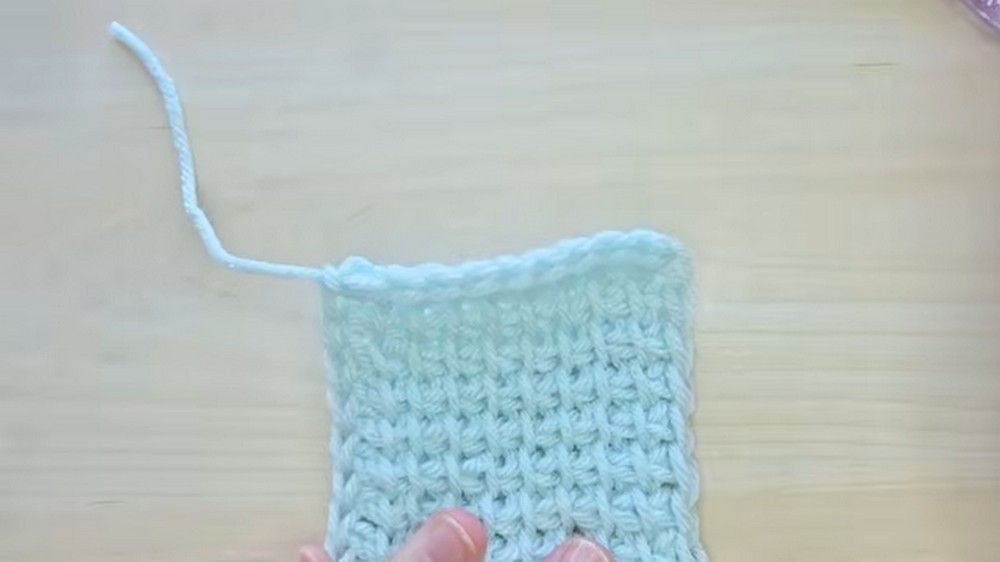
For the following rows, work into the front post of the vertical stitch. This creates the textured Tunisian surface that will make up the body of each gingham block.
Rows 2 onward – FwP: Insert the hook into the front post of each vertical stitch, yarn over and pull up a loop across the row, then insert the hook through the last 2 posts together at the end and pull up the final loop; 10 loops should be on the hook.
Rows 2 onward – RetP: Yarn over and pull through 1 loop, then yarn over and pull through 2 loops repeatedly until only 1 loop remains on the hook.
Keep the number of loops consistent as you work. The final edge placement is particularly important because the last two posts are worked together according to the supplied method.
Complete the First Color Block
Continue the same Forward Pass and Return Pass sequence until the first square contains 8 rows.
The eight-row height establishes the repeatable block used throughout the gingham pattern. Before changing colors, check that your block has the intended eight-row height and that the edges remain reasonably even.
Color Change: At the end of the 8th row, attach Color 2 to begin the next block section, then ch 1 before cutting the previous yarn.
The chain 1 gives you a secure point before separating the old color. Leave the color transition neat because these changes will become part of the visible gingham arrangement.
Extend the Blanket Into Joined Blocks
Once the first block is complete, the next section is started from the bottom right corner of the completed work. This is where the individual square idea begins turning into a connected blanket surface.
Start the Next Section: Attach the Color 2 yarn at the bottom right corner of the completed work and ch 10.
New Section – FwP: Work back along the new chain through its back loops, picking up the initial 10 loops just as you did for the first foundation row.
The important difference now is that you are not simply making an isolated square. The new section must be worked alongside the existing block so the pieces connect as you continue.
Join the New Block as You Work
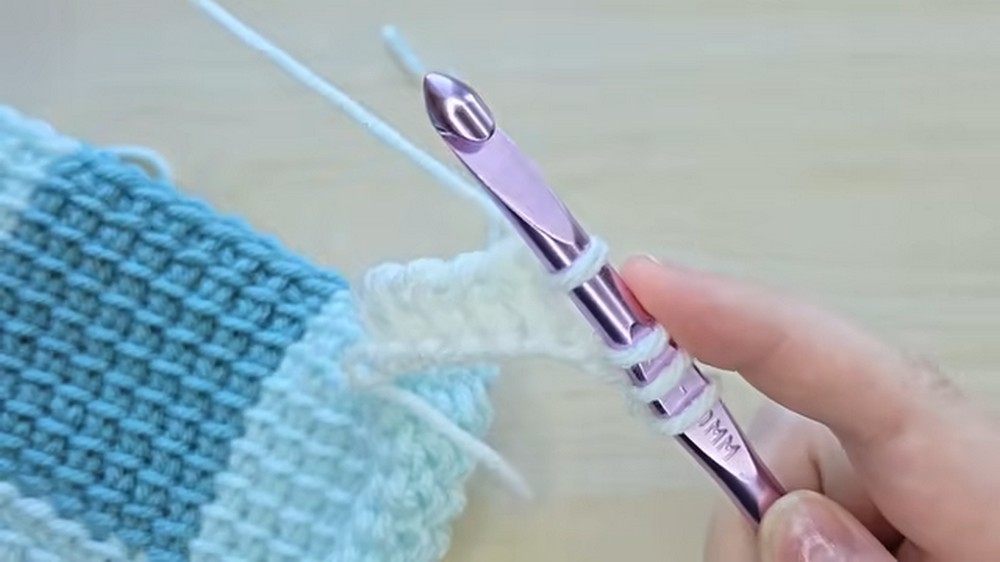
As the Forward Pass and Return Pass rows progress alongside the completed square, use the 2nd and 3rd loops or edges of the adjacent previous row to attach the new section seamlessly to the existing work.
This joining point is worth watching closely. If the hook is placed in the wrong edge or loop, the connection can become uneven, and the blocks may not sit neatly beside one another. Keep the new section aligned with the previous square as you work upward.
Joined Rows: Continue the Tunisian Forward Pass and Return Pass sequence while inserting the hook into the adjacent previous-row loops or edges as instructed, maintaining 10 loops on the hook.
Rotate the Three Colors for the Gingham Effect
After completing 8 rows with Color 2, attach Color 3, such as dark teal, and continue the same block-building method.
The visual effect comes from more than simply changing yarn colors. The three shades are rotated across the blanket so that the blocks create the horizontal and vertical rhythm associated with gingham.
Color Rotation: Complete each 8-row color block, change to the next shade, and alternate Color 1 → Color 2 → Color 3 across the connected sections to build the checkered pattern.
As the blanket grows, step back occasionally and look at the color arrangement rather than focusing only on the stitches directly under your hook. This makes it easier to catch a color-placement mistake before it spreads across several blocks.
Adjust the Blanket Size
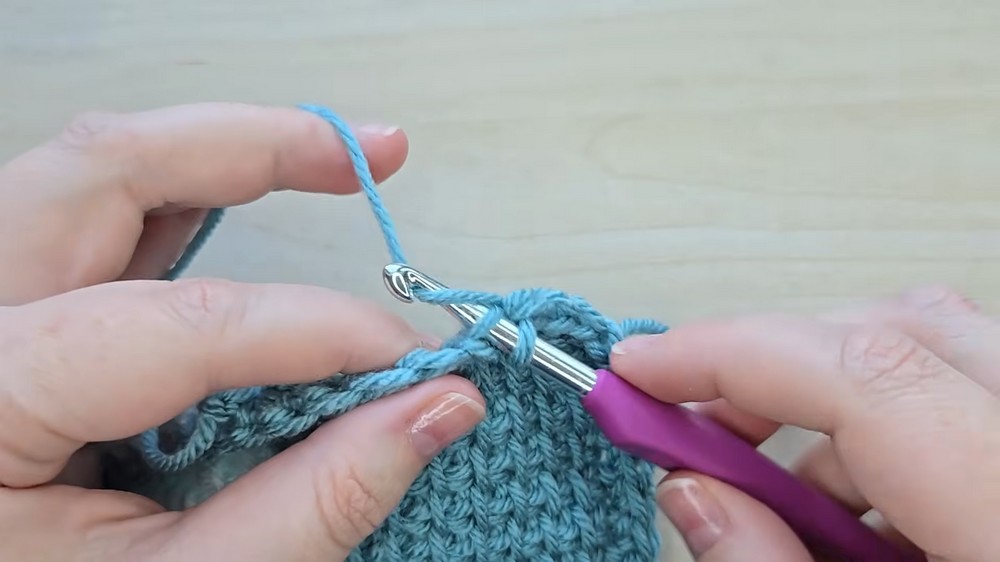
The blanket does not have to remain one fixed size. You can make it as wide or as long as desired by adjusting the starting chain and the number of rows or squares worked within each block.
For a larger blanket, continue the same block-and-color rhythm. For a smaller version, reduce the number of sections while keeping the same color relationship so the gingham appearance remains recognizable.
Secure the Color Changes
Whenever a color section is finished, secure the yarn before cutting it.
Finishing a Color Section: Ch 1 securely before cutting the yarn tail when finishing a color section or block.
Once the blanket body is complete, weave the loose ends neatly along the back ridges of the Tunisian crochet texture. Working the tails into the ridges helps keep the reverse side tidy while reducing the chance that the ends will remain loose.
Add the Crochet Border
After the gingham body is finished, switch from the larger Tunisian hook to the 5.5 mm standard crochet hook. The border gives the blanket a defined outer frame and helps finish the edges neatly.
First Border Round
Attach your chosen border yarn to the outer edge of the blanket and work single crochet evenly around the entire perimeter.
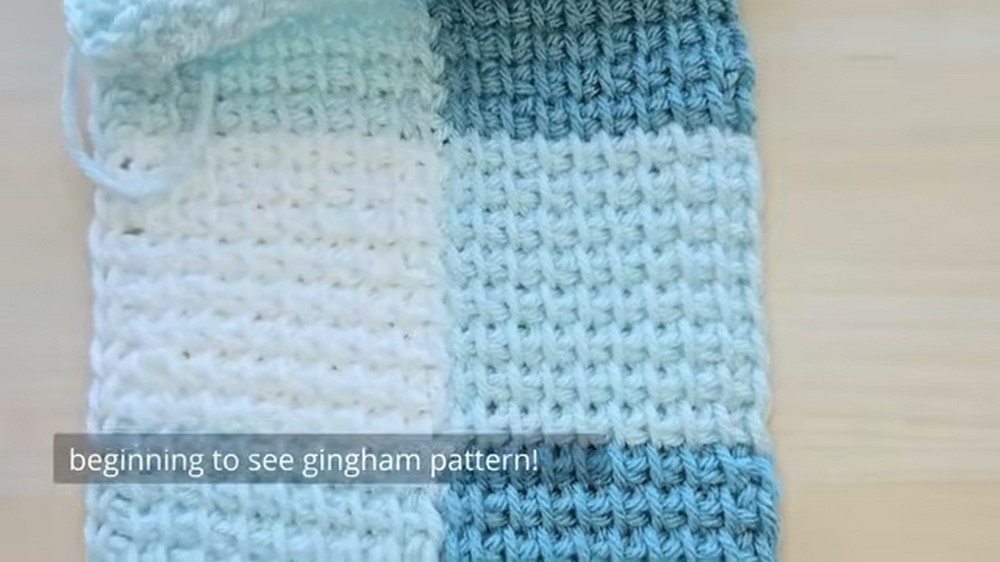
Border Round 1: With the 5.5 mm hook, work sc evenly around all four sides of the blanket, working ch 2 at each corner to turn smoothly without curling.
Pay attention to the corners as you move around the blanket. The chain 2 at each corner provides the extra space needed to turn the border around the edge instead of forcing the stitches tightly into the corner.
Build the Ridged Border
The second round changes the stitch placement slightly and creates the textured ridge that distinguishes the finished edging.
Border Round 2: Work sc through the back loop of each stitch around the blanket, using the same corner treatment as needed to continue the border smoothly.
The back-loop placement gives the edging a raised, ridged appearance. If you want a broader frame, continue adding rounds as desired.
Additional Border Rounds: Continue working additional rounds as desired to reduce curling and create a clean frame around the blanket.
Check the Finished Edges
Before fastening off, lay the blanket flat and look around the complete perimeter. The border should frame the gingham blocks without pulling the corners inward.
Check that:
- The color blocks follow the intended Color 1 → Color 2 → Color 3 rotation.
- The Tunisian blocks remain connected along their joining edges.
- The four corners turn smoothly.
- The border lies neatly around the outside edge.
- Loose yarn ends have been woven securely into the back ridges.
When everything looks even, fasten off securely and weave in any remaining ends. Your Tunisian Crochet Gingham Blanket is then ready to use.
Customize the Gingham Look
The same method can create noticeably different blankets simply by changing the three coordinating shades. A light combination such as white, mint, and teal gives the gingham a soft appearance, while other three-color combinations can create a stronger contrast.
Because the size is also adjustable through the starting chain and the number of rows or squares worked per block, you can adapt the blanket to the dimensions you want without changing the basic block-building idea.