Crochet Ghost Sweater with Floating Ghost Colorwork & Ribbed Edges
Give your crochet wardrobe some spooky texture with this cropped ghost sweater, featuring organic colorwork, ribbed finishing, and adjustable sizing.
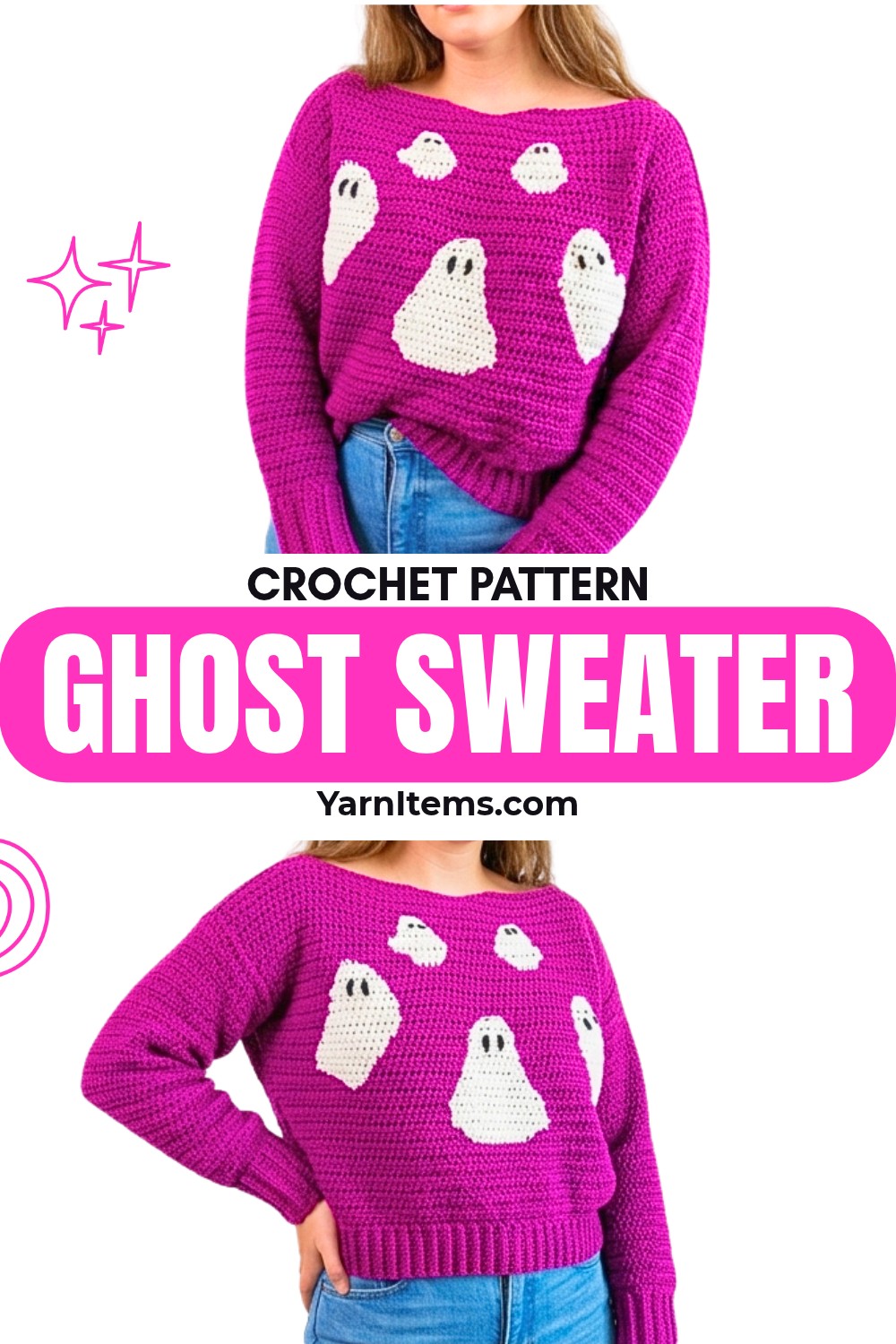
Plum purple yarn creates a rich background color for this playful crochet sweater, while cream-colored ghosts appear to float across its surface. Organic shapes, dark stitched eyes, and defined cream outlines give each crochet ghost personality without requiring rigid colorwork charts.
Sizing follows your favorite crochet sweater rather than fixed measurements, making it easy to create a boxy, slightly slouchy, cropped fit. Front and back panels are worked separately, then sleeves, ribbing, and small V-neck detail bring everything together.
Credit Frayed KnotCo Tutorials
Materials & Tools
- Main Color Yarn: Premier Yarns Cotton Fair in “Plum”; creator ordered 5 skeins to stay safe and estimates approximately 4 skeins for a medium, slightly cropped size
- Contrast Yarn: Cream or white yarn in same weight for ghosts
- Detail Yarn: Small amount of black acrylic yarn for ghost eyes
- Crochet Hook: 4.5 mm
- Stitch markers
- Yarn needle
- Scissors
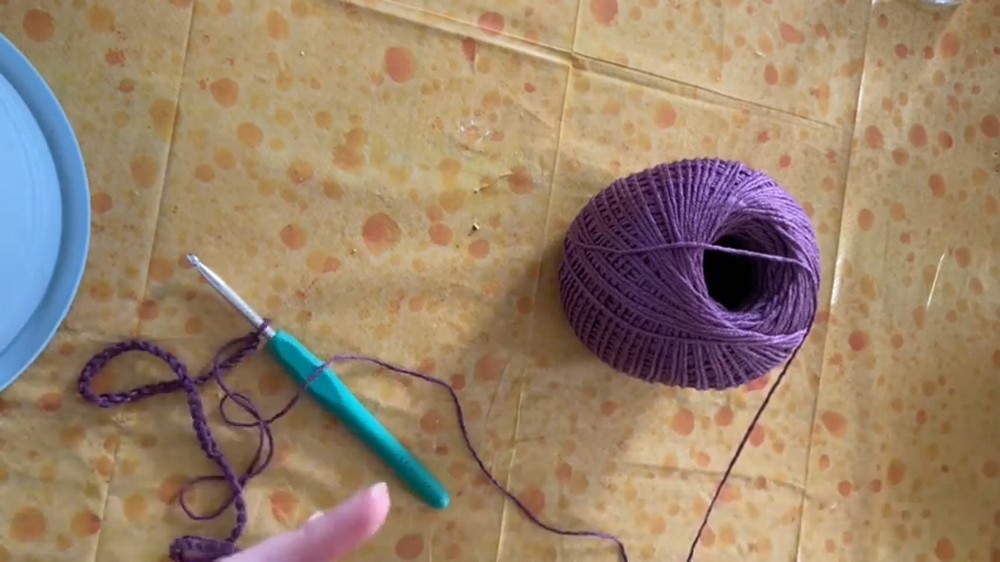
Find Your Preferred Fit
This sweater is designed around a small/medium, boxy, slightly slouchy, cropped fit, but the starting width can be changed using a sweater you already own.
Choose a sweatshirt or sweater with a fit you love. Measure its width and crochet starting chain until the chain reaches that width, then add approximately 1/2 inch to account for stretching.
This method is especially useful when making a garment with different yarn tension or for someone whose measurements fall between standard sizes.
Sleeves have a slight puff/dolman shape, giving extra room near the upper arm. Neckline includes a small V-neck notch, which can remain open, or the center gap can be stitched closed for a more traditional crew-neck appearance.
Abbreviations
- CH: Chain
- SC: Single Crochet
- HDC: Half Double Crochet
- BLO: Back Loop Only
- ST(S): Stitch(es)
- DEC: Decrease

Back Panel
Back panel establishes sweater width and provides a solid purple base before ghost colorwork begins.
Step 1 – Starting Chain: CH 95, or continue chaining until chain reaches desired sweater width plus approximately 0.5 inch.
Step 2 – Row 1: Skip first ST; work SC across entire chain.
This first row creates a solid base between the body and the future ribbed hem, so keep stitch tension even from the beginning.
Step 3 – Rows 2–11: Work HDC across the entire row for 10 total HDC rows.
Before beginning ghost colorwork, check panel width against your chosen template sweater. If width is correct here, later shaping can focus on height and armholes rather than trying to correct overall size.

Add Floating Ghost Colorwork
Ghosts are intentionally freehanded rather than locked into strict grid shapes. Their changing widths and positions create floating movement across the sweater.
Ghost 1 – Begin at Center
Step 4 – Row 12: Fold panel in half to find center; place stitch marker at center point; work HDC in purple until marker; on final pull-through of purple HDC, drop purple and pull cream yarn through for clean color change; work 10 HDC in cream, with 5 stitches on each side of center point; switch back to purple and work HDC to end.
Keep yarn changes controlled without pulling contrast yarn tightly. Tight floats can draw the panel inward and make the colorwork area narrower than surrounding rows.
Step 5 – Row 13: Work HDC in purple; when reaching ghost, add 2 additional cream stitches on each side, expanding ghost width to create sheet-like shape.
Step 6 – Row 14: Add 3 additional cream stitches on each side of the ghost to widen the lower portion further.
Shape Ghost 1
Step 7 – Continuing Ghost 1: Maintain current cream width for several rows, then gradually decrease cream stitches to taper ghost head; keep purple stitches around cream area so silhouette remains irregular and organic.
There is no fixed grid for ghost shape here. Step back occasionally and look at the full panel. If one side looks wider, use surface embroidery later to sharpen its outline rather than forcing every row into identical stitch counts.

Add Ghost 2
A few rows higher, place a stitch marker slightly off center to begin the second ghost.
Start Ghost 2 with 1 cream ST, then gradually increase cream stitches outward on subsequent rows. Keep its position slightly angled so it appears to float rather than line up directly beneath Ghost 1.
Add Ghost 3
Start Ghost 3 slightly higher than Ghost 2. Follow the same visual tapering approach, adjusting cream width gradually to create another floating figure.
Step 8 – Row 24: Complete all ghost colorwork. Row 24 is final full straight row before armhole shaping begins.
At this point, inspect all three ghosts before moving upward. This is the easiest point to adjust visual balance through surface embroidery later, since upper shaping has not yet narrowed the panel.
Shape Back Armholes
Armhole shaping begins after Row 24 and creates stepped upper edges for sleeves and shoulders.
Step 9 – Row 25: Slip stitch into first ST; weave into second ST and pull up loop to begin HDC row; work HDC across. This creates the stepped edge needed for armhole cut-in.
Step 10 – Decreasing: At end of row, skip last ST; turn work; make DEC over next stitches to continue shaping armhole; repeat HDC rows with decreases until back panel reaches desired shoulder height.
Keep both armhole sides visually balanced. Since shaping happens at opposite edges, compare the number of rows and decreases on each side before finishing panel.
Front Panel
Step 11: Repeat Steps 1–10 to make front panel.
Ghost placement can differ from back panel. Creator adds smaller ghosts near the upper area, giving the front and back different visual arrangements while keeping the same overall style.
Add Front Neckline
Step 12 – Final 3-4 Rows: Leave center stitches unworked during final 3–4 rows to create a small V-neck notch, or continue crocheting straight across for standard crew-neck shape.
For V-neck, keep center opening balanced from left and right sides. Marking the center before beginning neckline shaping can help prevent uneven notch placement.
Make Sleeves
Sleeves use the same general HDC texture but are sized according to preferred sweater template.
Step 13: Determine sleeve width from template sweater; crochet straight HDC rows until desired sleeve length is reached, allowing additional length for ribbed cuff; record starting chain count carefully so Sleeve 2 can match Sleeve 1 exactly.
Slightly fuller upper sleeve creates relaxed puff/dolman effect. Matching both sleeves depends more on recorded measurements and row counts than on trying to estimate second sleeve from memory.
Add Ribbing
Ribbing is worked separately along sweater edges and attached as each ribbed row is completed.
Step 14: Join yarn to edge of piece; CH to desired ribbing width.
Step 15: Work back and forth in SC through BLO to create stretchy ribbed texture; slip stitch to main body at end of each ribbed row to attach ribbing as you go.
Use the same approach for the bottom hem, sleeve cuffs, and neckline where ribbing is desired. BLO placement should remain consistent so ridges line up cleanly.
Define Ghost Faces
Small embroidered details make ghost shapes easier to recognize, especially where cream meets plum.
Eyes: Thread a yarn needle with black acrylic yarn; sew over the same spot 3 times to create thick, dark eyes on each ghost.
Give Ghosts Clean Outlines
Thread yarn needle with cream yarn and work surface embroidery around the perimeter of each ghost, weaving through end loops.
This outlining step is especially useful for freehand colorwork. It covers small areas of purple showing through cream edges and creates sharper ghost silhouettes, preventing shapes from looking like random spots.
Do not worry if ghost edges are not perfectly smooth before outlining. Surface embroidery can visually correct small uneven sections and gives final shapes more definition.

Assemble Shoulders
Lay front and back panels together.
Shoulder Seams: If back panel is slightly wider, align outer top edges and stitch them together so excess width falls into overall drop-shoulder/dolman shape.
Check both outer edges before sewing permanently. Aligning outer top edges is more important here than forcing inner edges to match when slight width differences exist.
Attach Sleeves
Open sweater flat.
Sleeve Attachment: Pin center top of Sleeve 1 to shoulder seam; sew sleeve into armhole; repeat for Sleeve 2.
Centering the sleeve first helps distribute extra sleeve fullness evenly on both sides of the shoulder seam.
Close Side and Sleeve Seams
Fold sweater in half with right sides facing.
Side Seams: Sew continuously from bottom hem upward along sweater side, then continue along underside of sleeve until reaching cuff.
Repeat on opposite side.
Keep seam tension consistent. Pulling too tightly can reduce width around side or sleeve, especially with HDC fabric.

Finish and Block
Weave in all loose yarn ends with a yarn needle.
Wet block or steam block the sweater to relax stitches, smooth colorwork tension, and settle final shape.
Allow fabric to dry fully after wet blocking before checking final measurements.
Ghost Placement: Keep Shapes Organic
Because ghost silhouettes are freehanded rather than plotted onto a rigid chart, small changes in width and position are part of the finished look. Use overall panel view as your guide instead of judging each ghost from one row alone.
Ghosts can float higher, lower, wider, narrower, or slightly off center. Surface embroidery provides final definition, so small uneven color boundaries do not need to be completely redone.
This approach also makes each sweater naturally different while preserving the same spooky floating-ghost theme.