Chunky Crochet Cardigan Pattern with Loose Slip Stitches & Custom Fit
Here’s a simple way to create a cozy crochet cardigan with oversized sleeves, a ribbed cuff, and a length that starts with your own measurements.
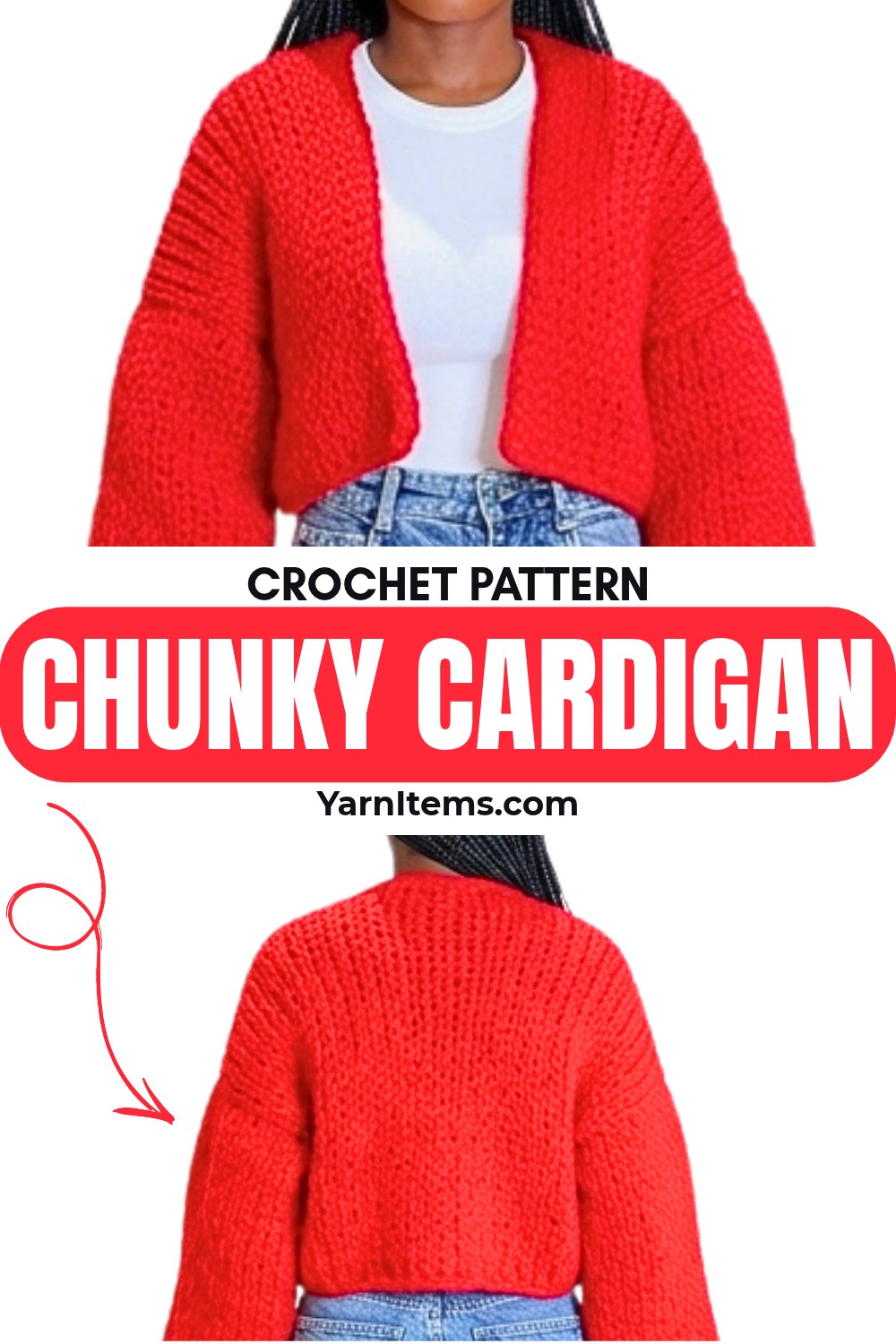
Chunky yarn gives this crochet cardigan its warm, substantial feel, while rows of loose slip stitches create a texture that looks surprisingly similar to knitted fabric.
The cropped version shown here has a front width of about 9 inches for an XS/S fit, with roomy sleeves and softly tapered cuffs that add shape without making the crochet cardigan feel stiff.
Working from your own measurements makes the length easy to personalize from the beginning. You’ll first create the body in one continuous crochet piece, shape the neckline with short rows, then crochet the sleeves separately with their own cuff shaping.
Since slip stitches can tighten the fabric considerably, keeping every stitch very loose is one of the most important details throughout the entire crochet pattern.
Credit AC Crochets
Materials & Tools
- Yarn: 7 skeins of Super Bulky/Chunky weight yarn. The tutorial uses Lenina from Volue, with each skein containing 100 g/90 m and made from 80% acrylic and 20% wool.
- Crochet Hook: 9.0 mm or 10.0 mm. Although the yarn recommends a 7.0 mm hook, sizing up by at least two hook sizes helps keep the slip stitches loose enough to work comfortably.
- Tape measure: For measuring the body, panels, sleeves, and cuffs.
- Stitch markers: Useful for marking the center neckline, cuff placement, and sleeve alignment.
- Darning/Yarn needle: For sewing the seams and weaving in the ends.
Before You Start: Keep the Slip Stitches Loose
Loose tension is more important here than it may seem. Slip stitches naturally make a dense fabric, and working them tightly can make the cardigan stiff, difficult to work into, and noticeably smaller than expected.
Keep your hook movement relaxed and avoid pulling the yarn tightly after each slip stitch. You should be able to insert your hook comfortably into the back loop on the following row. If your fabric already feels firm or your hook struggles to enter the stitches, loosen your tension before continuing.
All slip stitches in this pattern are worked very loosely, especially because the fabric needs to remain pliable.

Finished Size & Customization
The tutorial demonstrates an Extra Small/Small (XS/S) cardigan.
- Front panel width: 9 inches
- Cropped body length: The creator begins with a 15-inch measurement, which becomes approximately 13 inches after the slip-stitch fabric settles.
- Sleeve length: Approximately 14.5 inches
- Sleeve top width: Approximately 15 inches
- Cuff: 6 stitches, approximately 2.5 inches wide
Adjusting the Body Length
Measure from your front waist, over your shoulder, and down to your back waist. Add approximately 2 inches to account for the length lost as the loose slip-stitch fabric contracts.
For example, the tutorial uses a 15-inch starting measurement for a finished length of roughly 13 inches.
Adjusting the Sleeve Length
Measure from your bicep to your wrist and add approximately 2 inches. The sleeve foundation chain controls the finished sleeve length, while the repeated short-row sequence builds its width.
For a longer cuff, the 6-stitch cuff can be increased to 10 or 12 stitches.
Pattern Abbreviations
US crochet terms are used throughout.
- ch: Chain
- sl st: Slip stitch
- BLO: Back Loop Only
- st(s): Stitch(es)
Tension Note: Work every slip stitch extremely loosely so the fabric stays flexible and the back loops remain easy to access.
Main Body
Body and front panels are worked in one continuous piece from side to side. The foundation chain determines the cardigan’s overall length, while the repeated rows build the width.
Foundation Chain
Make an odd number of chains long enough to travel from your front waist, over your shoulder, and down to your back waist, adding approximately 2 inches for the expected shrinkage from the slip-stitch fabric.
Row 1: Skip the first ch from the hook; work 1 loose sl st in the second ch and 1 loose sl st in every ch across to the end.
Row 2: Ch 1, turn; the turning chain does not count as a stitch; skip the turning ch, then work 1 loose sl st in the BLO of the first st and 1 loose sl st in the BLO of every st across to the end.

To Desired Width
Rows 3–as needed: Ch 1, turn; skip the turning ch, then work 1 loose sl st in the BLO of every st across to the end; repeat until the panel measures approximately 9 inches wide for the XS/S size.
Width Check
Measure the panel rather than relying only on your row count. Because slip-stitch tension can vary considerably from one crocheter to another, the 9-inch measurement is more useful than simply matching the number of rows shown in the tutorial.
Shape the Neckline
Once the main panel reaches the required width, the center needs to be marked so the front and back sections can be separated.
Find the Center
Count the total number of stitches and divide that number by two. Place a stitch marker in the exact center stitch.
This marker becomes your reference point for the neckline, so take a moment to make sure it is positioned correctly before beginning the short rows.
Short Rows
Short Row 1: Ch 1, turn; work loose sl sts in the BLO of each st until reaching the stitch marker, leaving the remaining stitches unworked.
Short Row 2: Ch 1, turn; work loose sl sts in the BLO back up to the top of the panel.
Repeat: Continue working these short rows back and forth for approximately 2 inches, or about 6 rows, to create the neck opening.
Neckline Check
Lay the piece flat after completing the short rows. The opening should be clearly visible without the fabric pulling tightly around the center. If the neckline looks unusually narrow, check whether your slip stitches have become tighter than they were in the body.
Create the Second Front Panel
The second front is added after the neckline opening so both sides of the cardigan can return to the same overall width.

Working Down
Row 1: Ch 1, turn; work loose sl sts in the BLO down to the neckline edge where the short rows finish.
Re-Add the Front Stitches
Joining Chain: Chain the exact number of stitches that were previously left unworked at the front; the tutorial uses 31 sts, then add 1 extra ch for the turning chain.
Working Up
Row 2: Skip the turning ch; work 1 sl st into each newly made chain, then continue working 1 loose sl st in the BLO of the existing stitches all the way to the top of the panel.
Remaining Body Rows
Remaining Rows: Ch 1, turn; skip the turning ch, then work loose sl sts in the BLO across the entire row; repeat until the second front reaches the same number of rows and approximately the same 9-inch width as the first front panel.
Finish the Body
Final Row: Ch 1, cut yarn, and fasten off.
Before moving to the sleeves, place the body flat and compare both sides. Matching widths will make sleeve placement and side seaming much easier later.
Sleeves – Make 2
Sleeves are worked separately from side to side. Short rows leave part of the cuff section unworked, creating the tapered ribbed effect.

Foundation Chain
Measure from your bicep to your wrist and add approximately 2 inches. Make your foundation chain.
The tutorial uses 35 chains, producing a finished sleeve length of approximately 14.5 inches.
Row 1: Skip the first ch; work 1 sl st into every ch across to the top, giving 34 sts.
Mark the Cuff
Count 6 stitches from the bottom edge and place a stitch marker in the sixth stitch. These 6 stitches form the cuff area.
Row 2: Ch 1, turn; work loose sl sts in the BLO down the sleeve until reaching the stitch marker, leaving the bottom 6 cuff stitches unworked.
Row 3: Ch 1, turn; work loose sl sts in the BLO back up to the top of the sleeve.
Rows 4–5: Repeat Row 2 by working loose sl sts in the BLO down to the stitch marker, then repeat Row 3 by working loose sl sts in the BLO back to the top.
Connect the Cuff
Row 6: Ch 1, turn; work loose sl sts in the BLO down to the stitch marker; to connect the cuff, insert the hook through the turning chains of the previous short rows, insert it into the turning chain below, then insert it into the BLO of the 6th cuff stitch, yarn over and pull through all 4 loops on the hook; work 1 sl st in the BLO of each remaining cuff stitch to the bottom.
Row 7: Ch 1, turn; work loose sl sts in the BLO of every stitch from the cuff all the way to the top.
Repeat the Sleeve Sequence
Repeat: Repeat the sequence of 4 short rows, 1 connecting row down, and 1 full row up until the top width of the sleeve measures approximately 15 inches.
Fasten off and make the second sleeve in the same way.
Sleeve Shape Check
Before sewing anything to the body, lay each sleeve flat and compare them side by side. The cuffs should match, the short-row sections should have a similar shape, and both sleeves should reach the same finished width.
This is much easier to correct before the sleeves are attached.

Assemble the Cardigan
With the body and both sleeves finished, the next step is to position the sleeves accurately before sewing the side seams.
Center the Sleeve
Lay the main cardigan body flat. Find the exact center of the sleeve’s top edge and align it with the folded shoulder line of the body. Place a stitch marker at this center point.
Attach the Sleeves
Count the stitches on both sides of the marker to confirm that the sleeve is centered evenly. Using a darning needle and a long yarn tail, sew the sleeve to the body’s armhole opening.
Repeat for the second sleeve.
Sew the Side and Sleeve Seams
Turn the cardigan inside out so the right sides are facing each other. Starting at the bottom hem, sew upward along the body side seam, continue through the armpit, and sew down the sleeve all the way to the cuff.
Repeat on the opposite side.
Seam Check
Before finishing the seam, turn the cardigan right side out temporarily and check the sleeve position. The shoulder should sit at the top of the sleeve, and the underarm should not pull noticeably toward the front or back.
If the sleeve looks off-center, it is easier to reposition it now than after the seams have been finished.
Add the Bottom Edge
A simple slip-stitch edge gives the chunky cardigan a cleaner finish without adding much extra bulk.
Bottom Edging: Attach yarn to the bottom hem and work 1 round of evenly spaced slip stitches around the entire bottom edge, placing approximately 1 sl st between each space or ridge.
Keep these slip stitches loose so the lower edge remains flexible rather than drawing inward.
Finishing
Weave in all remaining loose ends on the wrong side of the cardigan. Turn the cardigan right side out and gently arrange the sleeves, neckline, and bottom edge so the fabric settles into its natural shape.
Your chunky crochet cardigan is now ready to wear.

Quick Fit Check Before Wearing
Put the cardigan on before making any final adjustments. Check the overall length from the front waist over the shoulder to the back, make sure the neckline sits comfortably, and confirm that the sleeve cuffs rest where you want them.
Because this design relies on loose slip stitches, the fabric may relax slightly with handling. Checking the fit after the cardigan is assembled gives you a better idea of its final drape than judging individual pieces alone.