Peacock Triangle Shawl Crochet Pattern with 3-Row Repeat
Create a graceful crochet Peacock Triangle Shawl with lace-like shells, flowing color changes, and a simple 3-row repeat that makes sizing easy to adjust.
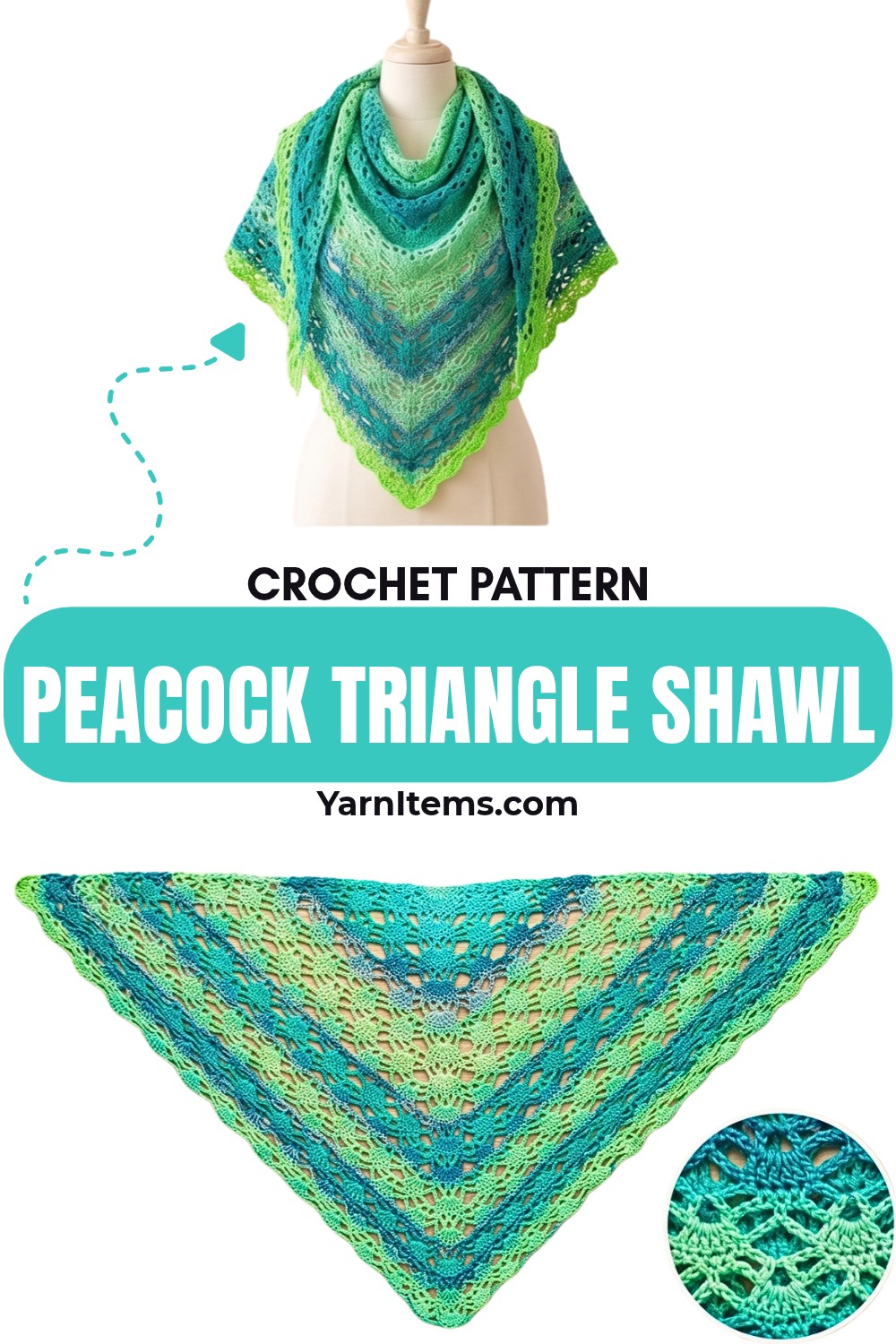
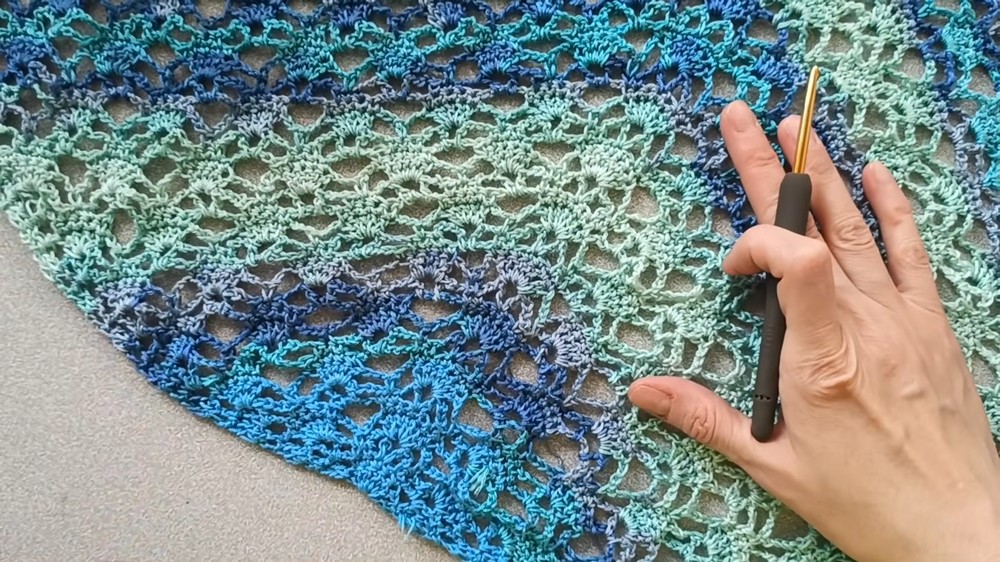
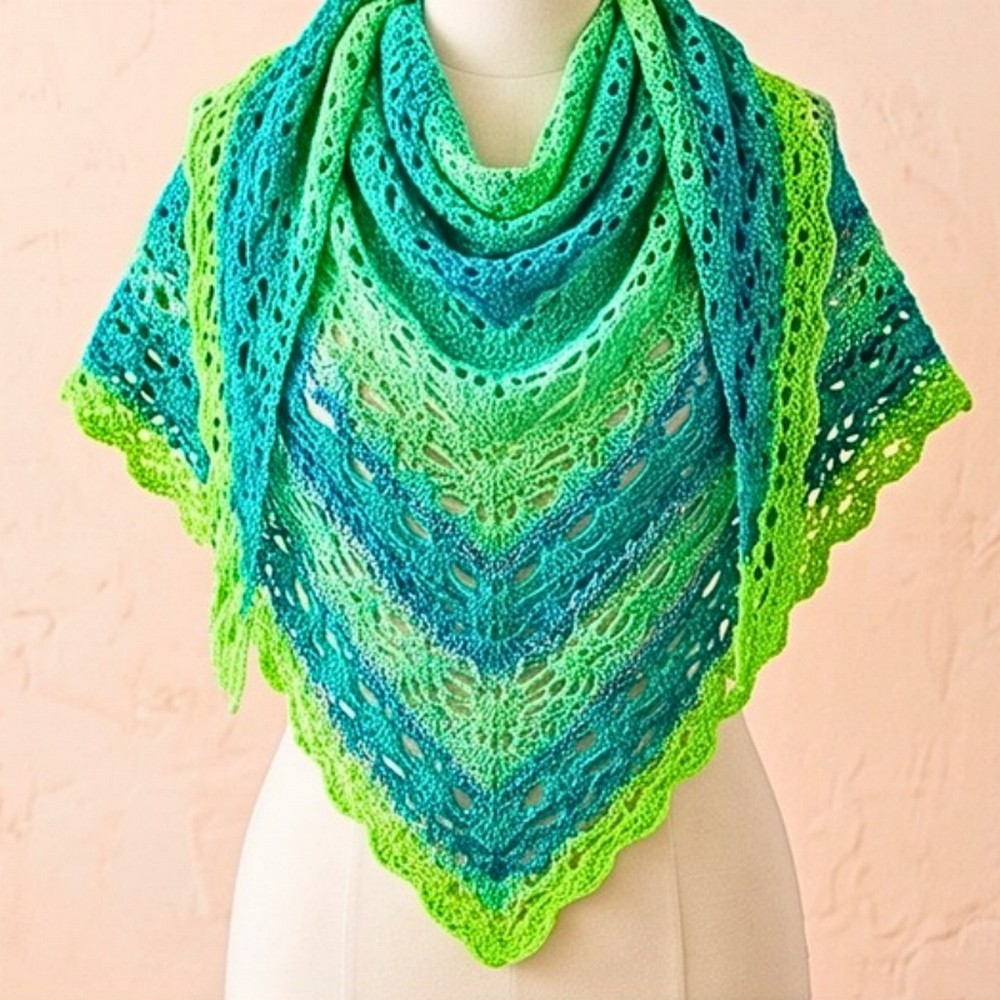
The Peacock Triangle Shawl combines open chain spaces, V-stitches, and sweeping shell sections to create a delicate lace effect while keeping the pattern approachable. Made with Alize Diva Batik or a similar fine yarn, it can be shaped into anything from a small bandana-style accessory to a generous triangle crochet shawl.
As you work through the crochet pattern, the first four rows establish the main stitch arrangement before Rows 5, 6, and 7 begin the repeating sequence. The center increases continue to shape the point while the sides expand naturally, giving you a clear rhythm to follow as the crochet shawl grows.
Credit Crochet with GG
Materials & Tools Needed
- Yarn: Alize Diva Batik (100g / 350m per ball) or any similar fine/fingering weight yarn. A slightly thicker yarn can also be used if preferred.
- Hook: 3.5 mm crochet hook. A 3.0 mm hook can also be used depending on your tension and comfort.
- Other Tools: Tapestry needle for weaving in ends and scissors.
Finished Size & Customization Ideas
This shawl is easily customizable because the main pattern uses a simple 3-row repeat. Continue repeating the pattern rows until the shawl reaches the wingspan and depth you prefer.
For a smaller accessory, stop earlier to create a bandana or neck cowl. For a larger wrap-around triangle shawl, continue the repeat for additional rows. The finished shape can also be worn around the waist as an accessory piece.
Pattern Abbreviations & Terminology
Standard US crochet terms are used throughout.
- MR: Magic Ring
- ch: chain
- st(s): stitch(es)
- sk: skip
- sp: space
- sc: single crochet
- dc: double crochet
- V-st: V-Stitch (1 dc, ch 2, 1 dc in the same stitch or space)
- inc: increase
Step-by-Step Crochet Instructions
Foundation
Start with a Magic Ring (MR). Alternatively, Ch 4, sl st to the first ch to form a ring.
Row 1: Ch 3 (counts as your first dc here and throughout), 1 dc into the MR, ch 3, 5 dc into the MR, ch 3, 2 dc into the MR, pull the tail of the MR tightly to close the hole, turn your work.
This opening row creates the central foundation from which the triangle begins to expand.
First Increase Row
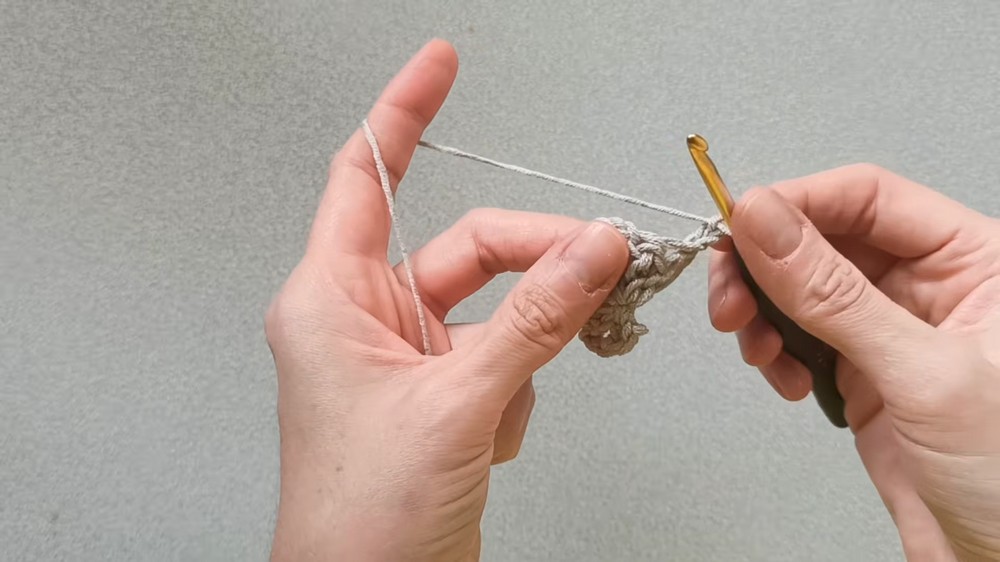
Row 2: Ch 3, 1 dc in the next st (the second dc of the previous row), ch 3, in the first ch-3 sp make a V-st [1 dc, ch 2, 1 dc], ch 3, sk to the 5-dc group and place 1 sc in the first dc, ch 3, sk 1 st and make a V-st in the next st (the 3rd/center dc), ch 3, sk 1 st and place 1 sc in the last dc of the 5-dc group, ch 3, in the next ch-3 sp make a V-st, ch 3, finish the row with 1 dc in each of the last 2 sts, turn your work.
The center V-stitch becomes an important reference point for the following rows, while the stitches around the 5-dc group establish the repeating lace arrangement.
Shell Row
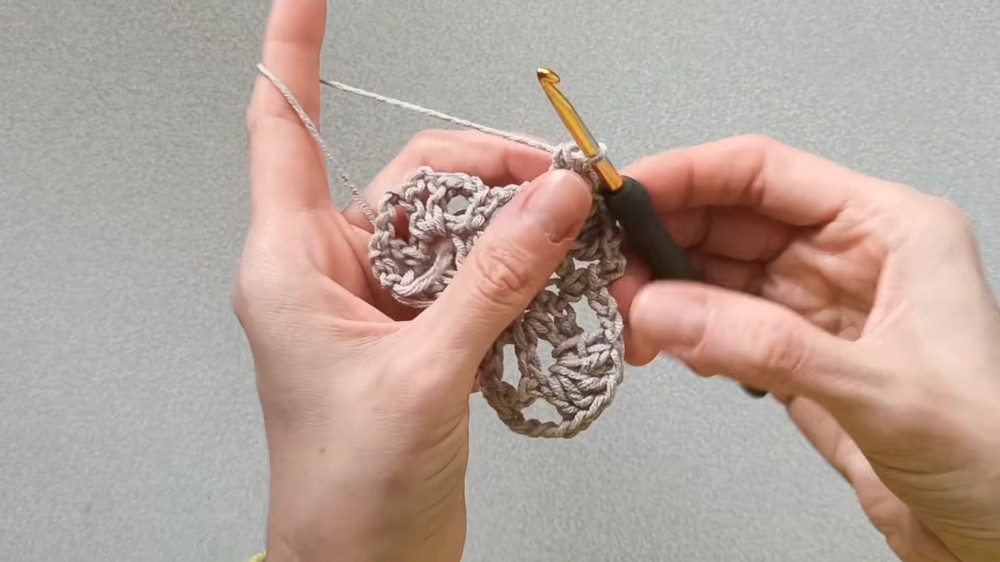
Row 3: Ch 3, 1 dc in the next st, ch 3, sk the next ch-3 sp and working directly into the ch-2 space of the first V-st make 5 dc, ch 3, place 1 sc into the sc from the previous row, ch 3, working into the center V-st make 7 dc (this will always be your center point increase), ch 3, place 1 sc in the next sc from the previous row, ch 3, in the last V-st make 5 dc, ch 3, finish the row with 1 dc in each of the last 2 sts, turn your work.
The 7-dc group at the center establishes the point of the triangle. Keep this center increase easy to identify because it remains the key point as the shawl becomes wider.
Chain & Single Crochet Row
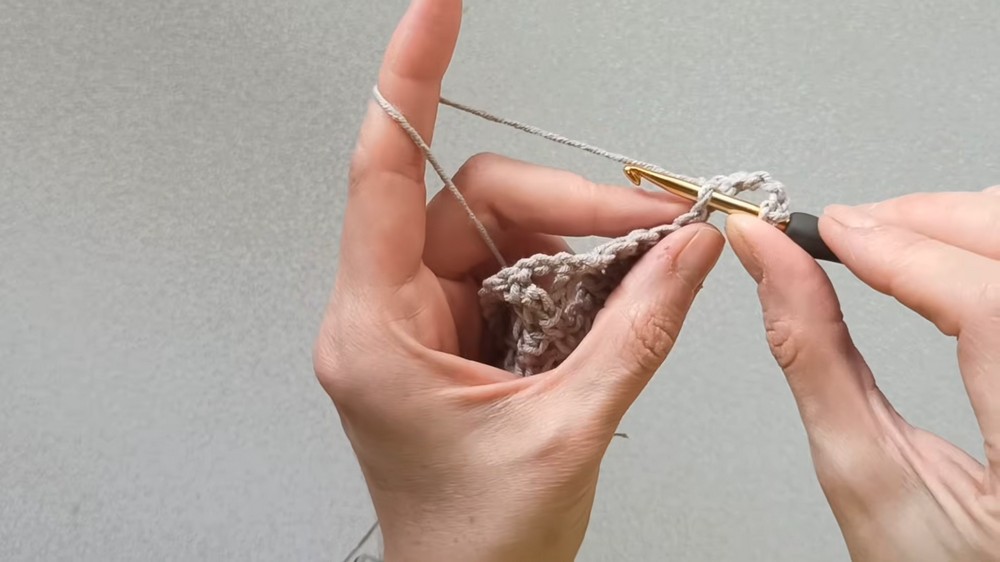
Row 4: Ch 3, 1 dc in the next st, ch 3, working across the 5-dc group place 1 sc in each of the 5 sts (5 sc total), ch 5, working across the center 7-dc group place 1 sc in each of the 7 sts (7 sc total), ch 5, working across the next 5-dc group place 1 sc in each of the 5 sts (5 sc total), ch 3, finish the row with 1 dc in each of the last 2 sts, turn your work.
Rows 5, 6, and 7 now establish the repeating sequence that will be used for the remainder of the shawl.
Repeating V-Stitch Row
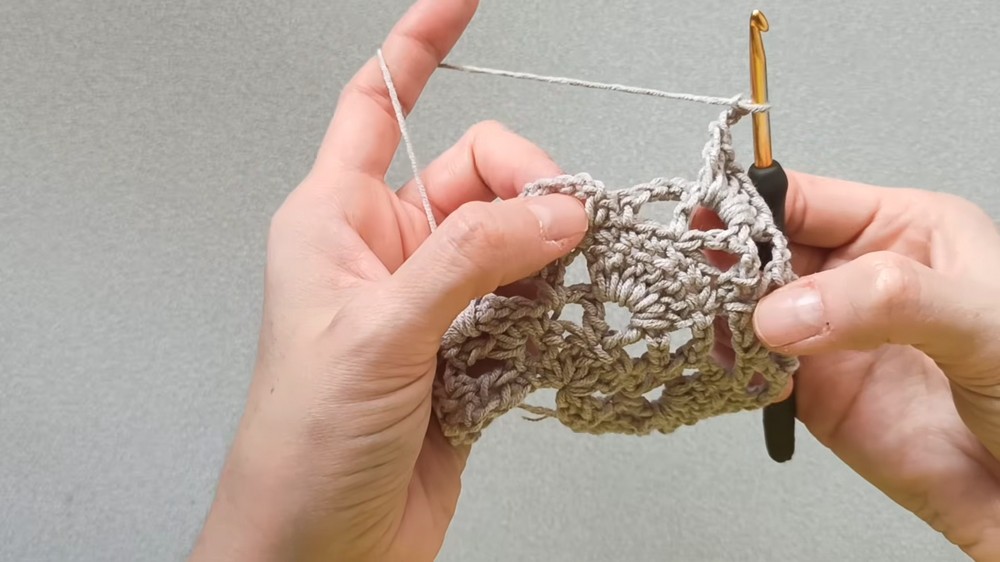
Row 5: Ch 3, 1 dc in the next st, ch 3, to make your first increase work a V-st into the 2nd chain of the initial ch-3 space from the previous row, ch 3, working over the 5-sc group sk the first sc and place 1 sc in each of the next 3 sts, sk the last sc, ch 3, work a V-st into the 3rd chain (center chain) of the ch-5 space, ch 3, arriving at the center 7-sc group place 1 sc in the 1st st and 1 sc in the 2nd st, ch 3, sk 1 st, make a V-st in the 4th (center) st, ch 3, sk 1 st, 1 sc in the next st and 1 sc in the last st, ch 3, work a V-st into the 3rd chain of the next ch-5 space, ch 3, over the next 5-sc group sk the first sc, 1 sc in each of the next 3 sts, sk the last sc, ch 3, work a V-st into the 2nd chain of the final ch-3 space, ch 3, finish the row with 1 dc in each of the last 2 sts, turn your work.
The center V-stitch continues the increase at the point, while the side V-stitches prepare the fabric for the shell groups in the following row.
Repeating Shell Row
Row 6: Ch 3, 1 dc in the next st, ch 3, work 5 dc into the first V-st, ch 3, over the 3-sc group sk the first sc, place 1 sc in the center st, sk the last sc, ch 3, work 5 dc into the next V-st, ch 3, approaching the center you have 2 sc, place 1 sc in the first st and sk the next, ch 3, work 7 dc into the center V-st, ch 3, over the next 2 sc sk the first st and place 1 sc in the second st, ch 3, work 5 dc into the next V-st, ch 3, over the 3-sc group sk the first sc, place 1 sc in the center st, sk the last sc, ch 3, work 5 dc into the final V-st, ch 3, finish the row with 1 dc in each of the last 2 sts, turn your work.
The shell groups form directly from the V-stitches made in Row 5. The center 7-dc shell remains the focal increase and keeps the triangle growing from its middle point.
Repeating Chain & Single Crochet Row
Row 7: Ch 3, 1 dc in the next st, ch 3, work 1 sc into each of the 5 sts of the 5-dc group, ch 5, work 1 sc into each of the 5 sts of the next 5-dc group, ch 5, over the center 7-dc group work 1 sc into each of the 7 sts, ch 5, work 1 sc into each of the 5 sts of the next 5-dc group, ch 5, work 1 sc into each of the 5 sts of the final 5-dc group, ch 3, finish the row with 1 dc in each of the last 2 sts, turn your work.
This row changes the shell sections back into the chain-and-single-crochet arrangement needed for the next V-stitch row.
Continue the 3-Row Repeat
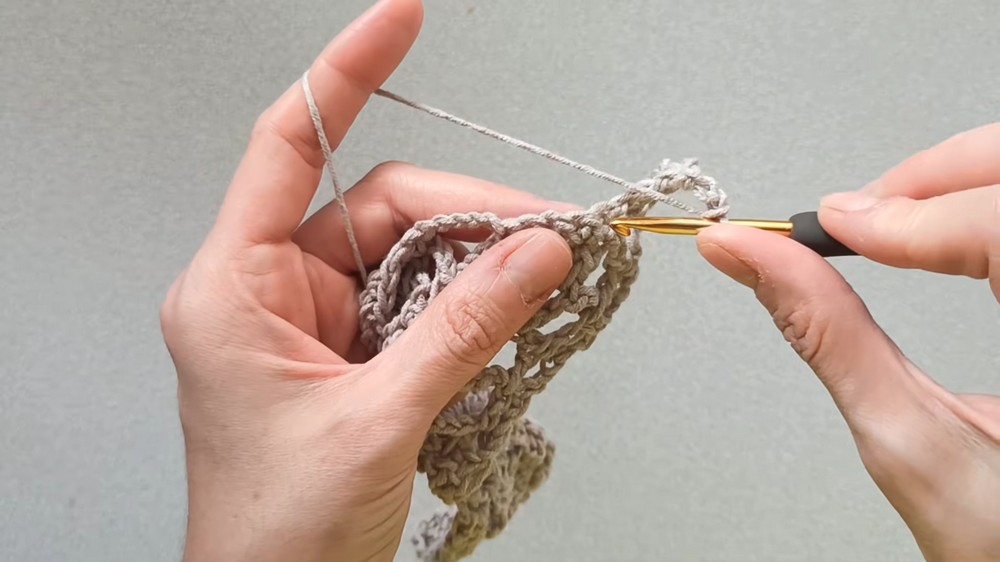
Repeat Rows 5, 6, and 7 consecutively for the remainder of the shawl. Each repeat naturally expands the shawl by adding more V-stitches and subsequent 5-dc shells to the sides, while the center continues with the 7-dc shell sequence to grow the point of the triangle.
Continue until the shawl reaches your preferred wingspan and depth.
Color Changes and Finishing
Working With Batik Yarn
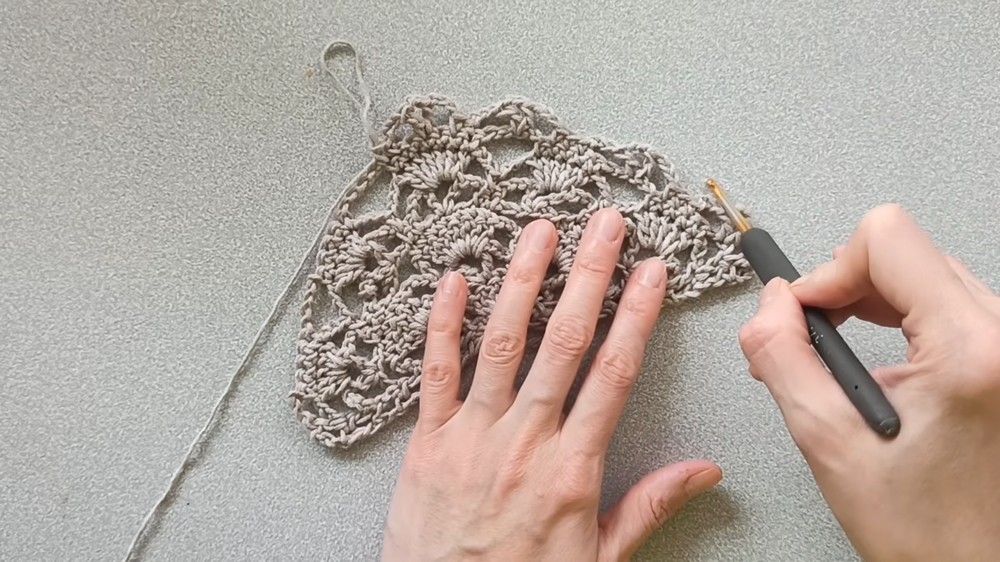
Because Alize Diva Batik is self-striping, the color transitions happen naturally as you crochet. If you decide to switch colors manually instead, pull the new color through the final loops of the last double crochet at the end of a row.
Fastening Off
Once the shawl reaches your desired dimensions, stop after a Row 6 or Row 7 repeat so the edges have a clean, scalloped shell or straight-chain finish. Cut the yarn leaving a 6-inch tail, then pull the tail securely through the final loop.
Weaving in Ends
Thread each loose tail onto a tapestry needle and weave it back and forth through the solid base stitches, such as the dc columns along the edges, to hide and secure the ends.
Blocking the Lace
For the peacock lace design to open up and drape beautifully, lightly wet block or steam block the finished shawl. Pin out the center point and side shells so the chain spaces sit cleanly.
Wearing and Sizing Ideas
The repeating structure makes it easy to stop at different stages depending on how you plan to wear the finished shawl. A shorter version can work as a bandana or neck cowl, while additional repeats create a larger triangle suitable for wrapping around the shoulders. The shape can also be styled around the waist as an accessory.
The pattern is versatile enough to let you decide the final dimensions while keeping the same central increase and repeating lace rhythm.