Crochet Autumn Shawl Pattern With Gradient Lattice Stitch
Create a lightweight autumn crochet shawl with an airy lattice stitch and a flowing gradient that makes each row feel like another shade of fall.
Crochet Shawl Pattern
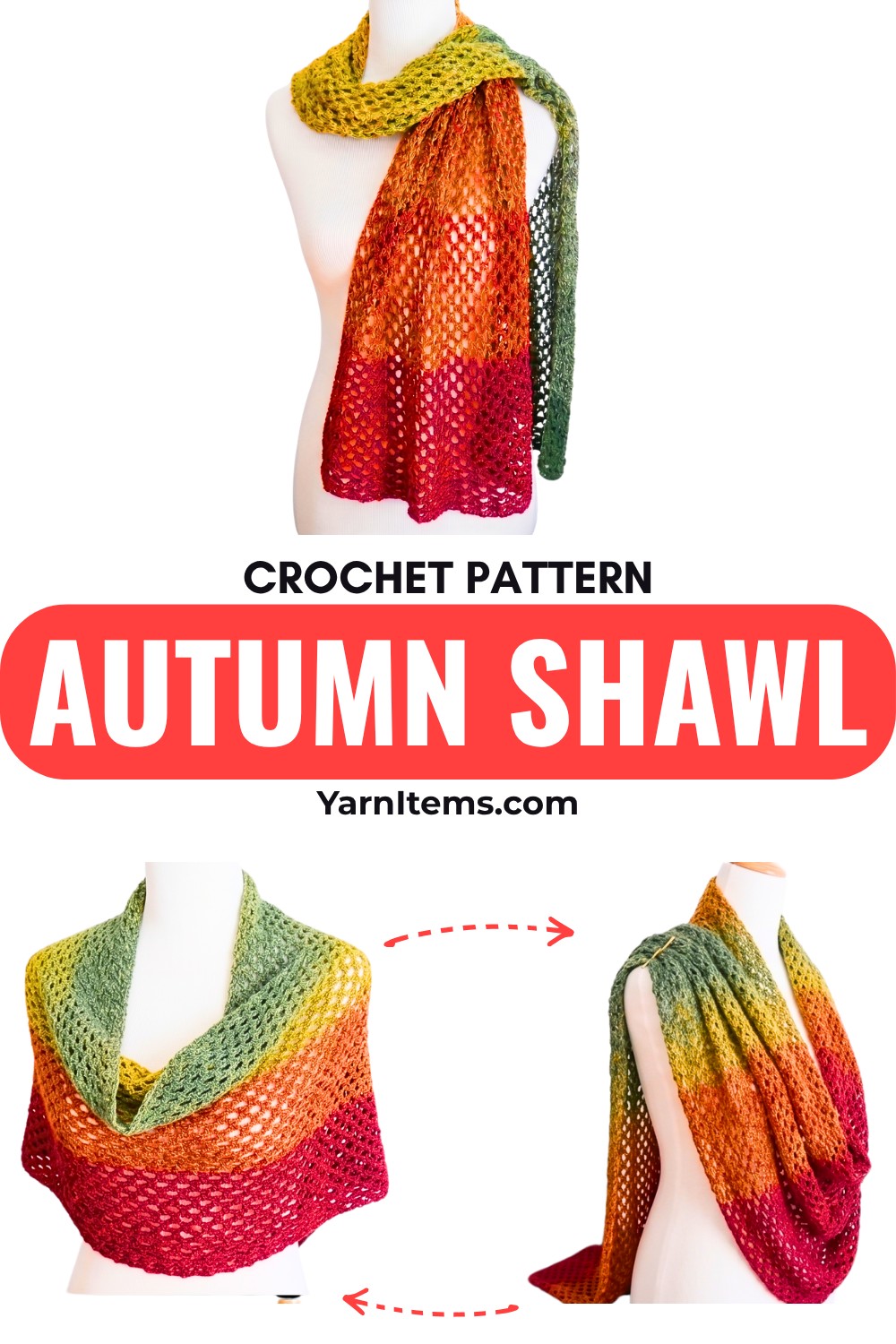
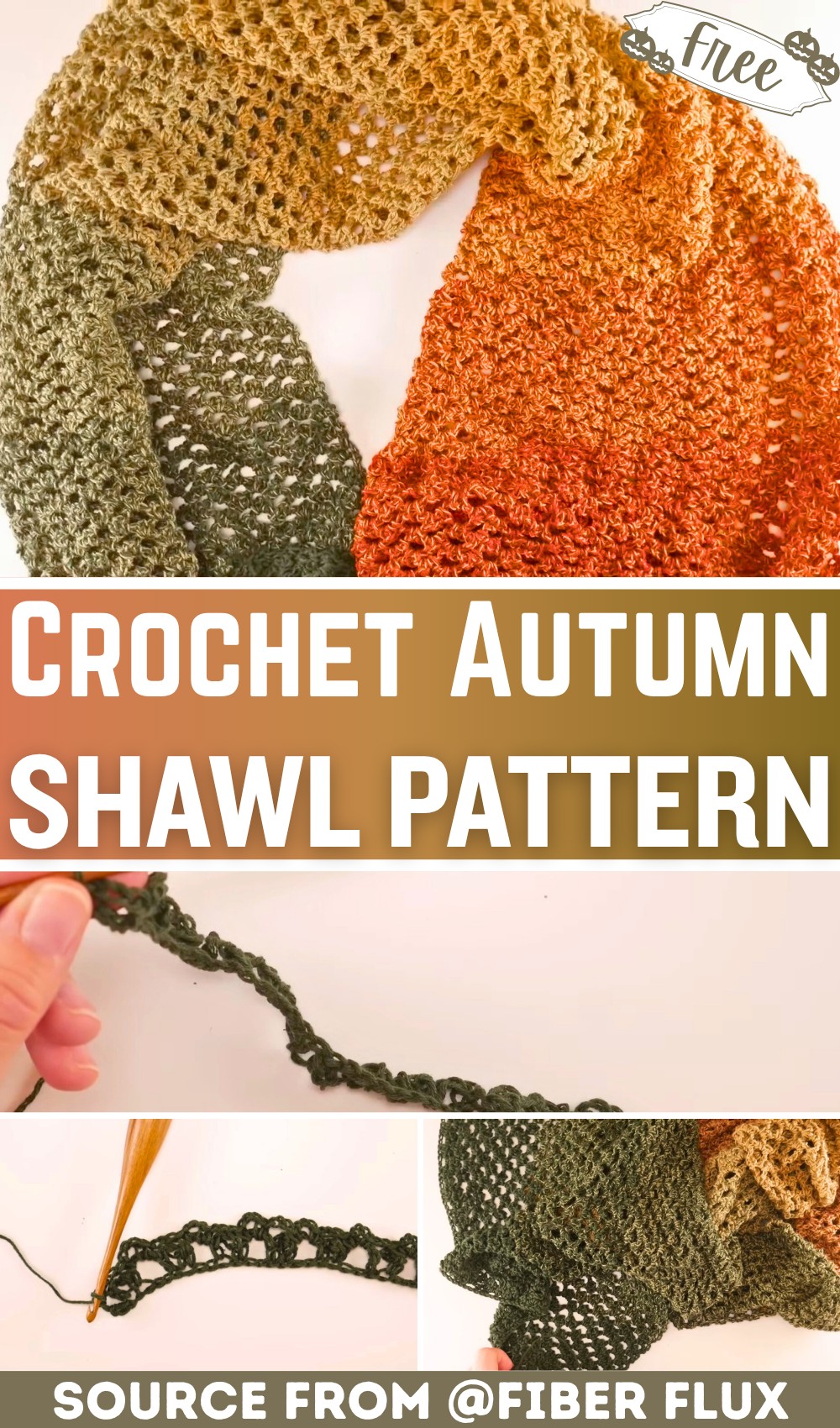
A lightweight shawl can be one of those crochet pieces that feel relaxing to make while still giving you something beautiful to wear. This autumn-inspired crochet design combines a simple open lattice stitch with a gradient yarn cake, creating a soft wrap that moves naturally through shades of green, gold, mustard, and rust.
The crochet pattern is built around a short repeating row, so once the stitch sequence becomes familiar, you can keep working without having to learn a complicated series of new stitches. The foundation chain determines the width, while repeating the main row controls the length, making it easy to adjust the shawl to suit the way you want to wear it.
Credit Fiber Flux
Materials & Tools Needed
- Yarn: 1 gradient yarn cake
- Twister by Hobbii, Orangery colorway
- 55% cotton / 45% acrylic
- Fine #2 yarn weight
- 250 g / 1,093 yards
- Crochet Hook: 4 mm (G)
- Tapestry Needle: For weaving in yarn ends
- Scissors
- Tape Measure: Useful for checking the finished dimensions and making size adjustments
Finished Size
The sample shawl measures approximately:
- Width: 21.5 inches
- Length: 60 inches
The open stitch pattern makes the finished fabric lightweight and easy to drape over your shoulders.
Customize the Width and Length
One of the easiest things about this shawl is how flexible the dimensions are.
To change the width, adjust the foundation chain in multiples of 4. Add or remove groups of four chains depending on whether you want a wider or narrower piece.
For a scarf-sized version, start with fewer chains. For a larger wrap, add more chains while keeping the same multiple-of-4 structure.
To change the length, simply continue repeating Row 2 until the shawl reaches the measurement you prefer.
Pattern check: Keep the foundation-chain multiple correct before beginning Row 1. Changing the starting chain without maintaining the 4-stitch repeat can affect how the lattice pattern lines up across the row.

Pattern Abbreviations
This pattern uses US crochet terminology.
- ch: Chain
- sc: Single crochet
- sp: Space
- sl st: Slip stitch
- RS: Right side
- WS: Wrong side
How the Shawl Is Constructed
Foundation Chain
- Make a slip knot and place it on your hook.
- Chain 100.
For a different width, use a foundation chain that is a multiple of 4.
Row 1: Create the Lattice Spaces
- Insert your hook into the 4th chain from the hook.
- Work 1 sc.
- Chain 3.
- Skip the next 2 chains.
- Work 1 sc in the next chain.
- Repeat the sequence of ch 3, skip 2 chains, sc in the next chain across the foundation chain.
- Finish with 1 sc in the final chain.
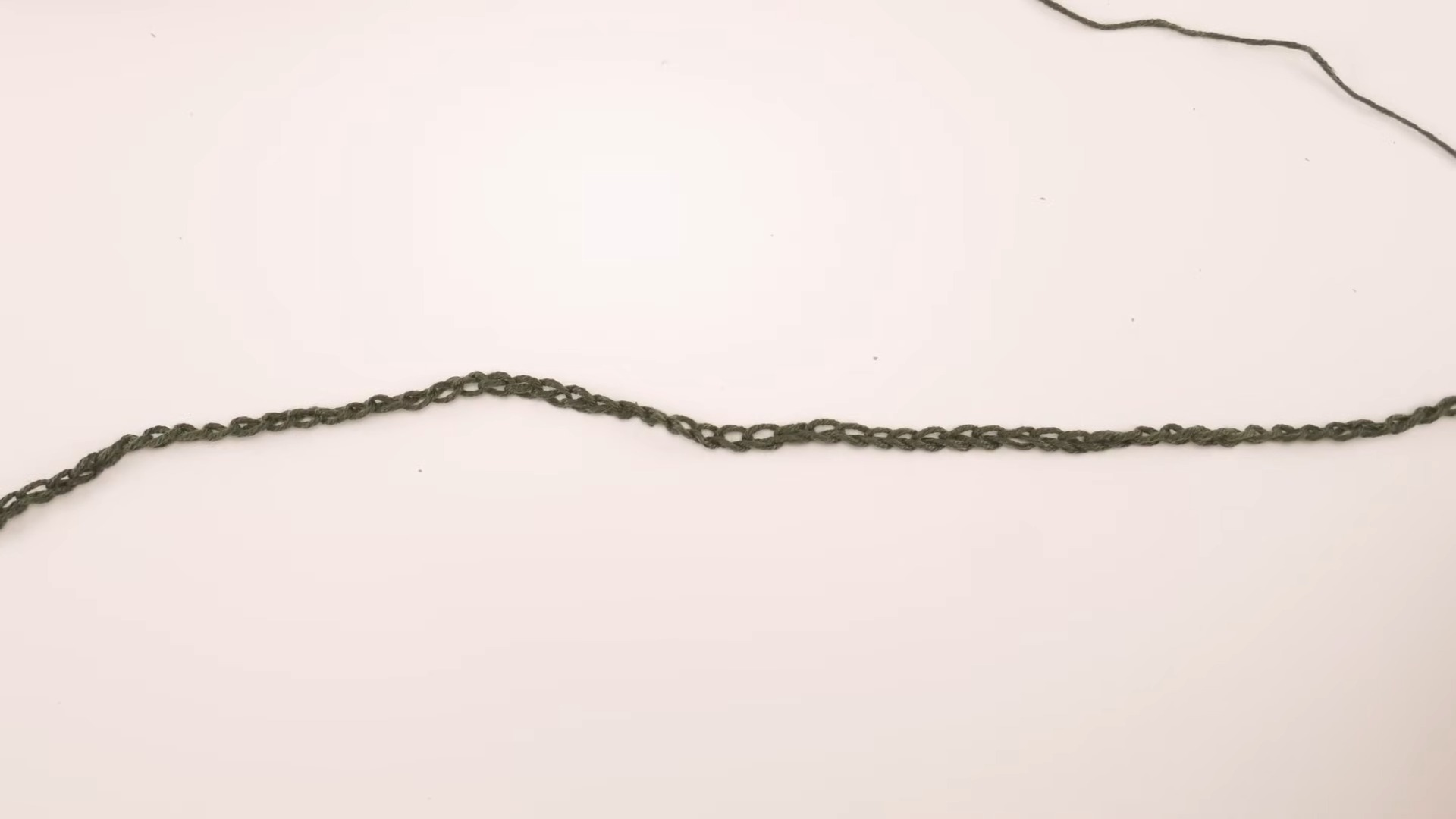
This row establishes the chain-3 spaces that you will work into on the following rows.
Check Your First Row
Before starting Row 2, look across the foundation row and make sure the chain-3 spaces are repeating evenly. If one space is missing or shifted, it will affect the lattice pattern in the rows that follow.
Row 2: Main Lattice Pattern
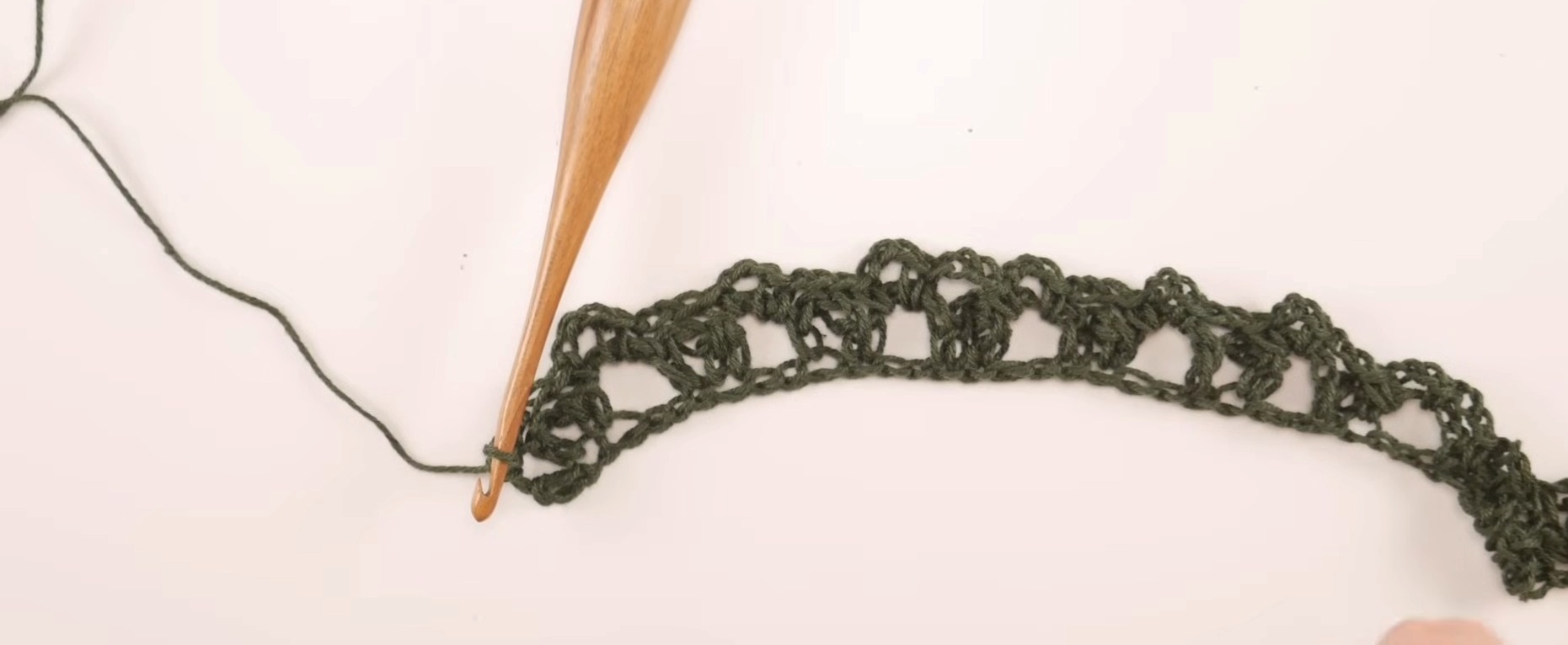
This is the only row you need to repeat for most of the shawl.
- Chain 3 and turn.
- Skip the first sc.
- Work 1 sc into the first ch-3 space.
- Chain 3.
- Work 1 sc into the same ch-3 space.
- Chain 3.
- Skip the next ch-3 space.
- In the following ch-3 space, work 1 sc, ch 3, 1 sc all in the same space.
- Continue this sequence across the row:
- sc, ch 3, sc in one ch-3 space
- ch 3
- Skip the next ch-3 space
- Continue until you reach the end.
- Finish with 1 sc in the turning-chain space.
Understanding the Repeat
The important part of this row is not to work into every chain-3 space. The pattern alternates between the spaces you use and the spaces you skip.
Once you recognize the sc, ch 3, sc group as the main repeat, the row becomes much easier to read.
Repeat Row 2
Continue repeating Row 2 until the shawl reaches your preferred length.
For the sample size, continue until the shawl measures approximately 60 inches long, or until the gradient yarn cake is nearly used.
You do not need to stop at a specific number of rows if you want a different length. Simply measure the shawl periodically and stop when it reaches the size you want.
Working With Gradient Yarn
The gradient yarn is one of the features that gives this shawl its autumn character. The sample moves gradually through shades such as:
Green → Mossy Green → Gold → Mustard → Rusty Red
Because the color changes are built into the yarn cake, there is no need to plan separate color-change rows.
As you approach a new color section, avoid cutting the yarn unnecessarily. Let the gradient transition naturally so the colors flow continuously through the lattice pattern.
If you do need to join or secure an end, try to weave it into the stitches where the surrounding yarn color is similar. This keeps the transition less noticeable.
Finishing the Shawl
When the shawl reaches the desired length:
- Fasten off the yarn.
- Leave a suitable yarn tail for weaving in.
- Thread the tail onto a tapestry needle.
- Weave the end through nearby stitches.
- Work back through the stitches in the opposite direction to secure it.
- Trim the excess yarn.
Repeat for any remaining loose ends.
Blocking the Shawl
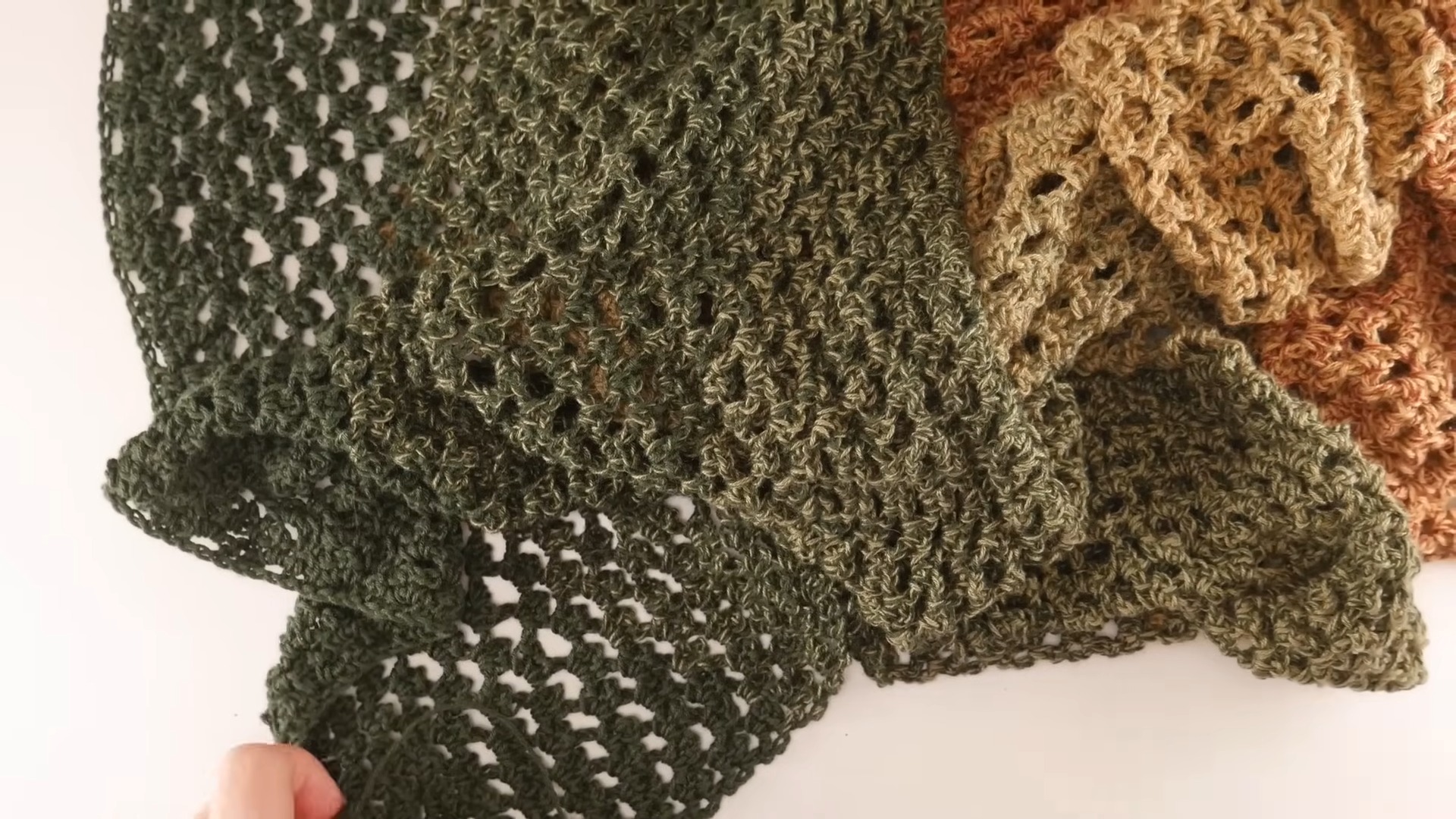
Blocking is especially useful for this open lattice design because it can help the spaces open up and give the shawl a more defined shape.
You can choose either wet blocking or gentle steam blocking, depending on the yarn manufacturer’s care recommendations.
After blocking:
- Shape the shawl evenly.
- Pay attention to the edges and corners.
- Allow the piece to dry completely before removing it from the blocking surface.
Blocking check: Do not stretch the fabric aggressively. The goal is to open and even the lattice rather than distort the stitches.
Styling Your Autumn Shawl
The finished shawl is light enough to wear in several ways. Drape it loosely around your shoulders when the weather is mild, or wrap it more closely around your neck like a scarf as temperatures fall.
The gradient colors also make it easy to pair with simple neutral outfits, allowing the changing shades to become the main feature of the look.
Final Thoughts
This autumn crochet shawl keeps the actual stitching simple while letting the yarn and open lattice texture create most of the visual interest. Once Row 2 becomes familiar, the piece settles into a comfortable rhythm, making it an enjoyable choice for relaxed crochet sessions.
For a different finished piece, adjust the foundation chain for width or continue the repeating row for extra length. Whether you keep the original autumn gradient or choose another colorway, the same simple construction gives you plenty of room to make the shawl your own.
Video Tutorial