Crochet Beaded Headband with Flower Ties and Scalloped Edging
Need a pretty headband with a braided center? This crochet design combines bead stitches, scalloped edges, and 50-chain floral ties for a soft, adjustable finish.
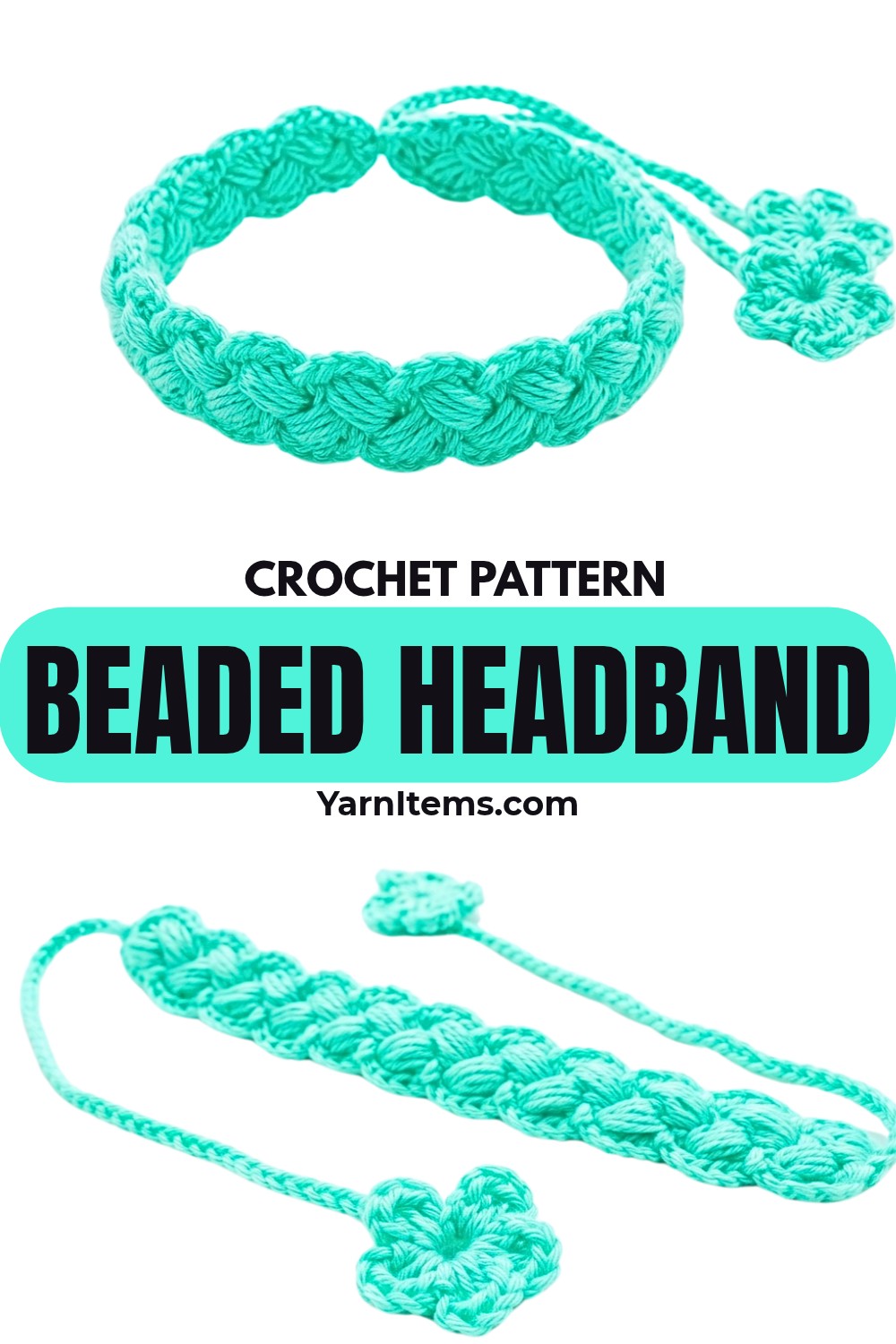
Soft crochet beads create a braided look at the center, while the scalloped edging gives both sides a delicate finish. The floral ties add a little extra charm and let the band sit comfortably behind the ears without relying on a fixed crochet headband size.
Designed with 4-ply cotton yarn and a 2.50 mm hook, the crochet pattern centers on a repeating bead stitch that is easy to extend or shorten. You will also learn how to shape the side edging, form each five-petal flower from the tie chain, and adjust both the main band and 50-chain ties to suit the wearer.
Credit Crochet & Crafts Therapy by Chompu
Materials & Tools Needed
- Yarn: Cotton soft yarn, 4-ply weight, in your preferred color
- Crochet Hook: 2.50 mm (Size 4/0)
- Tapestry/Yarn Needle: For weaving in ends
- Scissors
Finished Size & Customization
The main braided cord should sit comfortably across the top of the head from ear to ear. The 50-chain strings become the ties at the nape of the neck.
You can adjust the design in several ways:
- Main band length: Add or subtract bead stitches to make the center cord longer or shorter.
- Tie length: Change the 50-chain count if you want longer or shorter ties.
- Color: Use a contrasting shade for the scalloped edging or flowers by fastening off the main color and attaching the new yarn before beginning those sections.
Pattern Abbreviations
- ch: Chain
- sl st: Slip stitch
- dc: Double crochet
- hdc: Half double crochet
- st(s): Stitch(es)
- Bead Stitch Cluster (4hdc): Yarn over, insert the hook behind the post of the double crochet just made, yarn over and pull up a loop. Repeat this 3 more times for a total of 4 pull-ups. You will have 9 loops on the hook; yarn over and pull through all 9 loops.

Step-by-Step Crochet Pattern
Make the Main Bead Stitch Band
The center of the headband is formed from a repeating bead stitch. Each repeat starts with a double crochet and then builds the raised bead around that double crochet’s post. Keeping the pull-ups consistent will help the beads look similar all the way along the cord.
Begin the Foundation
Step 1: Start with a slip knot on your hook and chain 3 (ch 3).
Step 2: Yarn over, insert your hook into the very first chain you made. Pull up a loop, yarn over and pull through two loops, then yarn over and pull through the remaining two loops to complete 1 dc.
This first double crochet becomes the post around which the first bead stitch is made, so make sure you are working into the very first chain, rather than one of the later chains.
Form the First Bead Stitch
Step 3: Work 4 hdc pull-ups around the post of the double crochet you just made. To do this, yarn over, insert the hook from front to back around the post of the dc, and pull up a loop. Repeat this 3 more times.
You should now have 9 loops on your hook. Yarn over and pull firmly through all 9 loops to complete the first bead stitch cluster.
The multiple pull-ups create the raised, rounded section that gives the center its braided or beaded appearance. Try to keep the pull-ups at a similar height so the repeated beads remain even.

Continue the Bead Stitch Cord
Step 4: Chain 2 (ch 2).
Step 5: Work 1 dc into the top joining space of the previous bead stitch cluster.
This joining space is important because it positions the next double crochet directly after the completed bead. Working into the wrong area can interrupt the repeating center pattern.
Step 6: Work 4 hdc pull-ups around the post of the new double crochet, then yarn over and pull through all 9 loops on your hook.
Step 7: Repeat Steps 4 through 6 until the bead stitch cord reaches your desired length, typically from behind one ear to behind the other.

Length Check
Pause before starting the edging and place the cord across the top of the head. The finished center should reach comfortably from one ear area to the other without needing to stretch tightly.
If it feels too short, continue the bead stitch repeats. If it is already longer than needed, stop before adding another complete repeat. This is the easiest point to correct the length because the scalloped border has not yet been added.
Add the Scalloped Edging
Once the main bead stitch cord has reached the desired length, do not fasten off. The same working yarn will continue into the scalloped border.
The edging is made with repeated groups of ch 5 and sl st, placed into the spaces between the bead stitches. Follow the direction carefully so the border travels down one side, turns at the bottom, and then comes back up the opposite side.

Work Down the First Side
Step 1: Chain 5 (ch 5).
Step 2: Slip stitch into the space between the last two bead stitches on the side of the band.
This first slip stitch anchors the chain and creates the first scallop. Look for the open space between the bead sections rather than inserting the hook into the middle of a bead.
Step 3: Chain 5, then slip stitch into the space between the next two bead stitches. Repeat this (ch 5, sl st) sequence all the way down the first side of the headband.
Keep the chain-5 loops reasonably even. Consistent chains will help the scallops have a regular rhythm along the edge.

Turn the Bottom Corner
Step 4: When you reach the very first bead stitch at the bottom, slip stitch into the bottom-most base space to turn the work.
This small turn changes the direction of the edging. Make sure you reach the actual bottom-most base space before continuing, so the border does not begin climbing the opposite side too early.
Work Back Up the Other Side
Step 5: Chain 5, then slip stitch into the first space between the bead stitches on the opposite side of the band.
Step 6: Continue the (ch 5, sl st) sequence all the way up the second side. When you reach the top, slip stitch into the very top stitch to join the round.
At the end of this section, the beaded center should have a scalloped border running along both long sides.
Make the First Tie and Flower
The first tie begins directly from the top of the headband where the scalloped edging was joined. Its 50 chains provide the length needed to tie the headband at the nape of the neck.
Create the Tie
Step 1: From the top of the headband where you just joined, chain 50 (ch 50).
Do not shorten this chain unless you are intentionally customizing the tie length. The full 50-chain length is the stated starting measurement for the design.
Turn the End into a Flower
Step 2: Skip the first 4 chains from your hook. The 5th chain from the hook becomes the center ring for the flower.
This fifth chain is the key placement point. The remaining petals will all be worked into this same center chain.
Step 3: For the first petal, chain 2, work 2 dc, chain 2, and slip stitch into the same center chain.
Step 4: Repeat (2 ch, 2 dc, 2 ch, sl st) into that exact same center chain 4 more times.
You will have exactly 5 petals around the center.
Step 5: Fasten off, leaving a short tail for weaving.
Flower Check
Before moving on, look at the flower end of the tie. The five petals should all radiate from the same center chain. If one petal has been worked into a neighboring chain, it will sit out of line with the others, so check the center placement before weaving in the yarn tail.
Attach the Second Tie and Flower
The opposite end is finished in the same general way, but this side needs to be attached to the unfinished tip of the bead stitch band first.
Start at the Opposite End
Step 1: Turn the headband to the opposite, unfinished end. Insert your hook into the center tip of the bead stitch band and attach the yarn with a slip knot and slip stitch.
This attachment point keeps the second tie connected directly to the other end of the main band.
Make the Second Tie
Step 2: Chain 50 (ch 50).
Step 3: Skip the first 4 chains from the hook and use the 5th chain as the flower center.
Work the petal sequence (2 ch, 2 dc, 2 ch, sl st) a total of 5 times into that same center chain.
Step 4: Fasten off.
Secure the Ends
Thread the tapestry needle and carefully weave all loose ends into the back of the flowers and the base of the headband.
Take a moment to make sure the yarn tails are secured without pulling the flowers out of shape. Once the ends are woven in, snip away the excess yarn.
Final Fit Check
Place the finished headband across the top of the head from ear to ear and bring both floral ties toward the nape.
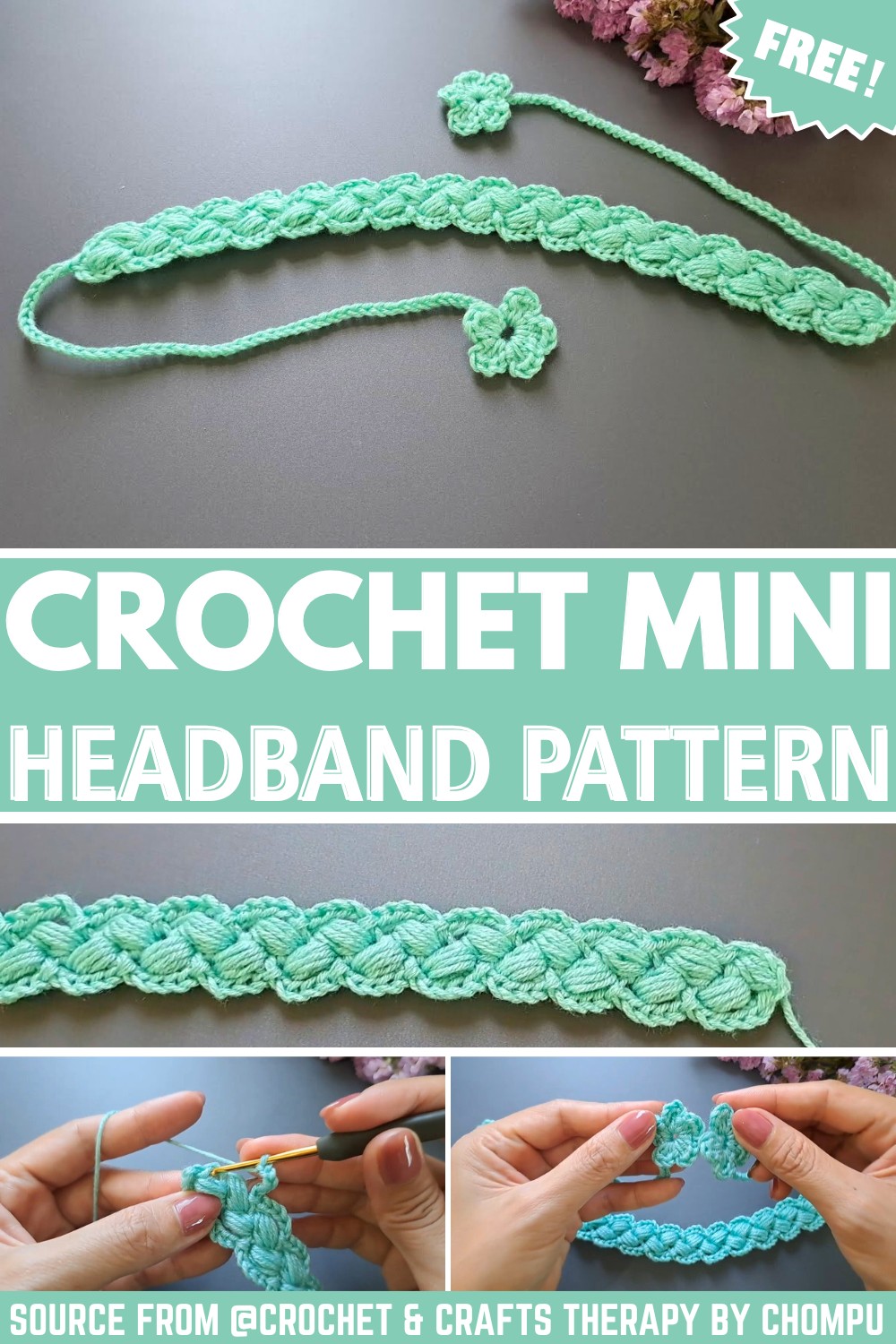
The center bead stitches should sit across the top of the head, the scalloped edging should frame both sides, and the two 50-chain strings should provide enough length to tie the headband comfortably.
If the center feels too short or long, the next version can be adjusted by changing the number of bead stitch repeats. For a different tie length, simply change the number of chains used for each string.
A Simple Finishing Tip
The raised bead stitches are the main feature of this headband, so even tension matters more here than trying to make every individual pull-up look perfectly identical. Keep each set of four pull-ups reasonably consistent and pull the yarn through the 9 loops firmly but without distorting the bead.
With the five-petal flowers at each end and the scalloped border framing the center, the finished headband has a braided texture with a soft, decorative finish that can be adapted for different ages and color combinations.