Crochet Star Sweater with Five-Point Panels & Custom Sleeves
Turn scrap yarn into this oversized star sweater, with dramatic five-point shaping, customizable colors, and sleeves that can be lengthened for your preferred fit.
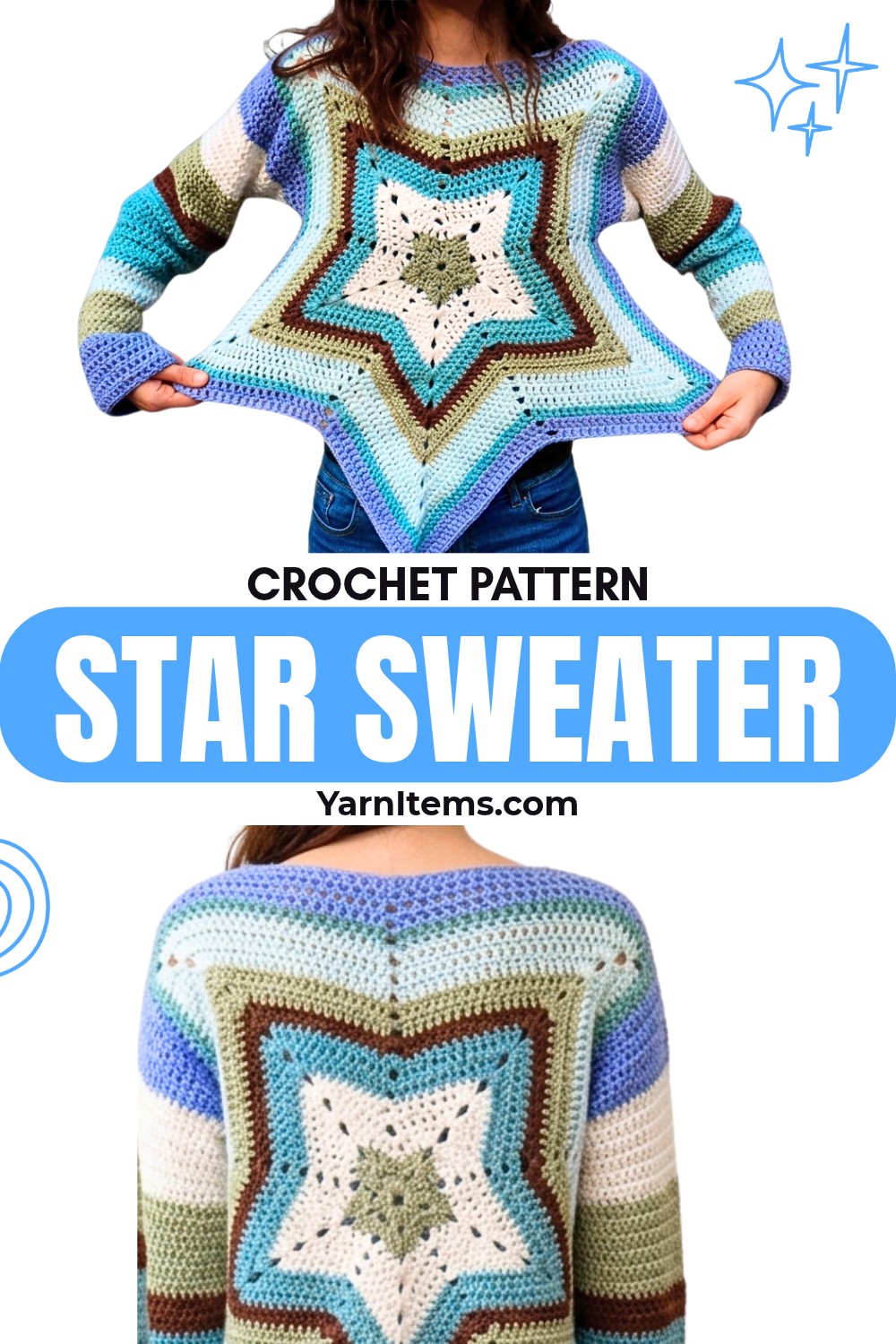
Blue, green, antique white, and brown scrap yarn can give this star-shaped crochet sweater playful color changes, while each panel grows outward from its center into five distinct points. Once two matching stars are joined, those points create shoulders, side shaping, and sleeve openings.
Size comes from crochet star-panel width rather than fixed garment measurements. Keep adding rounds until side valleys sit comfortably under your arms, then use loose slip-stitch seams so fabric keeps its relaxed drape. Sleeve length, color placement, and overall crochet star size can all be adjusted as you work.
Credit Calluna Crochet
Materials & Tools
- Yarn: Weight 4 medium/worsted acrylic yarn; creator uses scrap yarn in blue, green, antique white, and brown
- Hook: 5.0 mm crochet hook
- Scissors
- Tapestry needle: For weaving in yarn ends
- Stitch markers or bobby pins: For marking shoulder seams
How Size Is Determined
This sweater does not depend on one fixed finished measurement. Instead, two large star motifs determine overall width.
Continue adding rounds until each star is wide enough to cover your torso when held against your body. For fitting, place two upper points near your shoulders and check that side valleys rest comfortably beneath your arms.
Color placement is completely flexible. You can use one solid shade, alternate two colors, or introduce new scrap yarn for every round.
For cleaner color changes, switch shades near star points or at the bottom of sleeves. Those locations naturally hide joining areas and make color transitions less noticeable.

Abbreviations
- MR: Magic Ring / Magic Circle
- ch: Chain
- sl st: Slip stitch
- sc: Single crochet
- dc: Double crochet
- st(s): Stitch(es)
- Point / Increase: [3 dc, ch 3, 3 dc] worked in same space
Build First Star Panel
Make 2 identical star panels. If matching colors are important, follow identical color sequences on both panels.
Form Star Center
Round 1: Create MR, or ch 5 and sl st into first ch to form ring; ch 2, not counting as stitch; work 21 dc into MR; pull tail to close center hole; sl st into first dc to join; 21 dc total.
Check center before continuing. Pulling the ring firmly closes open space while still leaving enough room for next round to develop evenly.
Create Five Star Points
Round 2: Skip first st, which is stitch where joining sl st was made; sc in next st; skip next st; work [3 dc, ch 3, 3 dc] in following st to create first star point; skip next st, sc in next st, skip next st; work [3 dc, ch 3, 3 dc] in following st; repeat skip 1, sc, skip 1, point sequence until exactly 5 points are formed; sl st into first sc to join.
Each ch-3 space marks the tip of one star point. Keep those spaces easy to identify because every later round grows outward from these five points.
Color Change: If changing color, ch 1, cut yarn, pull tight, and weave end; attach new color to side of sc stitch closest to one point.

Expand Star Shape
Round 3: Sl st into next st, then ch 3, counting as first dc; work dc in next 2 sts; at ch-3 tip of point, work [3 dc, ch 3, 3 dc]; work dc in next 2 sts down opposite side of point; skip next 2 sts to form deep V-shaped valley between points; work dc in next 2 sts up following point; work [3 dc, ch 3, 3 dc] in point ch-3 space; repeat around as dc in next 2, skip 2, dc in next 2, point increase in ch-3 space; sl st to top of beginning ch 3.
Valleys should remain clearly defined. Skipped stitches create inward dips between points, while [3 dc, ch 3, 3 dc] keeps each point expanding outward.
Round 4: Sl st into next st; ch 3; work 3 additional dc before reaching point tip, giving 4 dc along slope; at ch-3 tip, work [3 dc, ch 3, 3 dc]; work 4 dc down opposite slope; skip 2 sts in valley; work 4 dc up next slope; continue around using 4 dc, point increase, 4 dc, skip 2 sequence; sl st to top of beginning ch 3.
Each round adds 2 more dc along each side of every point. This gradual increase is what makes star panel expand without losing its five-point outline.
Continue Growing Star
Round 5: Sl st into next st; ch 3; work dc in next 5 sts, giving 6 total sts along slope including beginning ch 3; work point increase in tip; work 6 dc down opposite slope; skip 2 sts in valley; repeat around.
Round 6 and onward: Continue same growth sequence, adding exactly 2 more dc on each side of every star point per round; Round 6 has 8 dc along each slope, Round 7 has 10 dc, and continue increasing by 2 per side with every new round.
Keep point increases centered in ch-3 tip spaces and continue skipping 2 valley stitches. If point tips begin looking uneven, check that increases remain in ch-3 spaces before adding another round.
Check Star Size Before Making Second Panel
Stop only when star panel reaches desired garment width. Hold two upper points near your shoulders and let side valleys fall toward your underarms.
Side valleys should rest comfortably beneath arms rather than sitting too high or pulling tightly across torso. If more width is needed, add another full round around star before moving to assembly.
Make second star panel using exactly same number of rounds. Matching round counts will make shoulder and side joining much easier.

Join Shoulders and Shape Neck Opening
Lay both star panels flat against each other with edges aligned. Upper two points become shoulders, while valley between those points creates neck opening.
Use stitch markers or bobby pins to mark where the neckline should end and the shoulder seam should begin.
Marking: Count stitches from each point tip down toward shoulder marker; use identical count on left and right sides, such as 15 stitches. Repeat matching placement on both panels.
Symmetrical marking matters here because even one extra stitch on one shoulder can shift neck opening toward one side.
Shoulder Join: Insert hook through marked stitch on both front and back panels; pull yarn through and ch 1 to secure; keep tension very loose and work sl st through both panels upward along slope toward point tip; at top, work sl st directly beneath ch-3 spaces of both panels.
Loose tension allows shoulders to drape rather than becoming stiff or gathered.
Repeat same shoulder joining process on opposite side.
Add Sleeves Directly to Armholes
Sleeves are worked around armholes rather than made separately. Each sleeve follows slope of star panel from shoulder toward underarm and back upward.
Sleeve Start: At point where shoulder seam ends beneath ch-3 space, ch 3 to begin sleeve.
Round 1: Separate front and back panels; work down back panel first by placing 1 dc in every stitch along slope until reaching 2 skipped stitches at underarm valley; do not crochet into 2 skipped valley stitches; fold piece over and jump directly to front panel, placing 1 dc into stitch immediately beyond valley gap; work dc in every stitch up front-panel slope until returning to starting ch-3; sl st to top of ch-3 to close round.
Skipping valley stitches keeps sleeve opening connected to star shape instead of filling in deep side dip.
Next Sleeve Rounds: Ch 3; work 1 dc in every stitch around; at underarm joining area, place 1 dc directly into center connector piece to smooth any uneven gap; continue around; sl st to end of round.
Repeat sleeve rounds until desired sleeve length is reached. Approximately 40 rows can be used as reference for long sleeves, but final length should be based on preferred fit.
Hide Sleeve Color Changes
When changing colors on sleeves, fasten off and attach new color at bottom underarm area. This places joining seam beneath arm, making color transition less noticeable when sleeve is worn.
Continue until first sleeve reaches desired length.
Repeat complete shoulder and sleeve process for second arm.

Close Sweater Sides
Once both sleeves are complete, align front and back star panels carefully.
Side Seam 1: Go to side point directly beneath first sleeve; insert hook under ch-3 space of both front and back panels; pull yarn through and ch 1; keeping tension very loose, sl st front and back panels together upward along slope until reaching underarm and bottom of sleeve; fasten off.
Side Seam 2: Repeat same process on opposite side.
Keep both side seams equally positioned. Matching seam placement helps preserve balanced star points and keeps front and back panels aligned.
Finish and Shape Fabric
Weave Ends: Use tapestry needle to weave in every loose yarn end securely throughout sweater.
Turn Right Side Out: Turn entire sweater so slip-stitch seams sit inside garment. This hides side and shoulder joining work for cleaner outside appearance.
Why Blocking Matters for Star Shape
Blocking is highly recommended for this design because large star points can curl, bunch, or appear bulky immediately after crocheting.
Lightly steam block or wet block sweater, allowing fabric to settle naturally. Pay particular attention to five star points, side valleys, shoulder slopes, and sleeve edges.
Do not pull points aggressively while blocking. Shape them gradually so each point becomes flatter and more defined without stretching fabric unevenly.
After blocking, star panels should drape more naturally and large points should sit flatter against body.
Final Fit Check
Before wearing, check:
- Both shoulder seams have matching stitch counts
- Neck opening sits comfortably between upper star points
- Side valleys rest beneath arms
- Sleeve lengths match
- Side seams remain loose enough for natural drape
- Color changes follow intended sequence
- Star points lie evenly after blocking
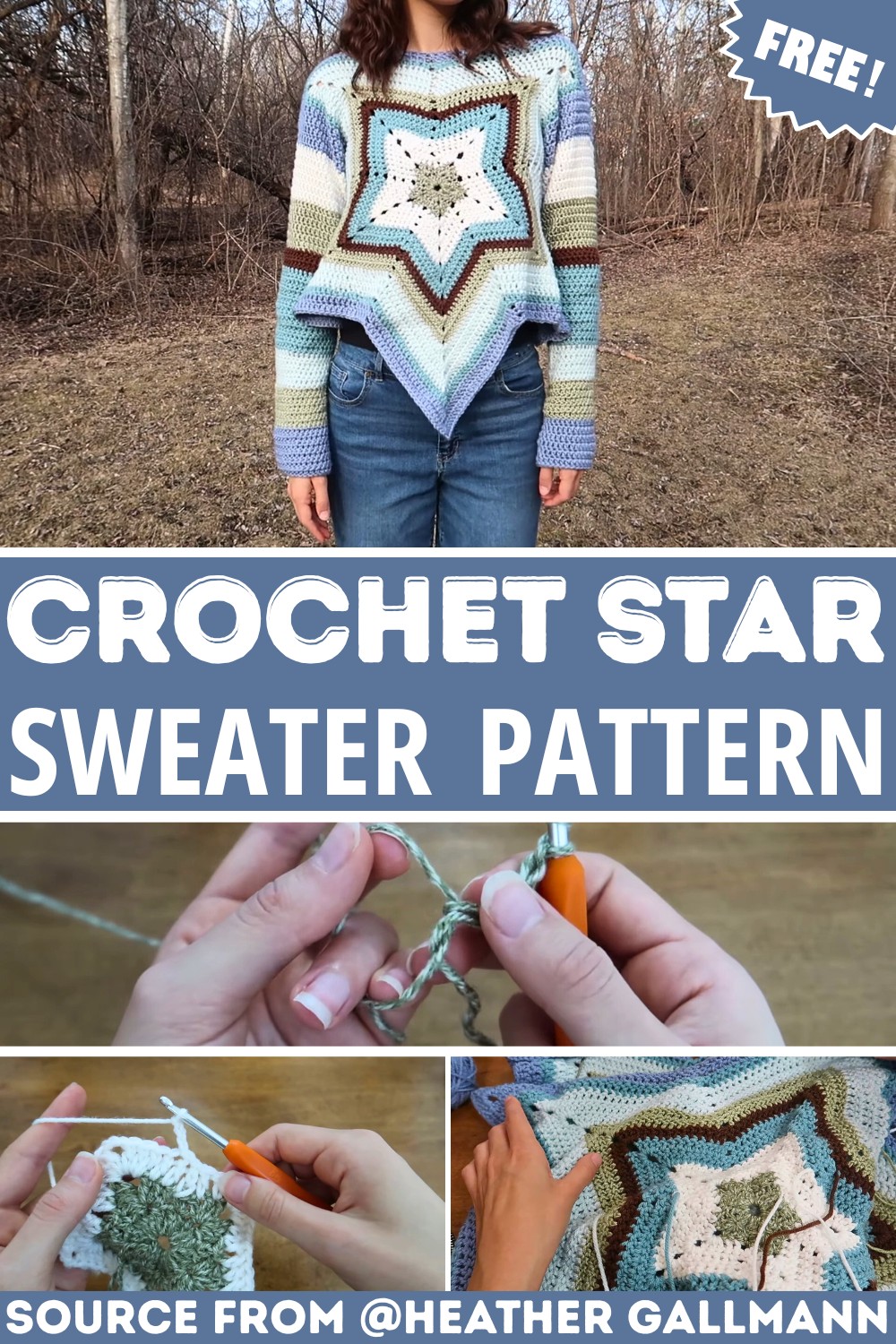
Final sweater has oversized star shaping with five dramatic points, customizable scrap-yarn color placement, and sleeves that can be kept short or extended for fuller coverage.