Stylish Crochet Sweater Tutorial: Easy-to-Make Cozy Design
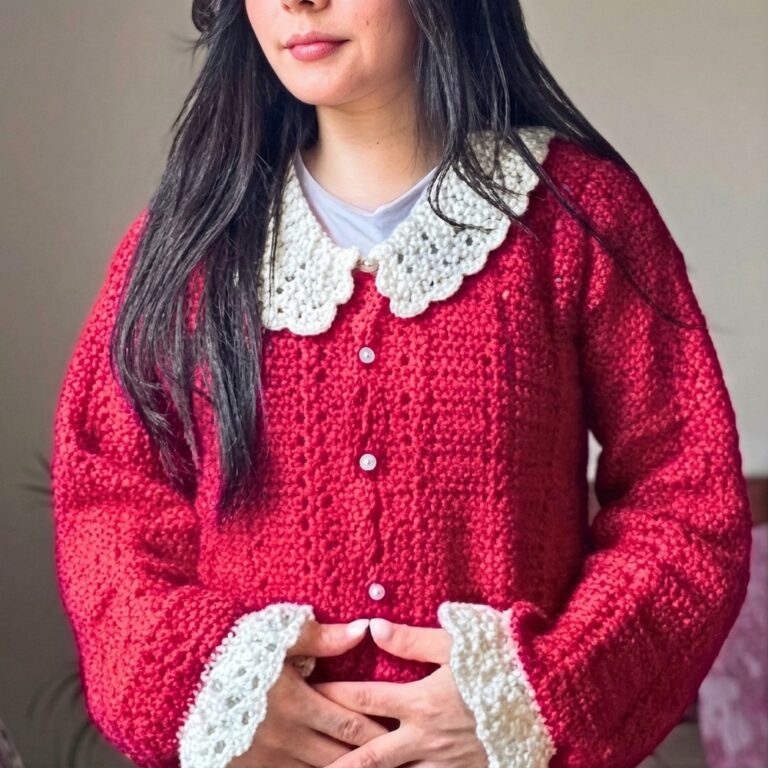
This crochet sweater is the perfect mix of comfort and fashion. This sweater is simple yet stylish, making it a wearable piece that looks great for any occasion, whether relaxing at home, heading out, or layering for chilly weather. With its soft blend of cotton and acrylic yarn, it feels just as good as it looks. The Crochet Sweater’s neat design and cozy feel make it a timeless choice for anyone who loves handmade apparel.
Stylish Crochet Sweater

The process of crocheting this sweater is creative and straightforward, ideal for beginners looking to make something useful and beautiful. You’ll create five main pieces: the back, two front panels, and two sleeves. Once they’re joined together, you’ll finish the edges and cuffs for a polished look. The stitch pattern gives the sweater a textured and elegant finish, so it’s as fun to make as it is to wear.
Step-by-Step Pattern
Materials:
To create your perfect crochet sweater, you will need the following materials:
- Yarn: 45% cotton, 55% acrylic blend, 50g (102m) per skein.
- Crochet Hook: 4mm.
- Scissors
- Tapestry Needle (for weaving in yarn ends and seaming pieces together).
Optional: Stitch markers to help keep track of your starting points for repetitive rows.

Pattern Instructions:
Step 1: Make the Foundation Chain
- Begin by making a chain (ch), using pairs of chains + 1 additional chain, according to the width of the piece needed (this is discussed in the video tutorial).
- For the back piece, chain the required number of stitches for the width of your back.

Step 2: Work Alternating Rows of Stitches for Texture
- Make 1 single crochet (sc) in the second chain from the hook, then sc across all stitches until the end of the row.
- Chain 2 and turn your work.
- Skip 1 stitch, make 1 half double crochet (hdc), then make 1 extended hdc (Ehdc) in the previous space.
- Continue repeating this sequence of hdc and extended hdc across the row until the last stitch. In the last stitch, make a regular hdc without skipping a stitch.
- Chain 1 to turn and begin the next row.
- For the next row, make single crochets (sc) worked only in the front loops.
- Continue alternating rows of single crochets and rows of half double crochets until the desired length of your piece is achieved.
Step 3: Create Sweater Components
Once the base pattern is complete, you need to create the following:
- 1 back panel: This will make up the back of the sweater.
- 2 front panels: These make up the two sides of the sweater’s front. They should be narrower than the back piece for an open cardigan style.
- 2 sleeves: Measure the length of your arms for this step.

Step 4: Assemble the Sweater
- Join the sides: Use a tapestry needle to seam the sides of the front panels to the back panel, leaving gaps for the armholes.
- Join the shoulders: Sew together the tops of the sweater for the desired shoulder seam width.
Step 5: Attach the Sleeves
- Sew the sleeves to the open armhole spaces. Ensure the seam is even on both sides to allow a smooth transition between the body and the sleeves.

Step 6: Finish the Cuffs with Ribbing
- For each cuff, chain 10 to start.
- Chain 1 for turning, then work 10 hdc in the back loops only.
- For a fitted design, use 1 slip stitch and decrease 3 stitches evenly along the sleeves when working the next row.
- Continue this sequence until the cuff is the desired circumference. Secure ribbing with a slip stitch.
Step 7: Add Edging for Waist, Openings, and Neck
- Using the same ribbing stitch pattern (hdc in the back loops), create an edging around the waist, neck, and front edges of the sweater.
- Decreases are not necessary for these sections unless you prefer a more fitted look.
- Finish with a slip stitch to secure and tie off the yarn at the end of your work.

Final Touches:
- Weave in all loose ends with the tapestry needle.
- Block your sweater for a neater and more professional finish.
Pattern Question:
Q: How do I adjust the pattern to fit different sizes?
A: Measure your body and adjust the starting chain in pairs plus 1 as per your size. Refer to the video description for further variations in measurements.