Crochet Cropped Sweater Pattern with Colorful Mesh
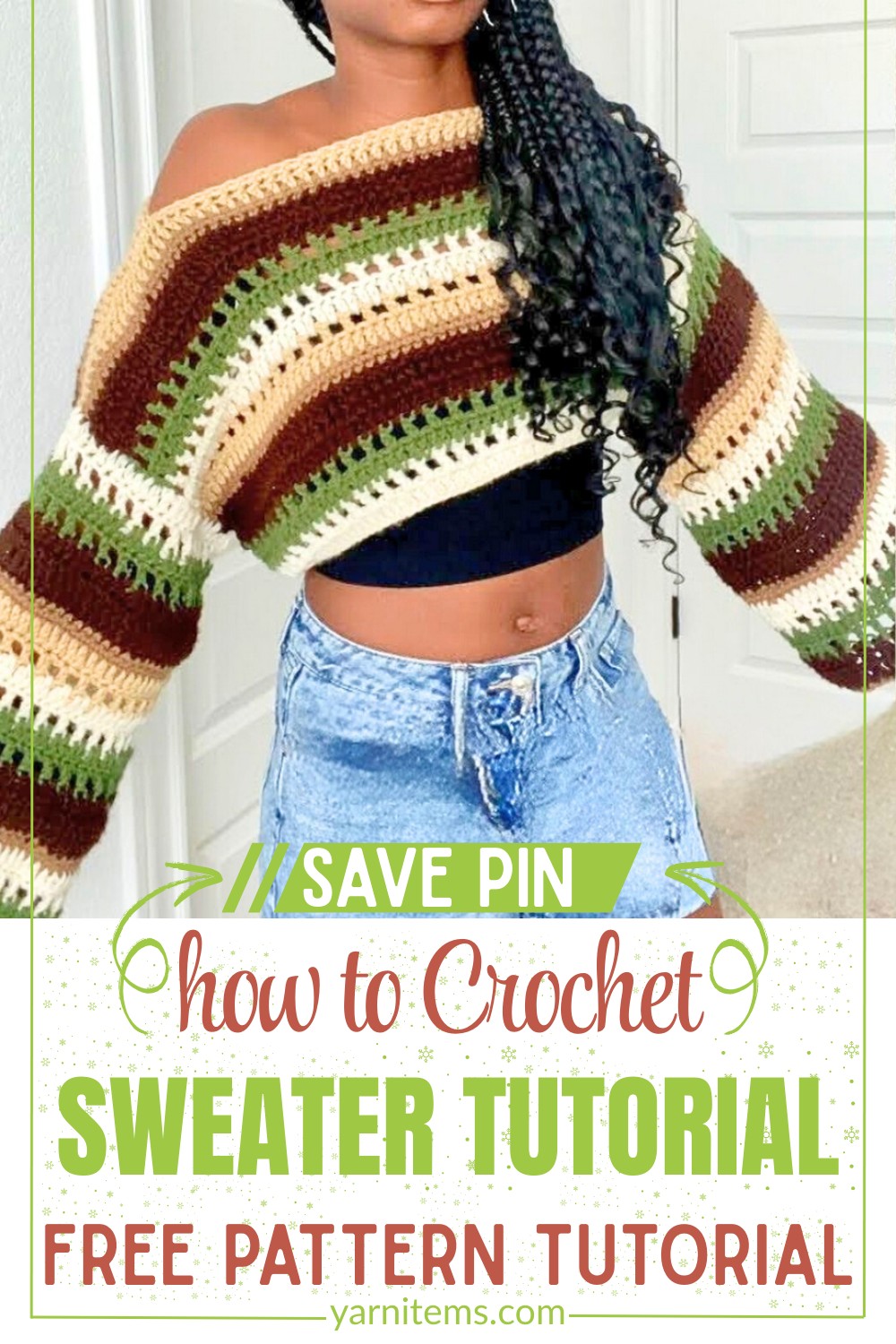
Bold stripes and airy mesh give this cropped crochet sweater its relaxed look, while made-to-measure panels make width and sleeve length easy to adjust.
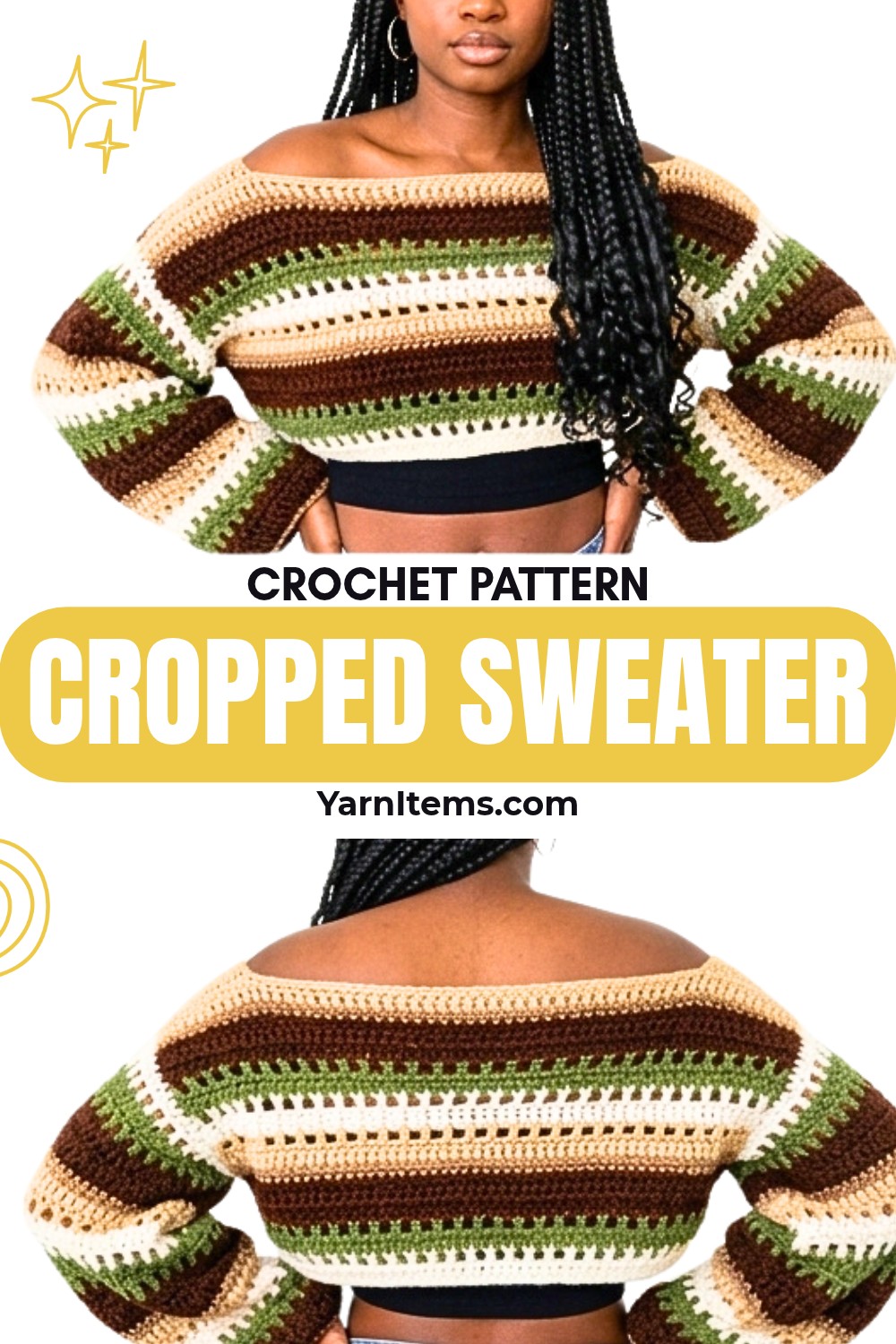
Color changes and alternating stitch textures give this cropped crochet sweater its playful look without requiring complicated shaping. Solid double crochet bands, open mesh rows, treble crochet texture, and single crochet sections create visible changes across each panel.
Start by measuring your shoulder width so your foundation chain fits from left shoulder to right shoulder. Once both panels reach your preferred torso length, simple shoulder and side joins create crochet armholes, while sleeves are worked directly around those openings and can continue until wrist length feels right.
Credit Azariah Crochets
Materials & Tools Needed
- Yarn: Weight 4 Acrylic Yarn; creator uses Red Heart Super Saver and Mainstays Acrylic Yarn from Walmart in multiple colors, including White, Green, Brown, and Dark Brown/Black
- Hook: 5.5 mm crochet hook
- Stitch markers
- Scissors
- Darning or tapestry needle
Measure Your Sweater Width
This sweater is completely made-to-measure.
Start by creating an even number of chains until chain stretches comfortably from your left shoulder to right shoulder. Hold chain across your shoulders before beginning Row 1.
Foundation chain needs to be even because later mesh sections depend on consistent skip-one, chain-one spacing.
For reference, creator used 64 chains.
Body length is intentionally cropped. Repeat pattern until front and back panels reach desired torso length rather than stopping at fixed row count.
Sleeves are also adjustable. Since they are worked directly around armholes, you can continue repeating sleeve rows until they reach preferred wrist length.
Pattern Abbreviations
- CH: Chain
- ST(S): Stitch(es)
- SC: Single crochet
- DC: Double crochet
- TR: Treble crochet
- SL ST: Slip stitch
- REP: Repeat
- GAP / CH-SPACE: Chain-1 space created in mesh rows
- YO: Yarn over
Treble Crochet
Yarn over twice, insert hook into stitch, pull up loop, yarn over and pull through 2 loops three times.

Color Changes Without Extra Finishing
Color changes are part of visual rhythm, so keeping joins secure and tails controlled will make later finishing much easier.
At end of row, pull new yarn color through final loops of last stitch to finish it. Tighten previous yarn, cut old working yarn, then tie new and old tails together using secure double knot.
Whenever possible, weave tails in while crocheting. Hold cut tails flat against top of stitches in next row and crochet directly over them. This keeps loose ends controlled and reduces finishing work later.

Create Body Panels
Make 2 identical panels.
Each panel follows same sequence of solid rows, mesh rows, and textured stitch sections. Keep row edges straight and make sure turning chains are placed consistently so both panels match when joined.
Foundation: Start with slip knot; CH an even number of stitches until chain reaches from left shoulder to right shoulder; creator uses 64 chains for reference.
Row 1 – Solid DC: YO, skip first 2 chains on hook, insert hook into 3rd chain and work 1 DC; continue working 1 DC in each chain across entire row.
This first solid row establishes width and gives mesh sections later in pattern stable stitches to work into.
Row 2 – Mesh: CH 3, turn; skip first DC stitch and work DC into second ST; CH 1, skip 1 ST, DC into next ST; REP across entire row; place final DC into final stitch. With 64-chain foundation, this creates 31 gaps.
Check mesh spacing before continuing. Each open gap should remain clearly visible without loose or oversized loops.
Row 3 – Solid DC / Color Change: Attach second color, such as Green; CH 2, turn; work 1 DC into first gap/ch-space, then 1 DC on top of next DC stitch; REP this sequence across; place final DC directly into top loop of CH-3 from previous row.
Working into both gaps and DC stitches fills mesh row while preserving color separation.
Row 4 – Mesh: CH 3, turn; skip first ST, DC into second ST; CH 1, skip 1 ST, DC into next ST; REP across.
Row 5 – Solid DC / Color Change: Attach third color, such as Brown; CH 2, turn; work 1 DC in gap and 1 DC on top of next DC stitch; REP across; finish with 1 DC in top of turning chain.
Row 6 – Treble Crochet: CH 4, turn; work 1 TR into first stitch and 1 TR into each stitch across entire row.
Treble stitches create taller texture here, making this band visibly different from surrounding double crochet sections.

Row 7 – Single Crochet / Color Change: Attach fourth color, such as Dark Brown or Black; CH 1, turn; work 1 SC in each stitch across.
Row 8 – Single Crochet: CH 1, turn; work 1 SC in each stitch across.
Two single crochet rows create shorter, denser texture before next color section.
Row 9 – Solid DC / Color Change: Attach new color; CH 2, turn; work 1 DC in each stitch across.
Row 10 – Solid DC: Continue with same color; CH 2, turn; work 1 DC in each stitch across.
Row 11 – Mesh: CH 3, turn; skip first ST, DC into second ST; CH 1, skip 1 ST, DC into next ST; REP across.
Repeat Body Pattern
After Row 11, repeat Rows 2 through 11 consecutively to build panel length.
Because sweater is cropped, compare panel length against your torso rather than counting toward fixed finished measurements. Stop once front and back reach desired crop.
When reaching final pattern section, finish with solid edge instead of standard mesh Row 11.
Clean Final Edge
Once desired length is reached, stop after Row 10.
Final Row: CH 1, turn; work 1 SC into each stitch across entire row; CH 1, cut yarn, and pull through to tie off.
This solid SC finish gives bottom edge cleaner definition than ending directly with mesh.
Make second panel using identical row sequence and matching finished length.
Join Front and Back
Place front and back panels together with right sides facing each other inside, so textured right sides of stitches are touching.
This positioning hides seam work inside sweater once garment is turned right-side out.
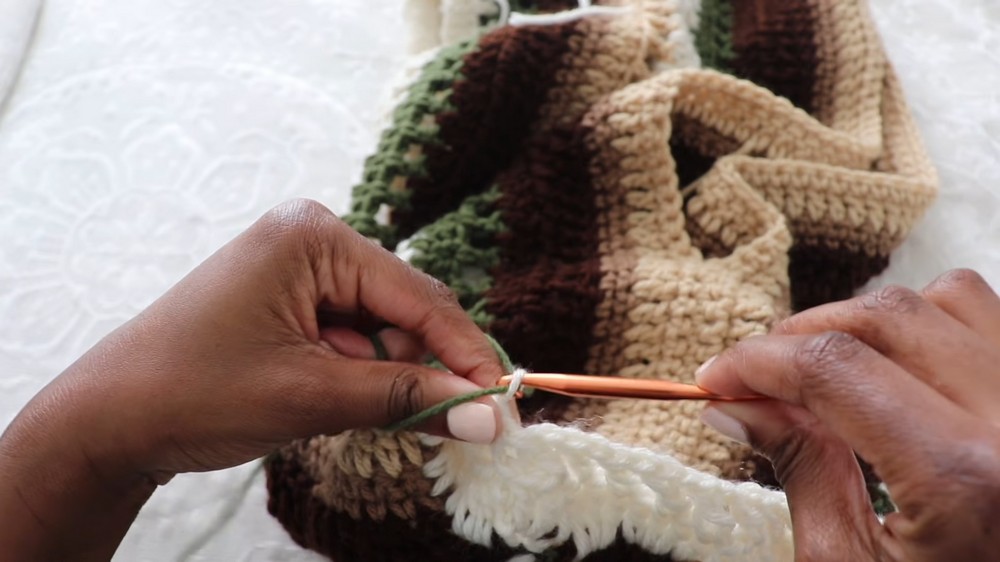
Join Shoulders
Create slip knot on hook.
Shoulder Seam 1: Insert hook through outer top corners of both panels; work 14 SC through both panels, moving inward toward neck; CH 1, cut yarn, and tie off.
Shoulder Seam 2: Repeat exact 14-SC joining process on opposite shoulder; CH 1, cut yarn, and tie off.
Keep shoulder joins even. Since sleeves will later be worked directly from armholes, uneven shoulder positioning can affect how sleeve opening sits.
Close Lower Side Seams
Side seams close body only below armhole, leaving upper section open for sleeves.
Side Seam 1: Create slip knot; insert hook at bottom corner through both panels; work 10 SC upward along side to secure lower section; CH 1, cut yarn, and tie off.
Large open section above these 10 SC becomes armhole.
Side Seam 2: Repeat same 10-SC joining process on opposite side.
Turn Sweater Right-Side Out
Turn entire sweater right-side out.
Shoulder and lower side seams should now sit inside sweater, leaving outer surface clean.
Before starting sleeves, check both armholes for similar size. Matching openings will help keep sleeve length and drape consistent.
Add Sleeves Directly to Armholes
Make 2 sleeves.
Sleeves are worked in joined rounds directly around armhole openings. Keep spacing even when inserting DC along side edges.
Round 1 – Solid DC Base: Create slip knot; insert hook into bottom of armhole gap and pull slip knot through; CH 2; work DC stitches evenly around entire armhole opening; place stitches into gaps or along stitch sides as needed, spacing them evenly so fabric does not bunch or stretch excessively; creator reaches 56 DC stitches around armhole; SL ST into top of first DC to join.
Do not force stitches into every visible edge space if doing so makes armhole tight. Even distribution matters more than placing stitches mechanically into every point.
Round 2 – Mesh: CH 3; skip first stitch, DC into second stitch; CH 1, skip 1 ST, DC into next ST; REP completely around armhole; SL ST into top of beginning CH-3.
Mesh round should visually match mesh sections from body panels.
Round 3+ – Solid DC / Color Change: Attach next color; CH 2; work 1 DC into chain space and 1 DC on top of next DC stitch; continue around sleeve; SL ST to join.
Continue sleeve using same sequence as body pattern, repeating Rows 2 through 11 as sleeve rounds.
Keep joined-round sequence consistent so color bands and stitch textures remain recognizable.
Continue until sleeve reaches desired wrist length. Because acrylic yarn can relax slightly during wear, check sleeve length against your arm before final fastening.
Sleeve Finish: CH 1, cut yarn, and tie off.
Repeat exact sleeve process for second armhole, using same stitch count and row sequence.
Adjust Neckline
Neckline can stay wide for relaxed, off-the-shoulder styling or be narrowed for more standard coverage.
Optional Neckline Adjustment: Thread darning needle and sew 10 to 12 stitches together on both sides of top neckline.
Try sweater on before tightening neckline fully. This lets you judge how much shoulder exposure you want without accidentally making opening smaller than intended.