How to Crochet a Textured Cable Stitch Sweater
Raised crochet cables give this made-to-measure sweater a classic knitwear look, while adjustable ribbing and sleeve lengths make it easy to personalize.
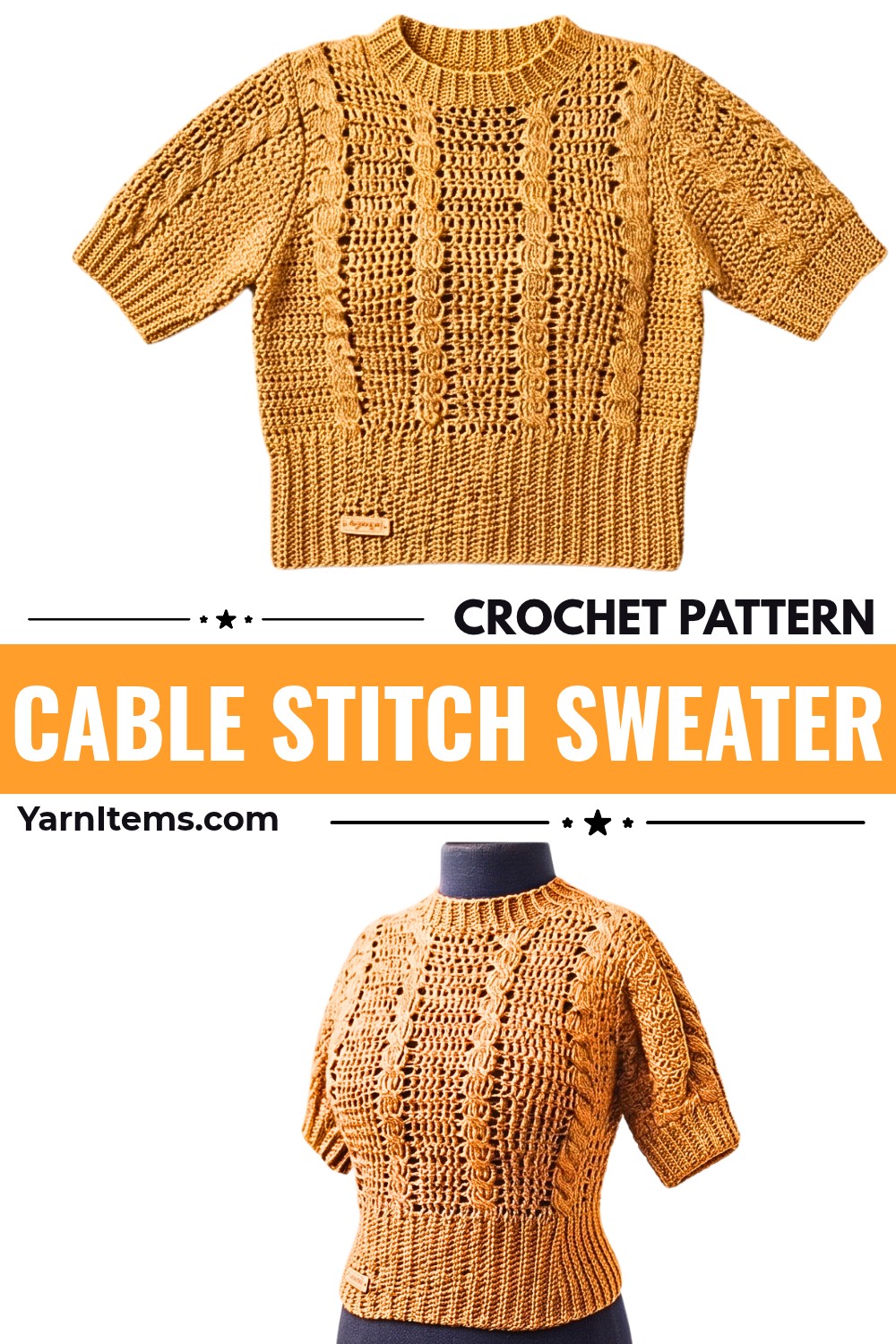
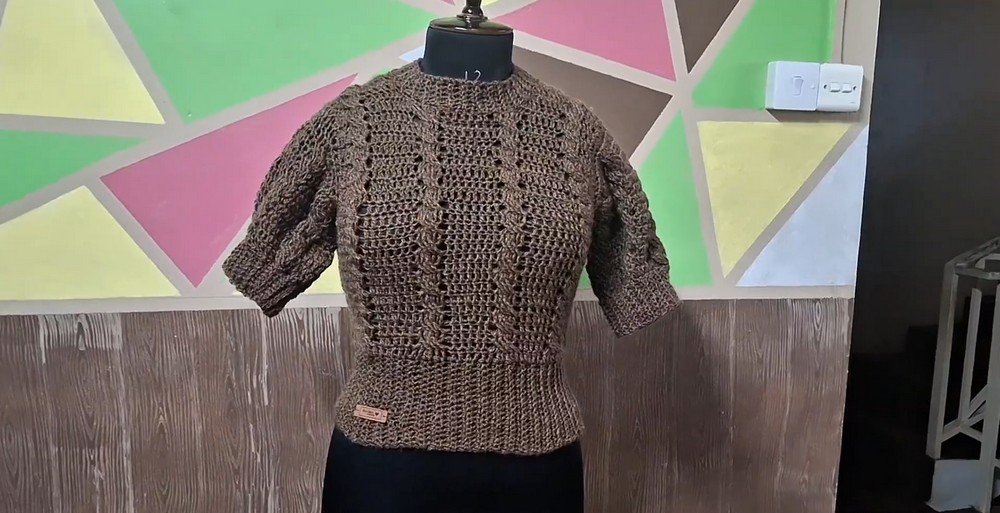
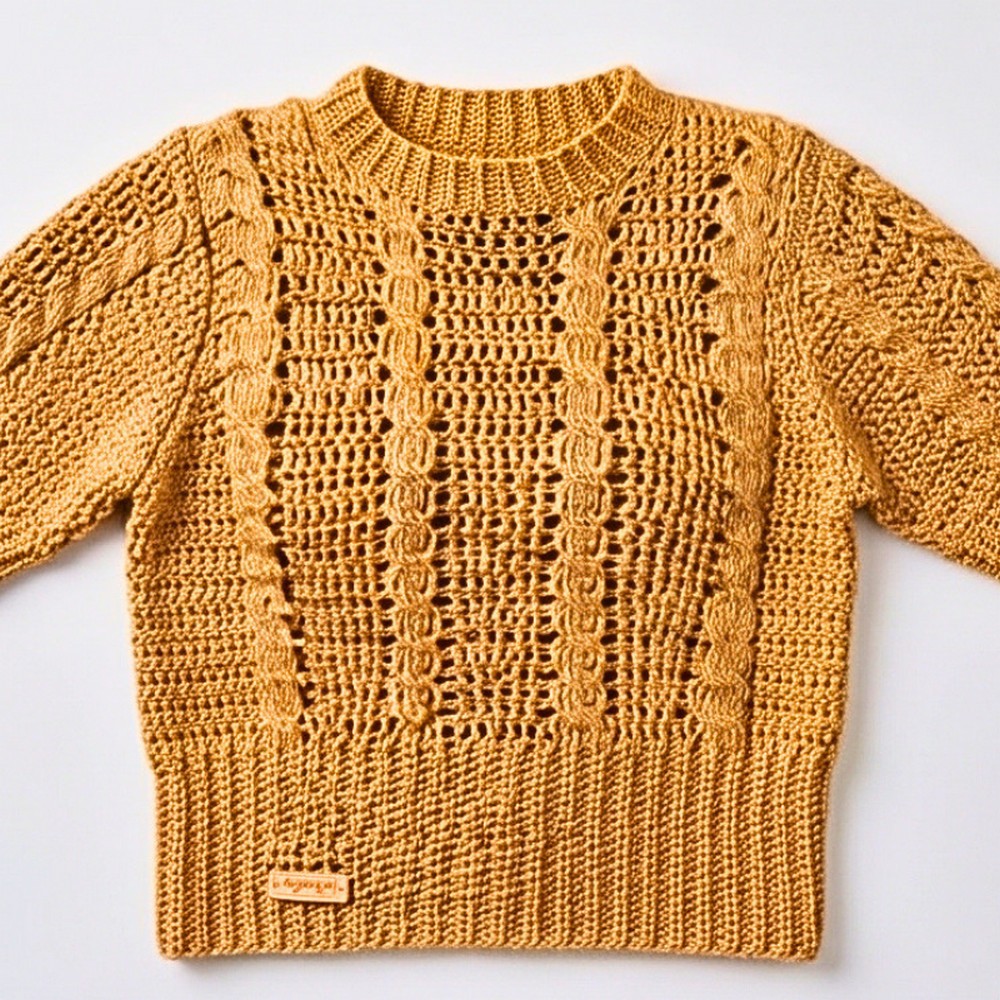
This sweater’s rich texture comes from crossed front post treble stitches that stand out against neat double crochet sections. A continuous cable crochet pattern gives the body a polished, traditional appearance, while the ribbed waistband, cuffs, and neckline create a comfortable finish.
Starting at the waist, you work the crochet sweater upward in the round before dividing the upper body into front and back sections. You’ll also learn how to shape the neckline, add sleeves, and crochet ribbing directly onto the sleeve and neck edges for a neat finish.
Credit Needle&Crochet Escape
Materials & Tools Needed
- Yarn: Wool and acrylic blend yarn in your preferred solid color. Light or medium-weight yarn is recommended so the cable definition stands out without adding excessive bulk.
- Crochet Hook: 3.75 mm hook, or the size needed to achieve a clean drape and suitable gauge.
- Notions & Accessories:
- Locking stitch markers
- Tapestry or yarn needle
- Measuring tape
- Sharp craft scissors
- Faux leather or woven maker label (optional)
Finished Size & Customization Ideas
This sweater is made to measure rather than following a fixed set of standard sizes. You begin by crocheting the waistband to your waist circumference, then build the body upward from its top edge.
Adjusting the Body Fit
- Fitted Body: Work 1 double crochet into each waistband stitch during the setup round.
- Oversized or Relaxed Fit: Work 2 double crochets into every 2nd stitch of the foundation round to add positive ease.
- Gentle A-Line Flare: Add subtle width toward the bust by working 2 double crochets into the 3rd, or middle, stitch of each 5-dc spacing section on increase rounds.
Changing the Sleeve Length
The instructions make short sleeves, but you can extend them to 3/4 or full length. Continue repeating the four-row cable pattern until the sleeves reach your preferred length, then add the cuff ribbing.
Choosing Your Colors
A continuous solid color highlights the raised cable twists and gives the sweater a classic appearance. For a different look, try horizontal color blocking between repeats or use a contrasting shade for the cuffs, hem, and collar.
Pattern Abbreviations & Terminology
All instructions follow standard US crochet terms.
- ch: chain
- sc: single crochet
- blo: back loop only
- dc: double crochet
- fptr: front post treble crochet. Yarn over twice, insert the hook from front to back to front around the post of the indicated stitch, yarn over and pull up a loop, then work the loops off in pairs three times.
- fpdc: front post double crochet. Yarn over once, insert the hook from front to back to front around the post of the indicated stitch, yarn over and pull up a loop, then work the loops off in pairs twice.
- sl st: slip stitch
- st(s): stitch(es)
- RS: right side
- WS: wrong side
Before You Begin
The main cable repeat uses 11 stitches: 6 cable stitches and 5 spacing stitches. Keep track of these groups as you work so the raised cables remain evenly arranged around the body.
The 3.75 mm hook is the recommended starting point, but yarn thickness and personal tension can affect the finished fabric. Make a small sample using the same cable stitches and check how it drapes before beginning the waistband. This is particularly useful for a garment that needs to fit comfortably around the waist, bust, and sleeves.
Step-by-Step Crochet Sweater Instructions
1. Crochet the Waistband Ribbing
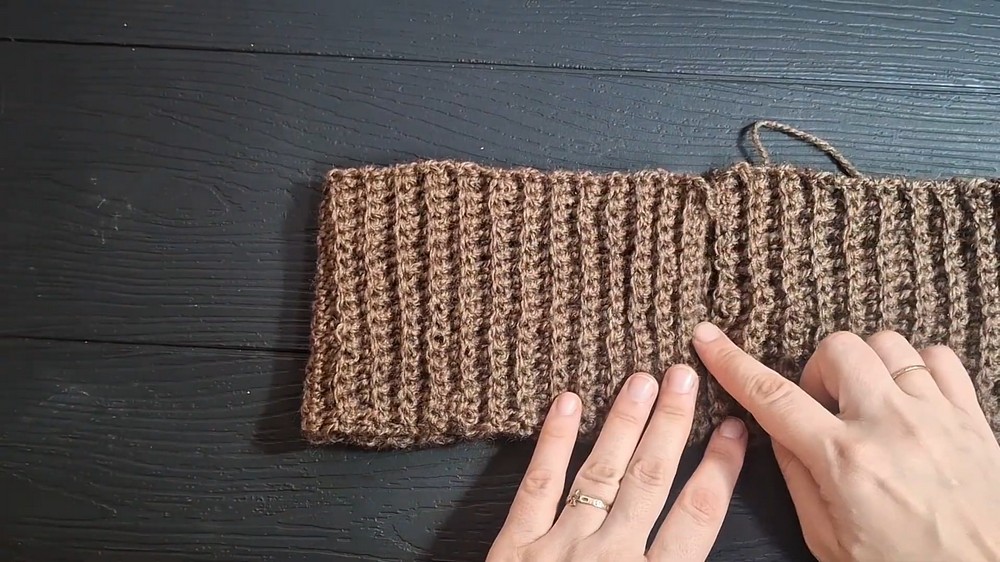
The waistband is worked flat in rows using single crochet stitches through the back loops. Once it reaches the required length, join the short ends to form a loop.
Foundation Chain
Chain to your desired ribbing height. Approximately 2–3 inches, or 10–14 chains, is recommended.
Row 1: Insert your hook into the 2nd chain from the hook and work 1 sc. Continue working 1 sc into every remaining chain across.
Row 2: Ch 1 and turn. Skip the turning chain, then work 1 sc into the back loop only (blo) of each stitch across until 1 stitch remains. Work 1 sc through both loops of the final stitch to create a firm, straight outer edge.
Row 3 and Beyond: Repeat Row 2 until the ribbing strip comfortably fits around your waist or hips.
Stitch Count Rule: The total number of rows worked must be a multiple of 11 to accommodate the 11-stitch pattern repeats, consisting of 6 cable stitches and 5 spacing stitches.
Joining the Band: Fold the ribbing with right sides together. Match the stitches of the final row to the foundation chain, then seam the two ends together with slip stitches across. Do not fasten off.
Helpful Tip: Check the waistband around your waist or hips before joining it. The ribbing should fit comfortably without being stretched excessively.
2. Work the Lower Body and Cable Pattern
After joining the waistband, rotate it so you can work into the row ends along its top edge. The body is crocheted in the round, with the raised cable sections separated by groups of 5 double crochet stitches.
Setup Round
Ch 2. This chain does not count as a stitch here or throughout the pattern.
Work 1 dc into each row-end around the circumference. Sl st to the top of the first dc to join.
Make sure the total number of double crochet stitches is a multiple of 11. If you are making an oversized sweater, the supplied instructions call for working 2 dc into every 2nd stitch.
Round 1 – Cable Twist Round
- Ch 2, then work 1 dc into each of the first 5 stitches. These form the first 5-dc spacing section.
- The next 6 stitches form the cable section. Skip the first 3 stitches.
- Yarn over twice and work 1 fptr around the post of the 4th stitch. Work another fptr around the 5th stitch, followed by 1 fptr around the 6th stitch.
- Now cross in front of the three stitches you have just made. Yarn over twice and work 1 fptr around the post of the skipped 1st stitch, 1 fptr around the 2nd stitch, and 1 fptr around the 3rd stitch.
- The six front post treble stitches now form the crossed cable.
- Work 1 dc into each of the next 5 stitches.
- Repeat the cable section and the following 5-dc spacing section around the entire body.
- Sl st to the first dc to join.
Understanding the Cable Cross: The first three front post treble stitches are worked around stitches 4, 5, and 6. The next three are worked around the skipped stitches 1, 2, and 3, crossing in front of the first group. Keep the crossing order consistent to maintain the raised twist.
Round 2 – Straight Post Round
- Ch 2, then work 1 dc into each of the 5 spacing stitches.
- Work 1 fpdc around the post of each of the 6 cable stitches in their natural sequential order. Do not cross the stitches.
- Work 1 dc into each of the next 5 spacing stitches.
- Repeat around the body and sl st to join.
Round 3: Repeat Round 2.
Round 4: Repeat Round 2.
Round 5: Repeat Round 1, working the cable twist again.
Continue the Body
Repeat Rounds 2-5 until the sweater reaches the base of the armholes. This creates one cable-crossing round followed by three rounds of straight post stitches before the next twist.
Optional Widening: To add more width around the hips or bust, work 2 dc into the 3rd, or center, stitch of each 5-dc spacing section on an increase round.
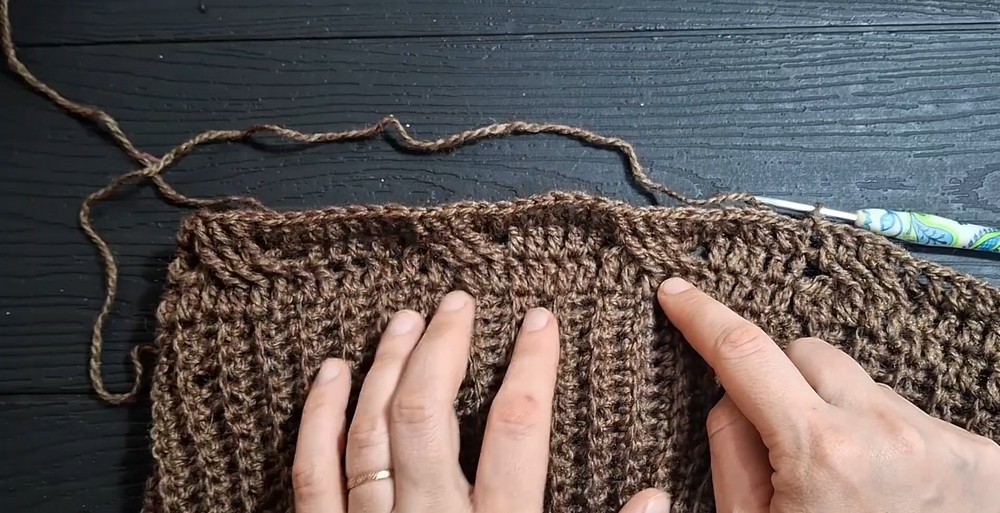
3. Shape the Upper Body, Armholes, and Neckline
When the body reaches the armpits, divide the stitches evenly into a front panel and a back panel. The upper sections are now worked flat in rows rather than continuously in the round.
Mark the Armholes
Measure 2 cm inward on both the left and right sides of the front piece. Place locking stitch markers at these points to mark the armhole boundaries.
Back Panel
- Leave the marked 2 cm underarm gaps unworked.
- Work back and forth in rows across the back panel stitches only.
- Maintain the established 11-stitch cable pattern.
- On right-side rows, work the front post stitches as established. On wrong-side rows, work the matching post stitches.
- Continue straight until the back panel reaches shoulder height.
- Fasten off.
Front Panel and Neckline Shaping
- Join the yarn at the front armhole marker.
- Work flat across the front panel, maintaining the established pattern until you reach the desired depth for the front neckline.
- Divide the front stitches into left and right shoulder sections, leaving the center stitches open for the crew neck.
- Work each shoulder separately until it reaches the shoulder seam height.
- Make cable crossings on right-side rows and straight post stitches on wrong-side rows.
Shaping Tip: Keep the front and back shoulder heights consistent so their edges can be joined neatly. The center opening determines the neckline depth, so check its position before completing both shoulders.
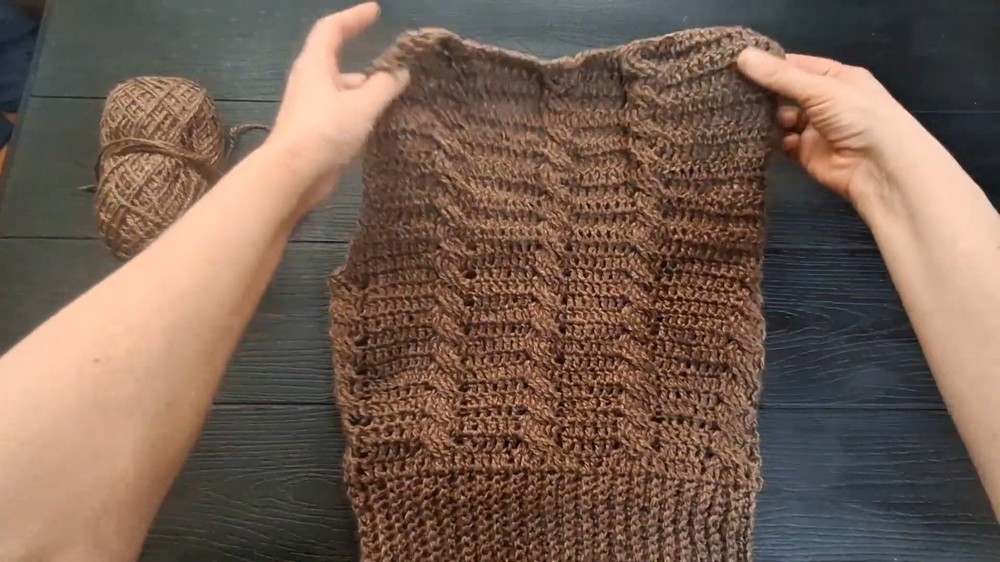
4. Crochet the Sleeves
Both sleeves are worked directly into the armhole openings. The short-sleeve length can be adjusted by continuing the cable repeat for additional rounds.
Round 1-2 – Sleeve Base
- Join the yarn at the bottom center of the armhole.
- Ch 2.
- Work 1 dc evenly into every row-end and stitch around the armhole opening.
- Sl st to join.
Round 3 Onward – Cable Pattern
- Establish the 11-stitch pattern repeats around the sleeve circumference.
- Arrange the stitches into groups of 5 dc separated by 6-stitch cable sections.
- Follow the four-round cable repeat: work the cable twist round, followed by three straight post rounds.
- Continue until the short sleeve reaches your desired length just above the cuff.
- Do not fasten off.
Sleeve Fit Tip: Check the sleeve opening and its circumference before continuing through many rounds. The cable pattern needs to fit around the available stitches without forcing extra or missing stitches into a repeat.
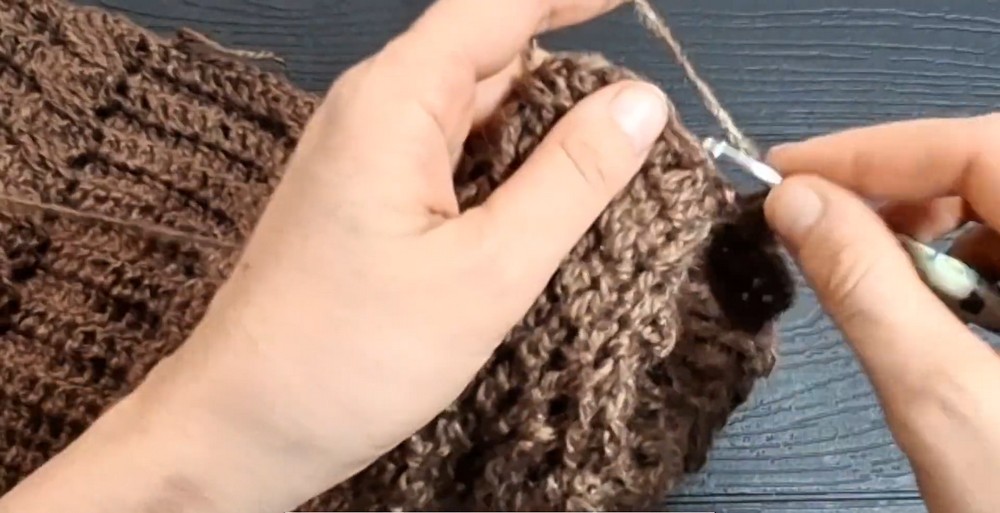
5. Add the Attached Sleeve Cuffs
The cuffs are crocheted directly onto the sleeve edges using perpendicular ribbing. Instead of making a separate strip and sewing it on afterward, you work short rows outward from the sleeve opening and anchor them along its edge.
Foundation: Ch outward from the sleeve edge to your desired cuff width. For the suggested width, ch 7 to 9.
Row 1: Work 1 sc into the 2nd chain from the hook and into each chain across, back toward the sleeve edge.
Anchor: Sl st into each of the next 2 open stitches along the sleeve perimeter.
Row 2: Ch 1 and turn. Skip the 2 anchor slip stitches. Work 1 sc into the blo of each stitch until 1 stitch remains. Work 1 sc through both loops of the final edge stitch.
Row 3: Ch 1 and turn. Work 1 sc into the blo across to the sleeve opening. Sl st into the next 2 stitches along the sleeve rim.
Repeat: Repeat Rows 2-3 around the entire sleeve circumference. Continue anchoring each short ribbing section to the next 2 stitches along the sleeve edge.
Join: When the cuff reaches the starting point, sl st the starting row and final row together on the inside to form a seamless cuff. Fasten off.
Cuff Tip: Keep the ribbing rows evenly spaced as you move around the sleeve. This helps the cuff sit neatly without pulling the sleeve edge into an uneven shape.
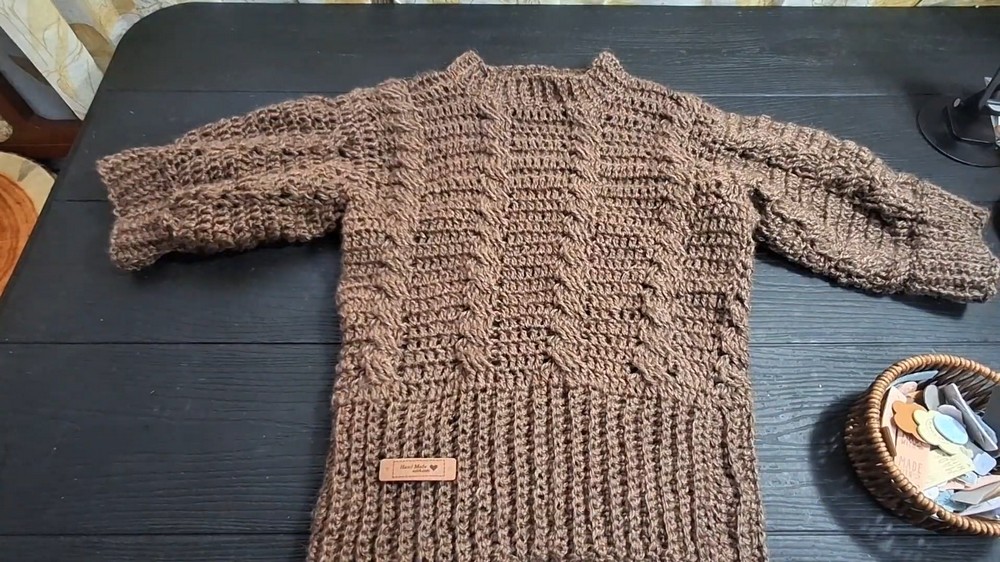
6. Add the Attached Neckband Ribbing
The neckline uses the same perpendicular ribbing technique as the cuffs, giving the collar a coordinated finish.
- Join the yarn at either shoulder seam along the neckline opening.
- Ch outward to make the collar height. Approximately 5 to 7 chains are suggested.
- Work 1 sc into each chain toward the neckline.
- Anchor the ribbing with 2 sl sts into the neckline edge.
- Work sc through the back loop only as you crochet up the ribbing row and again as you work back down.
- Continue around the entire neckline opening, anchoring each ribbing section along the edge.
- When you reach the starting point, seam the first and last rows together with slip stitches.
- Fasten off.
Neckband Tip: Check that the ribbing lies evenly around the neckline as you work. Avoid pulling the anchor slip stitches too tightly, since excessive tension can make the collar edge draw inward.
Assembly and Finishing
Join the Shoulder Seams
Turn the sweater inside out so the right sides are facing each other. Using a tapestry needle and matching yarn, whipstitch or mattress stitch across the front and back shoulder edges securely.
Weave in the Yarn Ends
Thread the remaining yarn tails onto a tapestry needle. Weave them through the dense double crochet panels on the wrong side of the sweater, securing each end so it stays hidden.
Add a Maker Label
If desired, position a faux leather or woven maker label at the bottom front ribbing or inside the back collar. Sew it securely into place.
Block the Sweater
Finish by using gentle steam or wet blocking to relax the front post stitches and improve the drape. Arrange the sweater in its intended shape and allow it to dry fully before wearing it.
Blocking can help the cable texture settle and make the ribbed edges lie more evenly. Follow the care instructions for your yarn, especially if it contains acrylic or wool.
Conclusion
Raised cable stitches give this sweater the look of traditional textured knitwear, while the made-to-measure waistband and adjustable sleeves allow the fit to be personalized. The 11-stitch repeat creates the main pattern, and the perpendicular ribbing gives the cuffs and neckline a coordinated finish.
Once the shoulder seams are joined, the yarn ends are secured, and the sweater is gently blocked, the cable texture and overall shape are ready to wear.