Crochet Mohair Cardigan Pattern with Custom XS–XXXL Fit
Try a side-to-side cardigan that lets your measurements decide the fit, from the starting chain and body width to the sleeve length and neckline.
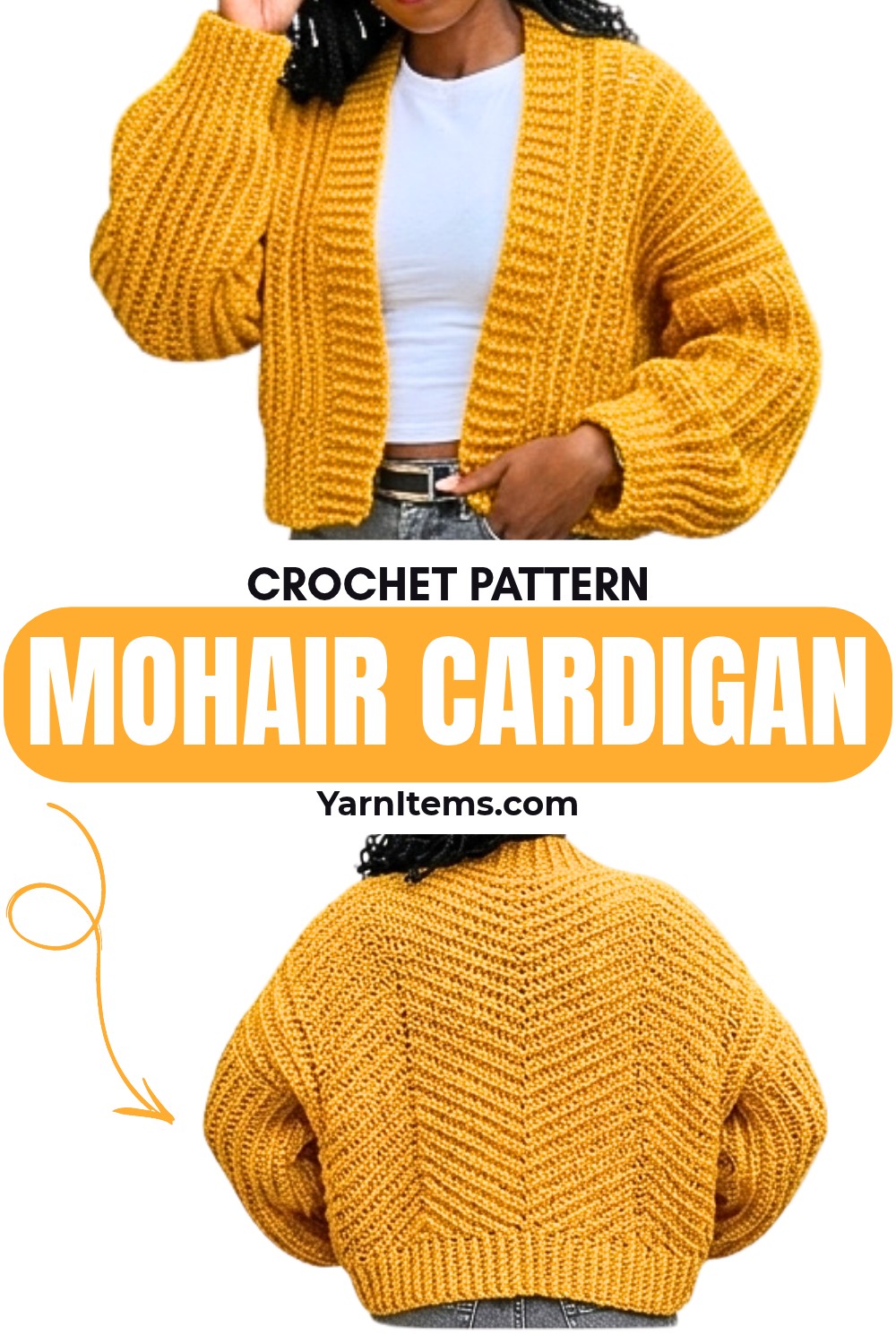
Soft mohair yarn gives this cardigan an airy, fuzzy appearance while the double strand creates enough body for a wearable fabric with a larger crochet hook.
The sample is made in Extra Small, but the measurement-based approach makes it possible to adjust the length, body width, and sleeve size for anything from XS through XXXL. Front and back ribbing-like sections frame the simple hdc center, giving the finished crochet cardigan a clean shape without complicated stitch patterns.
Starting with the correct body measurement sets up almost everything that follows. The first long chain determines the crochet cardigan’s shoulder-to-hem length, repeated rows establish its width, and short rows open the neckline before the second front is added.
Sleeves are worked separately and shaped with the same sc-and-hdc combination, then everything is joined before a five-row fpdc-and-bpdc ribbed edging finishes the front.
Credit AC Crochets
Materials & Tools Needed
- Yarn: 6 skeins of Durable Mohair for the XS sample, with each skein containing 50 g/190 m. The yarn is a Size 2/Sport Weight blend of 55% acrylic, 25% mohair, and 20% wool.
- Crochet Hook: 5.0 mm
- Scissors
- Measuring tape
- Darning needle
- Stitch markers
Working With the Mohair Yarn
Hold the yarn double throughout the cardigan. This creates a fuller, airy fabric and allows the Sport Weight yarn to work well with the 5.0 mm hook.
Crochet Abbreviations
US crochet terminology is used.
- ch: Chain
- st(s): Stitch(es)
- sc: Single crochet
- hdc: Half double crochet
- dc: Double crochet
- fpdc: Front post double crochet
- bpdc: Back post double crochet
- BLO: Back loop only

Measure Before You Crochet
Length is controlled by the foundation chain because the body is worked from side to side.
For the desired cardigan length, measure from your shoulder down to the bottom hem. Multiply that measurement by 2 to determine the approximate length of the starting chain.
For example, an 18-inch desired sweater length requires a starting chain measuring approximately 36 inches.
Width is then created by adding rows to the front and back sections. This means your measurements, rather than a fixed stitch count, determine the final fit.
For sleeves, measure the desired arm length and use that measurement for the sleeve foundation chain. A petite sleeve may begin with approximately 14–16 inches, depending on the wearer.
First Front Panel & Main Body
The cardigan begins as one long piece. The first front, back, and second front will eventually be formed from this continuous section.
Foundation Chain: Make a slip knot and chain a length equal to twice your desired cardigan length; for example, chain approximately 36 inches for an 18-inch finished length.
Row 1: Skip the first ch; work sc in the next 13 chs, place a stitch marker in the 13th sc to mark the bottom ribbing section; work hdc in each ch across until exactly 13 chs remain; work sc in the final 13 chs.
Row 2: Ch 1, turn; work BLO sc in the first 13 sts, BLO hdc in each st across until reaching the stitch marker, BLO sc in the next 12 sts, then work the final 13th st as a standard sc under both loops to create a clean, sturdy edge.

Repeat for the Body Width
Repeat: Continue repeating Row 2 until the front panel reaches your desired width; for the XS sample, continue until it measures approximately 7 inches across, or about 22 rows.
Check the Ribbing Edges
The first and final 13 stitches create the sc sections that frame the central hdc fabric. Keep these sections consistent from row to row. Pay particular attention to the final stitch of each row, which is worked through both loops rather than the BLO to help maintain a firm, tidy outer edge.

Shape the Neckline
Once the first front and body reach the desired width, the center of the long piece becomes the shoulder line. The neckline is created by temporarily leaving one front section unworked.
Find the Center
Fold the main piece in half lengthwise and count the total number of stitches. Divide the stitch count by two and place a stitch marker in the exact middle stitch.
This marker identifies the shoulder line and separates the section you will continue working for the back from the front section that remains unworked temporarily.
Neckline Row 1: Ch 1, turn; work BLO sc in the first 13 sts, BLO hdc in each st across until reaching the center stitch marker, then work the final hdc under both loops; leave the remaining front stitches unworked.
Neckline Row 2: Ch 2, turn; the ch-2 does not count as a stitch; work hdc under both loops of the first st, BLO hdc in each st across until the final 13 sts, BLO sc in the next 12 sts, then work sc under both loops of the final st.
Repeat the Neckline Rows
Repeat: Continue alternating Neckline Rows 1 and 2 until the neckline gap measures approximately 4 inches wide, or about 10 rows.
Neckline Measurement Check
Measure the opening instead of relying only on the number of rows. The 4-inch measurement is what establishes the intended neck opening, while individual row height can vary slightly with tension and yarn handling.
Add the Second Front Panel
The second front is restored by chaining across the neckline gap. Using the exact number of stitches that were left unworked keeps both sides of the cardigan balanced.

Recreate the Missing Stitches
Foundation Across Neckline: Count the exact number of stitches left unworked during the neckline section and chain that same number; the tutorial example uses 63 chains.
Second Front Row 1
Row 1: Ch 1, turn; skip the first ch, work sc in the next 13 chs, work hdc in the remaining chains until reaching the previously worked back-panel stitches, continue with BLO hdc across the body until 13 sts remain, work BLO sc in the next 12 sts, then work sc under both loops of the final st.
Second Front Row 2
Row 2: Ch 1, turn; work BLO sc in the first 13 sts, BLO hdc across until the final 13 sts, work BLO sc in the next 12 sts, then work the final st as a standard sc under both loops.
Complete the Second Front
Repeat: Continue repeating Row 2 until the second front matches the first front in width; for the XS example, work to approximately 7 inches or 22 rows, then fasten off.
Balance Check Before Moving On
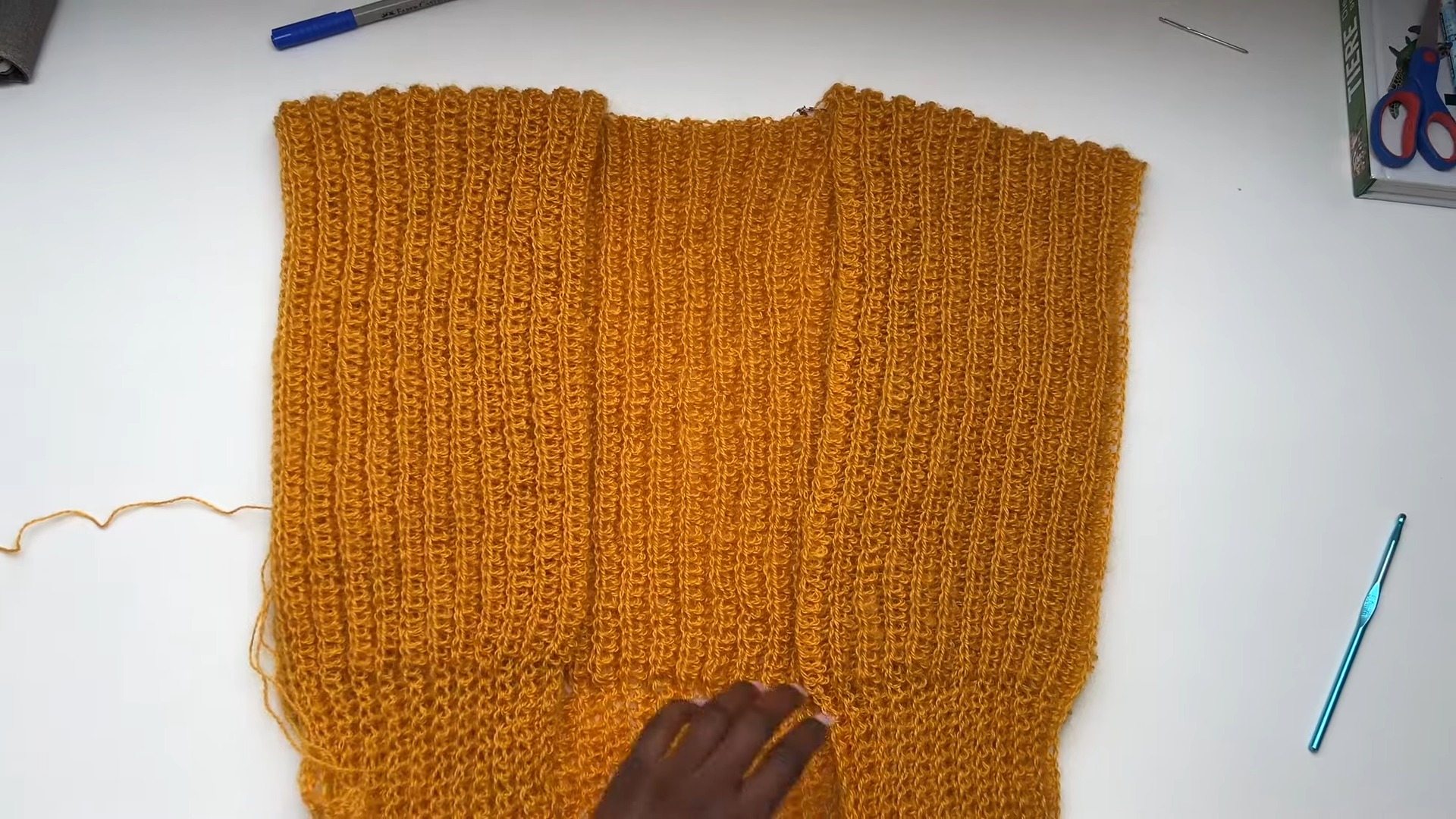
Lay the completed body flat and compare the two front sections. Both should have the same width, while the neckline should sit centrally between them. Checking this now makes sleeve placement much easier later.
Sleeves – Make 2
Each sleeve is worked separately from cuff toward the upper arm. The first 13 stitches create the wrist section, while the remaining hdc area gives the sleeve its width.
Foundation Chain: Chain a length equal to your desired sleeve length; the tutorial example uses approximately 16 inches.
Row 1: Skip the first ch; work sc in the next 13 chs to form the wrist cuff, then work hdc in every remaining ch to the end.
Row 2: Ch 2, turn; work BLO hdc in each st across until the final 13 sts, work BLO sc in the next 12 sts, then work sc under both loops of the final st.
Row 3: Ch 1, turn; work BLO sc in the first 13 sts, then work BLO hdc in every remaining st across, working the final hdc under both loops.
Repeat the Sleeve Rows
Repeat: Continue alternating Rows 2 and 3 until the top, or widest part, of the sleeve reaches the desired width; the XS sample measures approximately 14 inches, requiring about 40 rows.
Fasten off and make a second sleeve to match.
Sleeve Measurement Check
Measure both sleeves across their widest section before joining them. Matching width and length will help keep the shoulders even once they are attached to the body.
Join the Sleeves to the Body
Accurate centering matters here because the sleeve’s top edge needs to sit evenly across the shoulder area.
Find the Sleeve Center
Lay the main cardigan body completely open. Fold one sleeve in half lengthwise and locate the exact center stitch along its top edge. Place a stitch marker there.
Match the Shoulder
Align the sleeve’s center marker with the center shoulder point of the cardigan, which corresponds to the middle of the neckline gap.
Count the stitches outward from the center on both the sleeve and body. Matching these sections before sewing helps prevent the sleeve from shifting toward the front or back.
Sew the Sleeve
Using a darning needle and the yarn tail, sew the sleeve edge to the body’s armhole. A mattress stitch can be used for the seam, or the pieces can be joined with slip stitches.
Repeat the same process for the second sleeve.

Close the Side and Underarm Seams
Fold the cardigan along the shoulder line with the wrong sides facing out.
Side Seam: Starting at the bottom of the sleeve cuff, sew continuously upward to the underarm and then straight down the side of the body to the bottom hem; repeat the same seam on the opposite side.
Before securing the yarn, check that the sleeve cuff, underarm, and body hem all line up naturally. If one side appears twisted, reposition the pieces before completing the seam.
Add the Front Ribbing
The final edging travels from the bottom inner corner of one front, around the neckline, and down the opposite front. The base round establishes an even row of dc stitches for the raised ribbing to follow.
Base Row: Reattach yarn at the bottom inner corner of the front panel; ch 3, which counts as 1 dc; work 1 dc evenly into the edge of every row up the front panel, around the back neckline, and down the opposite front panel.
Ribbing Row 1: Ch 3, turn; fpdc around the next dc, bpdc around the following dc; repeat from * to * across the entire row and finish with 1 standard dc in the top of the turning chain.
Ribbing Row 2: Ch 3, turn; work fpdc around each fpdc and bpdc around each bpdc to maintain the established ribbing pattern, then end with 1 dc.
Complete the Collar
Ribbing Rows 3–5: Ch 3, turn; continue working fpdc around fpdc and bpdc around bpdc while maintaining the established ribbing pattern, ending each row with a dc; repeat until you have 5 total ribbing rows, or continue until the collar reaches your preferred width.
Fasten off.
Finishing the Cardigan
Use a darning needle to seamlessly weave in all remaining loose ends. Take care to secure the yarn without pulling the mohair fabric too tightly, especially around the neckline and front ribbing.
Give the cardigan a final measurement check, then turn it right side out and gently arrange the sleeves and front edging.
Your soft, airy mohair crochet cardigan is ready to wear.

Fit Check Before You Weave In Every End
Try the cardigan on before hiding all of the remaining tails. Check the shoulder position, neckline opening, sleeve length, and overall body width while the seams are still easy to access.
Measurement-based crochet gives you flexibility, but the finished fabric can behave differently once the pieces are joined. A quick fitting at this stage can reveal whether the neckline sits where you want it or whether a sleeve needs repositioning before everything is permanently finished.