Two-Color Crochet Beanie Pattern with Textured Stitches
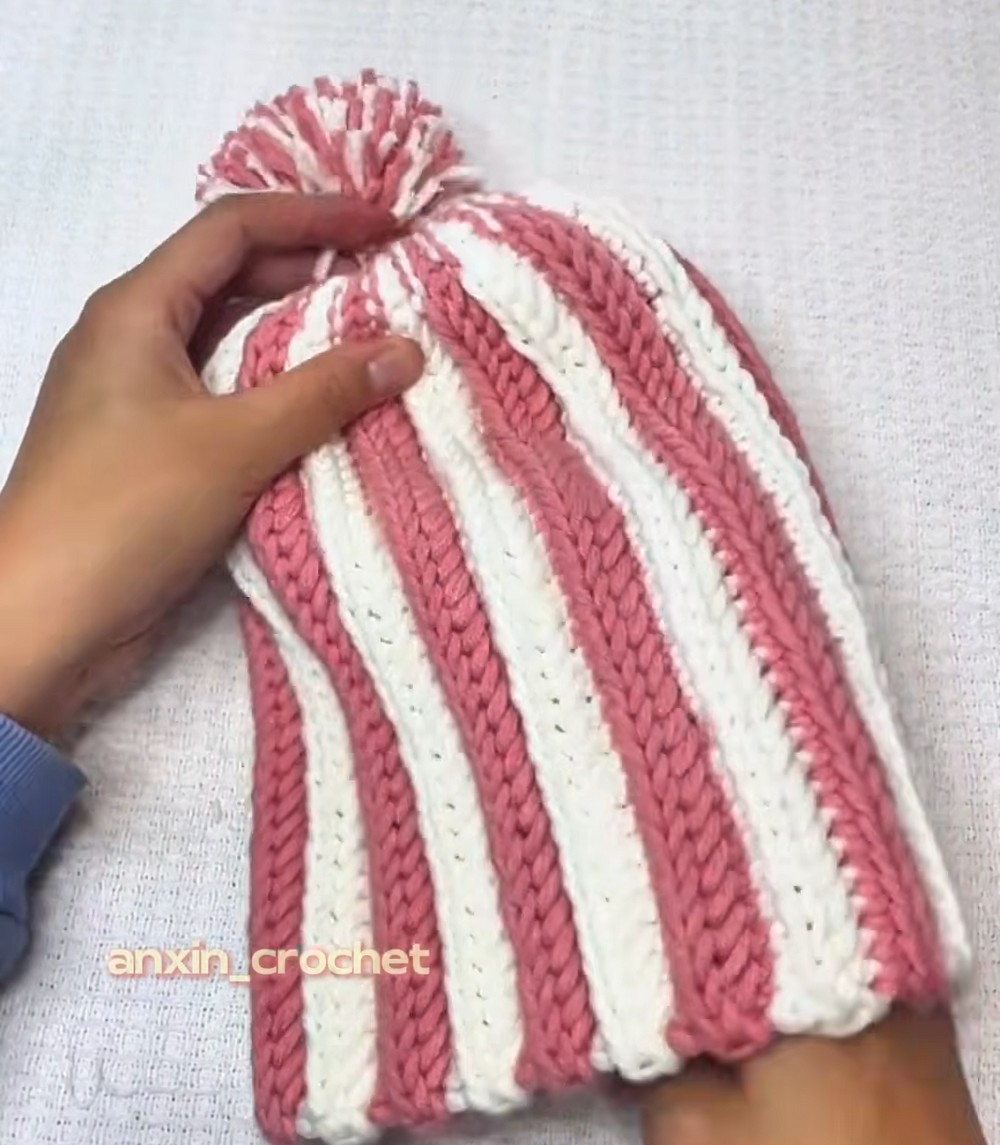
Add striking color contrast to your winter wardrobe with this two-color crochet beanie hat, featuring textured larkspur-style stitches, a folded brim, and a matching pom-pom.
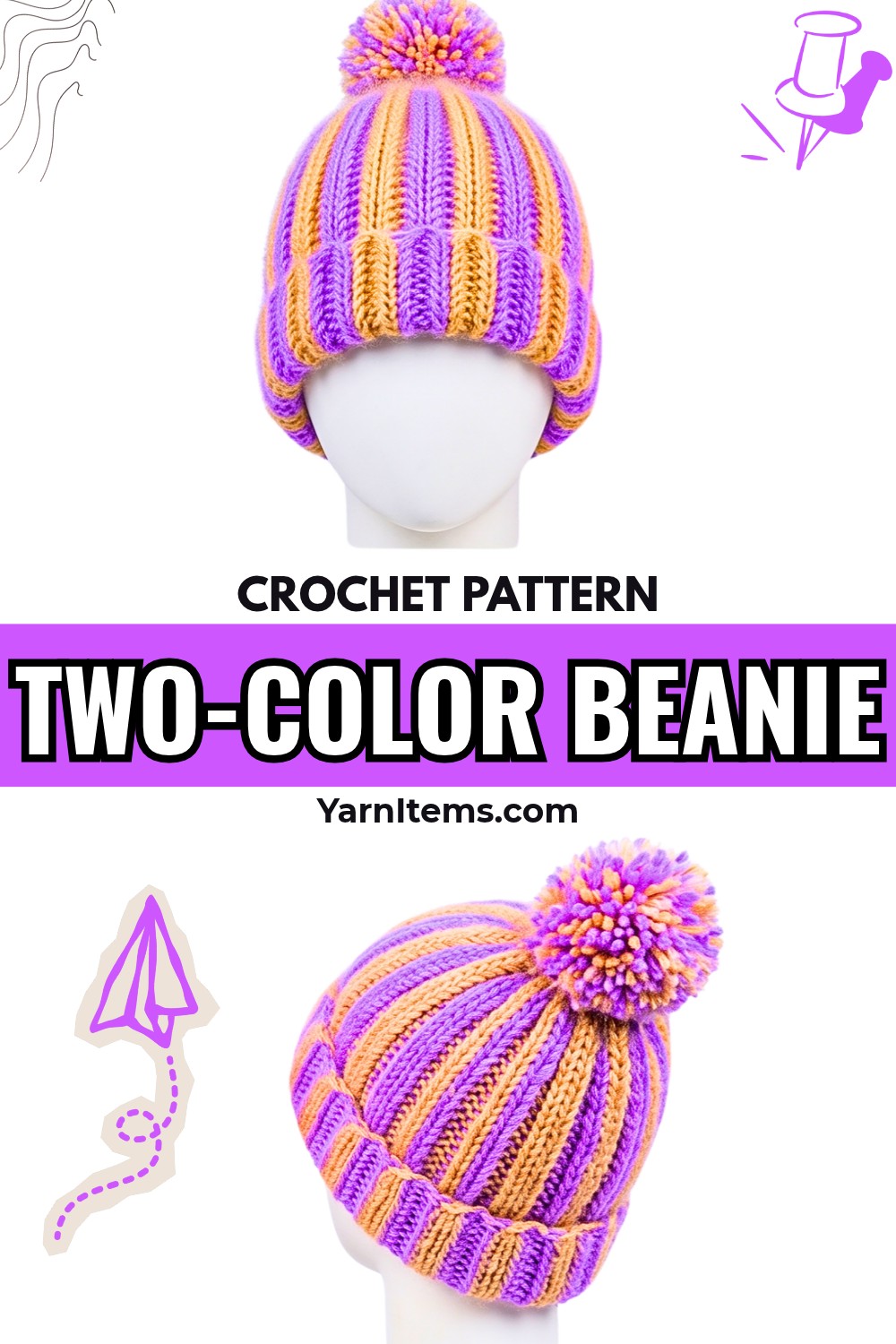
Pink and white yarn create a distinctive patchwork effect in this two-color crochet beanie, where contrasting rows highlight raised flower-like stitches. Textured bands give the finished crochet hat depth and character, while a small folded brim and fluffy two-color pom-pom complete its cozy winter look. Pair it with a warm coat or sweater for a coordinated cold-weather accessory.
This crochet pattern walks you through building a textured hat band, alternating yarn colors at the brim-side boundary, and joining the edges to shape the crown. You’ll learn how to keep color blocks aligned, gather the top neatly, and make a matching pom-pom using the supplied tutorial’s techniques. Let’s work through each stage to create a polished finish.
Credit anxin_crochet
Materials & Tools
- Yarn: Two contrasting yarn colors suitable for a cozy winter hat. The demonstration uses pink and white.
- Crochet hook: Choose a size appropriate for your yarn weight.
- Tapestry or sewing needle: For seaming the band, gathering the crown, and weaving in ends.
- Stitch markers: To identify the first stitch of each row.
- Measuring tape or ruler: To check the foundation chain and finished band length.
- Pom-pom maker: For creating a two-color pom-pom.
- Scissors: For cutting yarn and trimming the pom-pom.
- Optional leather label: For decorating the finished brim.
Finished Size and Fit
The supplied instructions begin with approximately 41 chain stitches measuring around 28 cm (11 inches). The final band length should be approximately 3 cm shorter than the wearer’s head circumference.
For example, if the head measures 55 cm, aim for a band length of about 52 cm.
The hat has a small folded brim and alternating color blocks. Because yarn thickness and personal tension affect the finished measurements, check the band around the intended wearer’s head before sewing the seam.
Crochet Abbreviations
- ch: Chain stitch
- sl st: Slip stitch
- sc: Single crochet
- FLO: Front loop only; in this supplied pattern, the hook is directed through the loop facing away from the crocheter
- st(s): Stitch(es)
Stitch note: The source describes a distinctive vertical-bar stitch worked through a strand and the next stitch, with the yarn pulled through the loops on the hook. Follow the accompanying video demonstration for exact placement, since this stitch is not fully defined by a standard abbreviation in the supplied instructions.

Step-by-Step: Crochet the Two-Color Beanie
Step 1: Prepare the Foundation Chain
Begin with a long yarn tail so you have enough yarn for sewing the band together later.
- Leave approximately 60 cm (24 inches) of yarn at the starting end.
- Form a slip knot on your hook.
- Chain 41 stitches, keeping the loops even and slightly loose.
- Measure the foundation chain. It should be approximately 28 cm (11 inches).
If your chain measures much less than expected, check your tension before continuing. A tight foundation can make the finished band difficult to fit comfortably.
Step 2: Establish the Slip-Stitch Brim
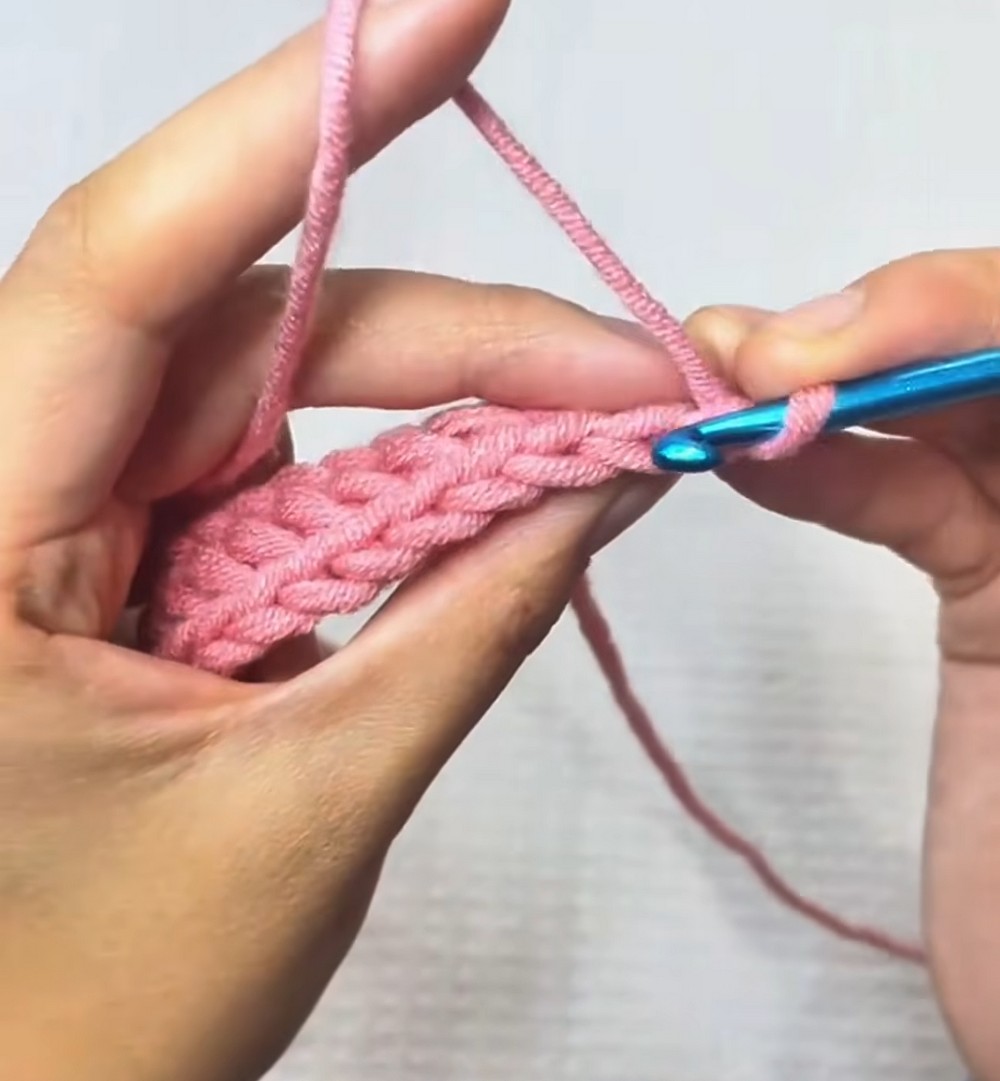
The first seven slip stitches form the narrow brim-side section, which will be folded upward once the hat is finished.
- Make the initial chain stitch as described in the source.
- Work the first slip stitch and place a stitch marker in it.
- Continue working slip stitches through the loop facing away from you until you have completed seven slip stitches in total.
- Keep the stitches even rather than pulling them tightly.
This narrow section creates a clear edge between the brim and the textured body.
Step 3: Work the First Single Crochet
After the seven slip stitches, begin the transition into the main stitch pattern.
Insert the hook into the eighth stitch, draw up a loop, then yarn over and pull through both loops to complete one single crochet.
The single crochet acts as a transition point before the distinctive vertical-bar stitches begin.
Step 4: Build the Vertical-Bar Texture
Work across the remaining foundation stitches using the stitch placement demonstrated in the source.
- Insert the hook through the specified vertical strand on the left, away from you, and into the next stitch as directed.
- Draw the yarn through the stitch and pull through all loops on the hook, following the demonstrated method.
- Repeat this stitch across the remaining row.
- Finish with a slip stitch in the final stitch, then turn your work without adding extra turning chains.
Keep the raised strands consistent from stitch to stitch. This texture helps the two-color sections stand out once the hat is assembled.
Step 5: Work Back Across the Row
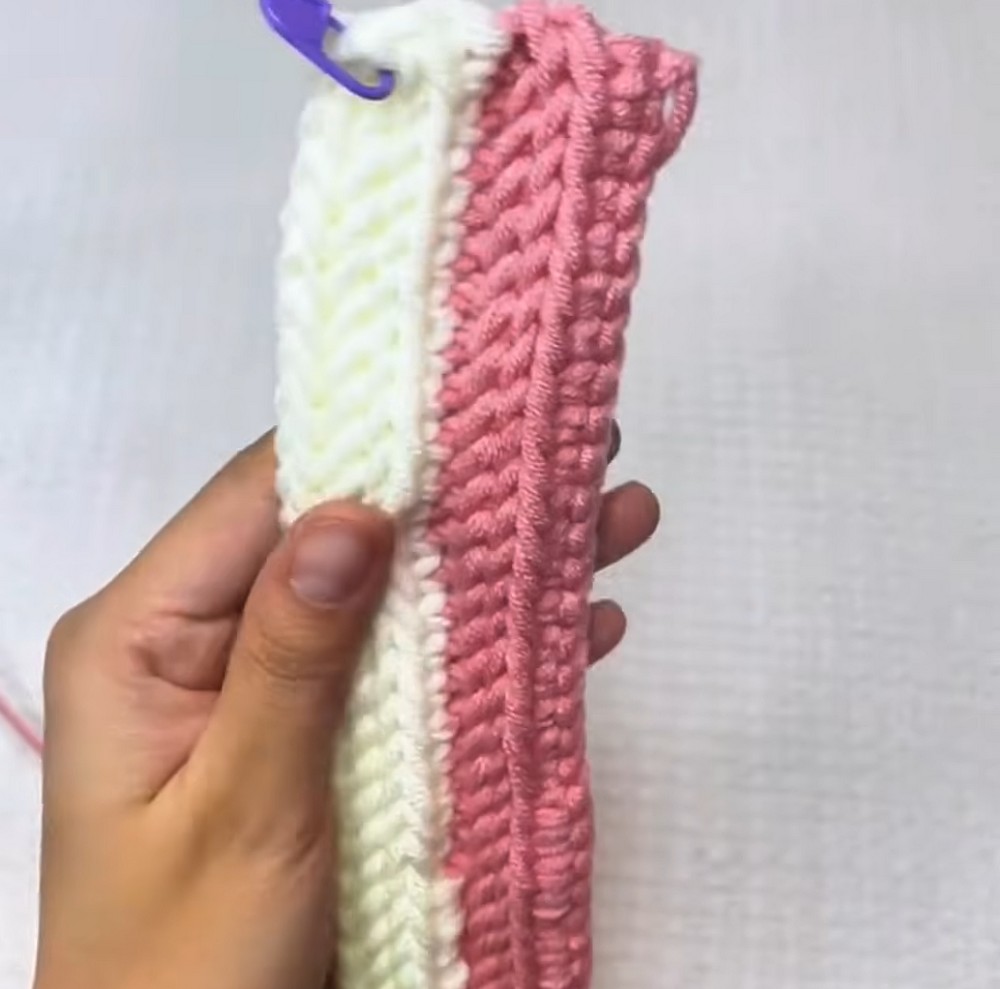
The return row continues the texture while maintaining the narrow slip-stitch section at the edge.
- Begin with one single crochet and mark this first stitch.
- Continue working the vertical-bar pattern through the loop facing away from you.
- Stop when seven stitches remain at the brim-side edge.
The marker makes it easier to identify the row’s starting point, especially after you begin alternating colors.
Step 6: Change to the Second Color
Switch yarn at the seven-slip-stitch boundary to keep the color blocks aligned.
- Work the final seven slip stitches up to the last stitch of the boundary.
- At the seventh slip stitch, drop the current color and pick up the new color.
- Leave approximately 5 cm of the new yarn tail at the back.
- Pull the new color through to complete the slip stitch.
- Make one chain stitch with the new color and turn your work, leaving the previous color unworked.
Color-change tip: Avoid tugging the new yarn too tightly. Keep the transition secure but flexible so the edge does not bunch or pull inward.
Step 7: Continue the Row in the New Color
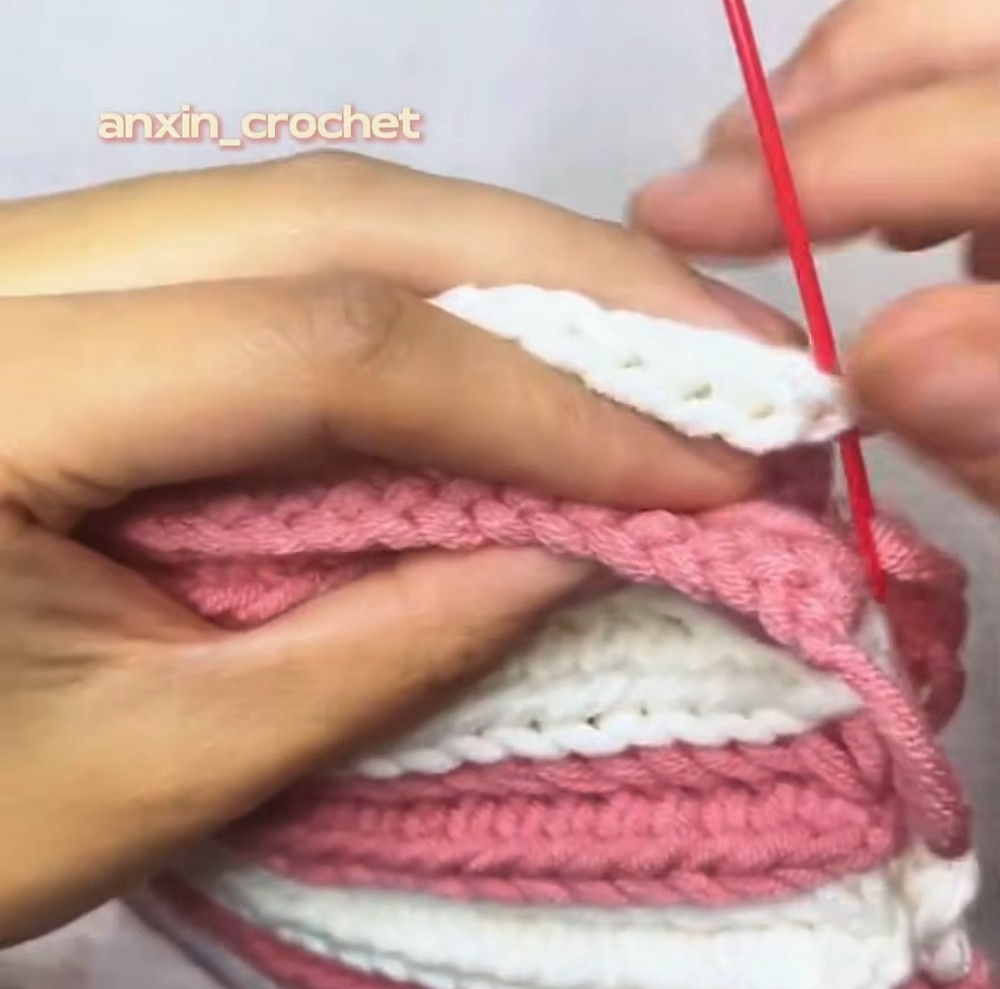
With the second color attached, repeat the established stitch sequence.
- Work seven slip stitches along the brim-side edge.
- Make one single crochet at the transition point.
- Continue with the vertical-bar stitch pattern across the row.
- Follow the same placement and stitch sequence used for the previous color.
The aim is to keep the stitch structure consistent while the yarn color changes. This gives the finished fabric its organized, alternating appearance.
Step 8: Alternate the Two Colors
Repeat the back-and-forth rows, switching colors at the seven-slip-stitch boundary whenever the pattern calls for a transition.
Keep these points in mind as you work:
- Follow the same boundary placement for each color change.
- Leave the inactive color unworked as directed in the source.
- Keep the first stitch marked so row starts remain easy to identify.
- Maintain even tension across both colors.
The contrasting rows create the patchwork effect, while the raised stitches provide texture. Check the fabric periodically to make sure the color blocks remain orderly rather than drifting unevenly across the band.
Step 9: Measure the Hat Band
Continue repeating the rows until the band reaches the intended length.
Measure the wide edge of the band and aim for a length approximately 3 cm shorter than the wearer’s head circumference. For a 55 cm head measurement, the target band length is about 52 cm.
Try wrapping the band around the intended wearer’s head measurement before finishing. It should feel comfortably snug without stretching the stitches excessively.
Step 10: Finish the Band and Secure the Color Tails
When the band reaches the required length, complete the final row with the active yarn color.
- Work to the end of the row.
- Make the final slip stitch.
- Stretch out the working loop and cut the yarn, leaving approximately 5 cm of tail.
- Leave a similar tail at the previous color’s cut end.
- Tie the two color tails securely together as directed.
Avoid cutting the original 60 cm starting tail, since it is reserved for sewing the band’s side seam.
Step 11: Sew the Side Seam
Join the two ends of the band to form the hat’s cylindrical shape.
- Thread the original 60 cm starting tail onto your sewing needle.
- Bring the band edges together, following the orientation shown in the tutorial.
- Pass the needle through the first stitch from side to side to anchor the seam.
- Continue sewing through the corresponding inside loops or stitches, matching them one by one.
- Work all the way up to the top edge.
Seaming tip: Match the stitches carefully as you sew. If the edges shift, pause and realign them before continuing so the color pattern meets neatly at the seam.
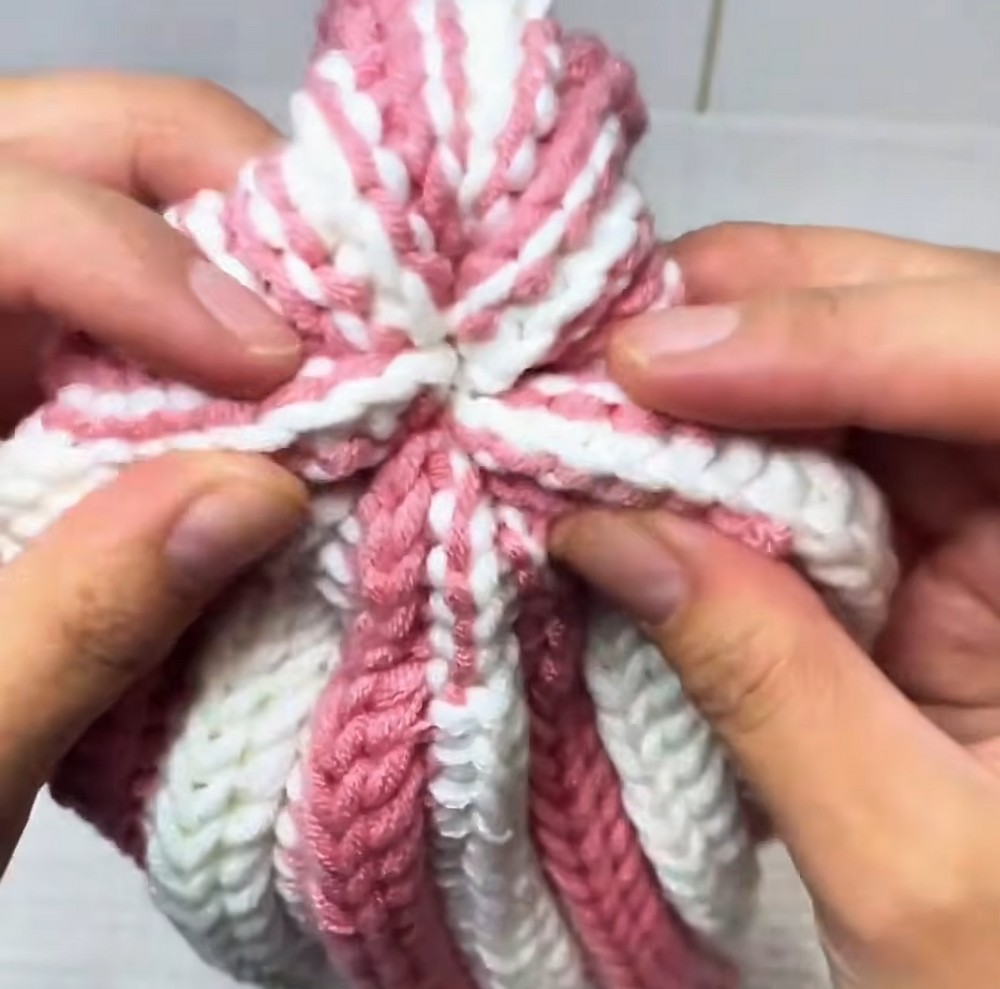
Step 12: Gather the Crown Closed
After sewing the side seam, close the open top of the hat.
- Insert the needle in and out through the holes along the top edge of the petal-like sections.
- Continue around the opening, keeping the gathering stitches evenly spaced.
- Pull the yarn firmly to bring the opening together.
- Sew through the five top edges or bars as described in the supplied instructions, leaving approximately 1 cm per stitch.
- Pull again to cinch the center completely closed.
- Secure the yarn with a firm double knot.
Turn the hat inside out and inspect the gathered top. Check that all five sections align cleanly and that the seam is secure.
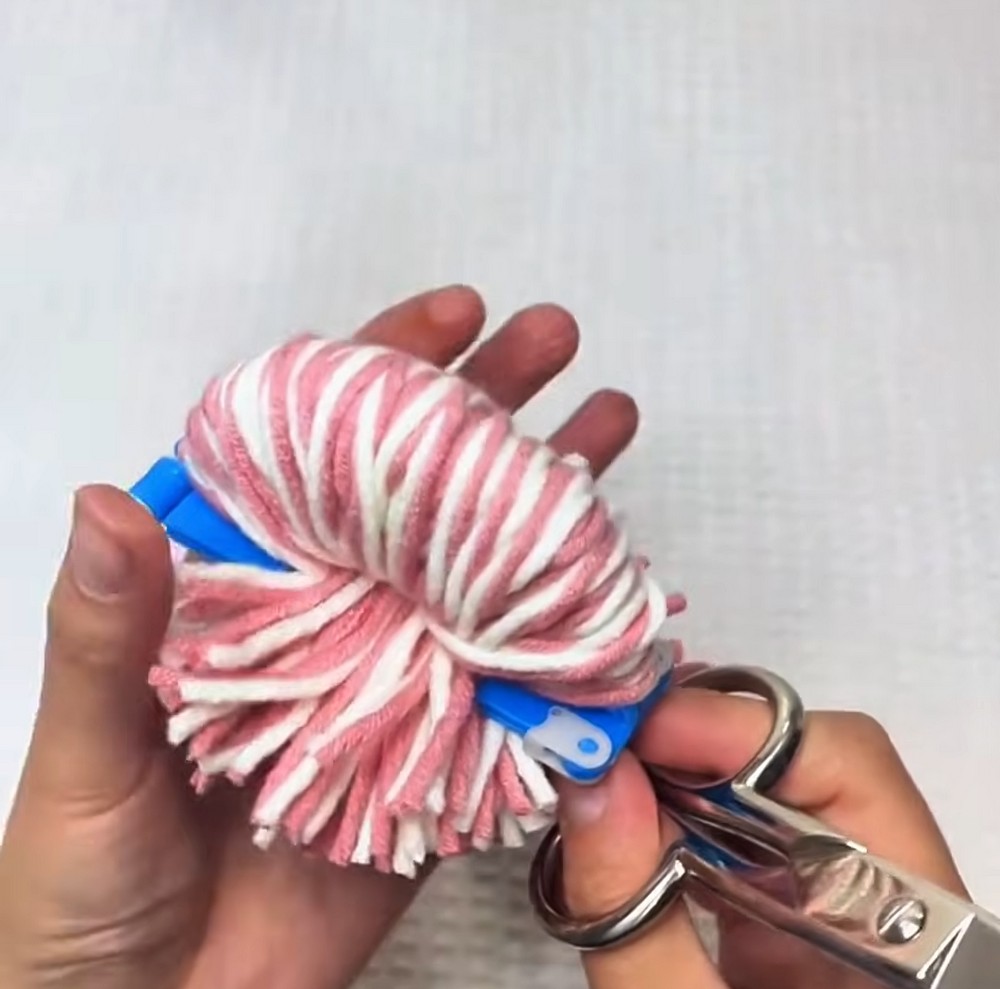
Step 13: Prepare the Two-Color Pom-Pom
A matching pom-pom adds a finishing detail that echoes the hat’s contrasting yarn.
- Take one strand of each color and twist them together.
- Open the pom-pom maker.
- Position it with the white side facing outward, as described in the source.
- Wrap the twisted two-color yarn evenly around both sides until the maker is thickly covered.
Aim for even coverage so the finished pom-pom has a balanced mix of colors rather than one side appearing much fuller than the other.
Step 14: Cut and Tie the Pom-Pom
Secure the yarn before removing the pom-pom from its maker.
- Close the maker’s sides.
- Carefully cut the wrapped loops along the center groove on both sides.
- Cut a separate piece of yarn approximately 20–30 cm long.
- Slide it into the center groove, wrap it around the middle, and tie a very tight double knot.
- Remove the pom-pom from the maker.
Keep the center tie tight. A loose tie can allow strands to slip out when the pom-pom is trimmed or handled.
Step 15: Shape the Pom-Pom
Trim the pom-pom to create an even, rounded finish.
Fluff the yarn with your fingers or comb it through gently. Use scissors to trim longer strands until the pom-pom looks full and uniform.
The supplied tutorial also mentions using a lint remover. If using one, follow its instructions carefully and avoid damaging the yarn fibers.
Step 16: Attach the Pom-Pom
Secure the pom-pom through the gathered crown.
- Use a crochet hook or sewing needle to guide the pom-pom’s anchor strings through the center opening to the inside of the hat.
- Turn the hat inside out.
- Tie the pom-pom strings securely to the crown’s anchor threads.
- Trim the excess tails to approximately 3 cm, once the attachment is secure.
Check the pom-pom by gently tugging it. It should remain firmly attached without loosening the gathered crown.
Step 17: Finish the Folded Brim
Turn the hat right-side out and roll the bottom edge upward slightly to create the small folded brim.
If desired, sew a leather label onto the front or side of the brim. Keep any decorative label securely attached and suitable for the intended wearer.
Inspect the completed hat for loose ends, uneven stitches, and a secure crown. The alternating pink and white texture, folded edge, and two-color pom-pom now come together as a coordinated winter accessory.