Crochet Rose Bouquet Blanket Pattern with Leaf Border
Looking for a floral crochet finish? Build a round base, add leafy edging, then turn red crochet strips into roses for a bouquet-style border.
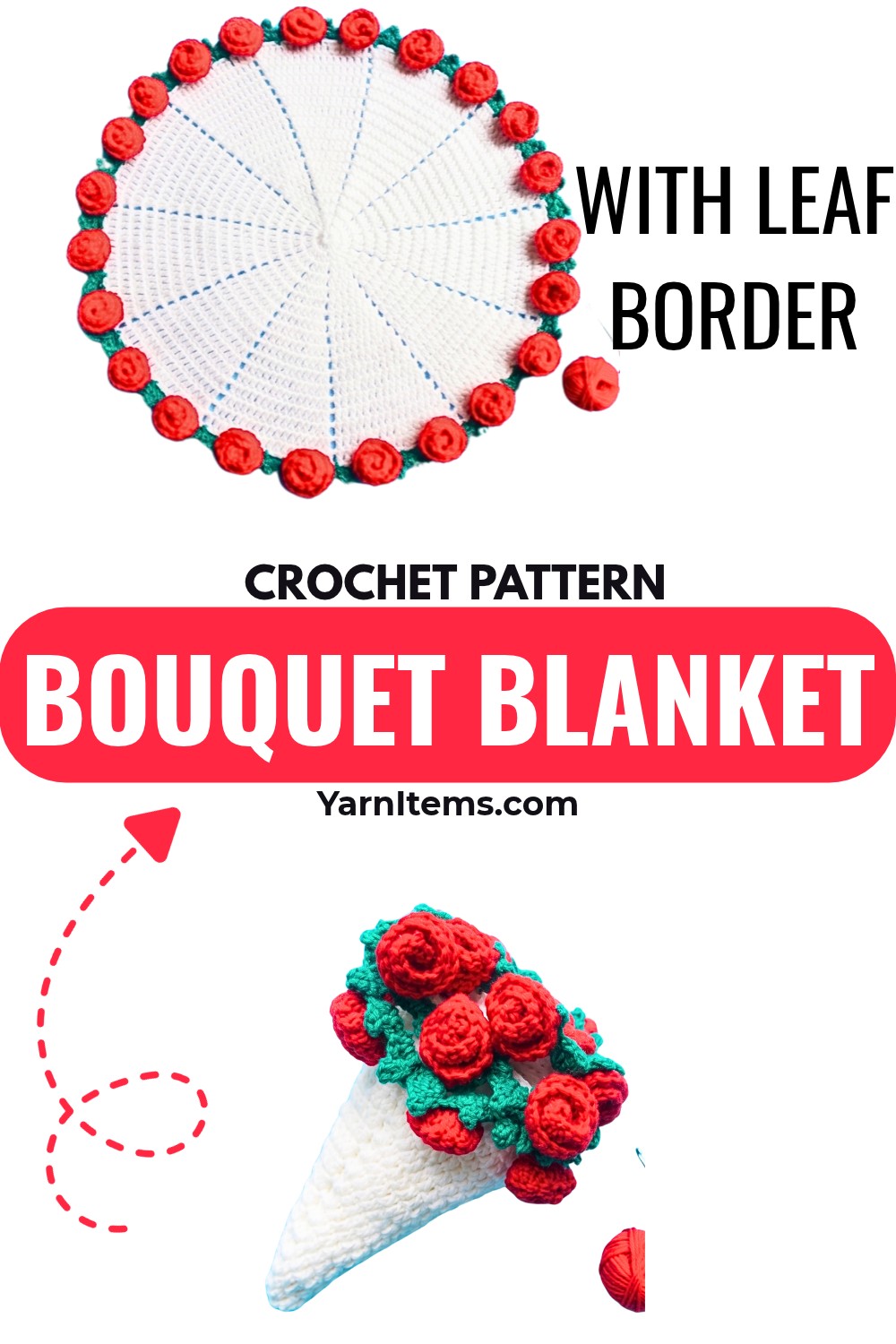
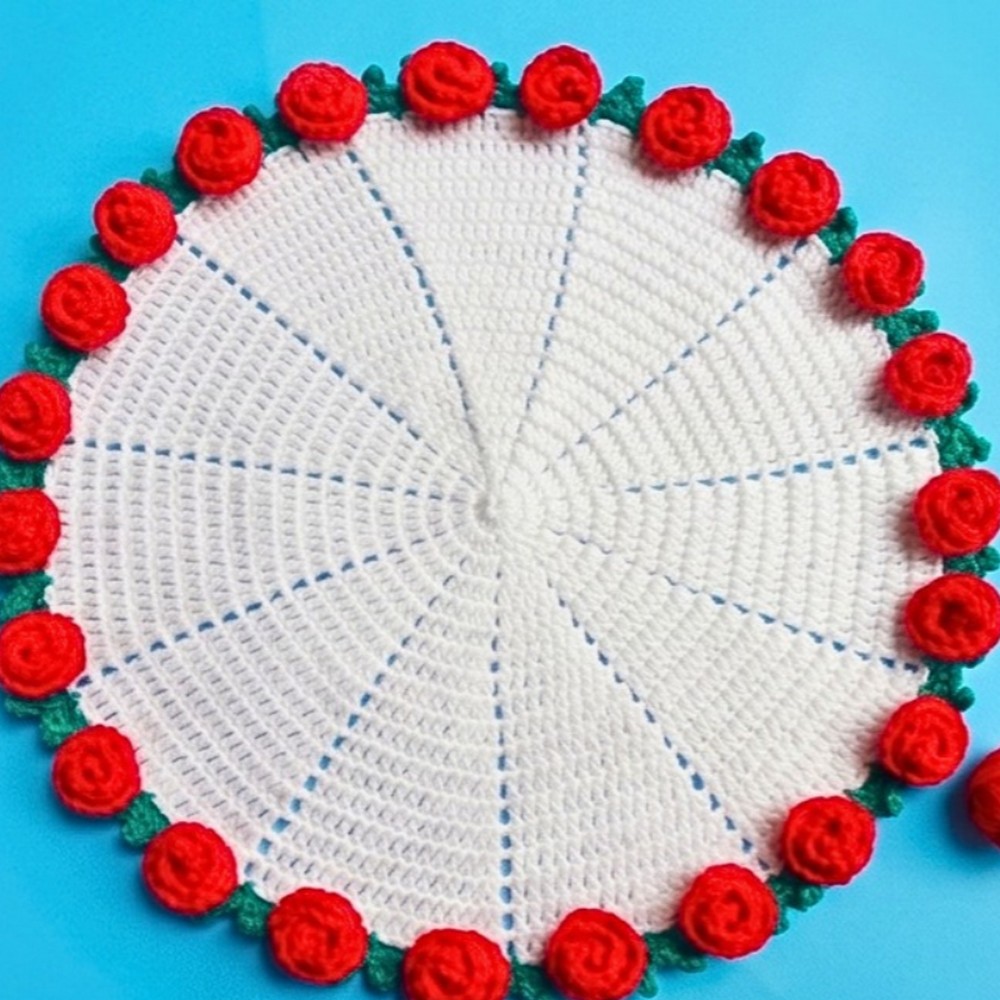
A simple expanding crochet circle becomes surprisingly decorative once the floral border is added. The half-white base provides a clean backdrop for the green leafy edging, while the raised red roses give the finished crochet piece its distinctive bouquet-inspired look.
The tutorial takes you through the base circle, leaf border, individual roses, and the sewing needed to bring everything together. You’ll also see where the size can be changed, how the crochet rose strips are shaped, and how to keep the flowers evenly spaced around the edge.
Credit Diy crochet-crosia
Choose the Size Before the Floral Border
The tutorial shows the half-white base worked through Row 18, producing a circle approximately 8 to 9 inches (23 cm) across. At this size, it can work as a decorative table mat or placemat.
If you want a larger blanket, continue the same increasing pattern beyond Row 18 before adding the green border. For a smaller doily-style piece, stop the base earlier and add the leaf border at the size you want.
The important point is to decide the size before beginning the green edging, because the border is added after the base circle is finished.
What You’ll Need
- Medium-weight (4-ply) double-knit wool yarn in Half-White, Green, and Red
- 3.5 mm crochet hook
- Yarn needle for sewing
- Scissors
- Decorative ribbon, optional for the bouquet presentation
Crochet Terms Used
The pattern uses US crochet terminology:
- ch = chain
- sc = single crochet
- dc = double crochet
- sl st = slip stitch
- st(s) = stitch(es)
- sp = space
- picot = ch 3, then sl st into the top of the double crochet just made
Easy Crochet Rose Bouquet Blanket Pattern
Build the Half-White Circle
The base grows in twelve repeating groups. From Row 2 onward, each group gains one additional double crochet per round, while the increase is placed in the last stitch of each group.
Row 1: Make a magic circle (or ch 4 and sl st to the first ch to form a loop). Ch 2 does not count as a st here and throughout. Work 12 dc into the circle. Sl st to the top of the first dc to join. (12 dc)
Row 2: Ch 2. In the same st as the join, work 2 dc. Ch 1, 2 dc in the next st. Repeat from * to * 11 more times around. Ch 1, sl st to the first dc to join. (12 groups of 2 dc, separated by ch-1 sps)
Row 3: Ch 2. Work 1 dc in the first st. Work 2 dc in the next st. Ch 1, skip the ch-1 sp. Work 1 dc in the next st, 2 dc in the next st. Repeat from * to * 11 more times around. Ch 1, sl st to the first dc to join. (12 groups of 3 dc)
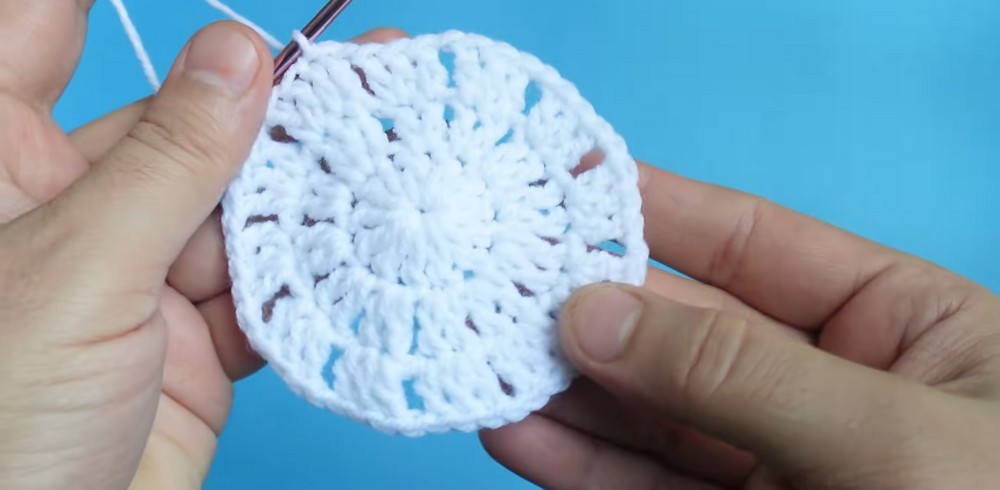
Row 4: Ch 2. Work 1 dc in the first st, 1 dc in the next st, and 2 dc in the last st of the group. Ch 1, skip the ch-1 sp. Work 1 dc in each of the first 2 sts, 2 dc in the last st of the group. Repeat from * to * around. Ch 1, sl st to the first dc to join. (12 groups of 4 dc)
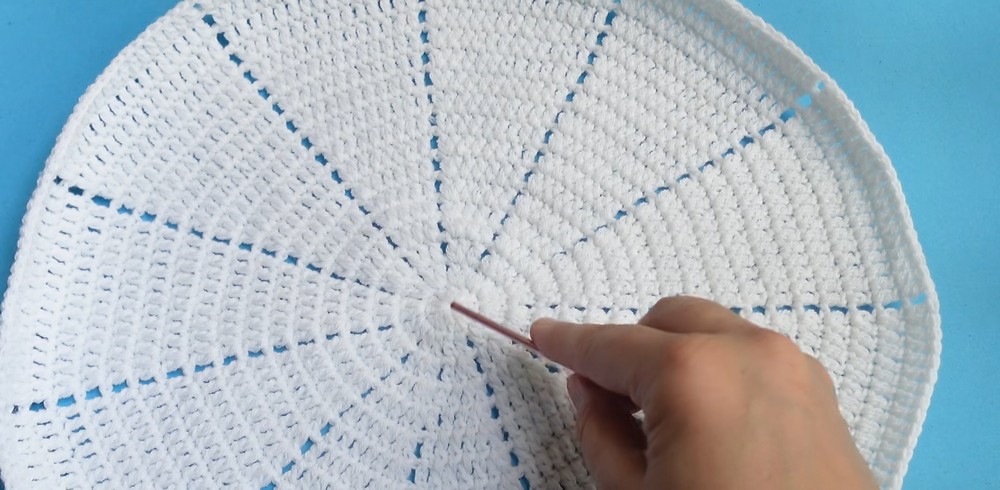
Rows 5–18: Continue the same increasing pattern. For each row, ch 2. Work 1 dc in each st across the group, placing 2 dc in the last stitch of every group. Always make a ch 1 space between each group. By the end of Row 18, you will have exactly 18 dc stitches in each of the 12 groups. Sl st to join, and fasten off the half-white yarn.
Check the Circle Before Changing Colors
Before moving to the border, look across the outer edge of the finished circle. The twelve groups should remain clearly separated by their ch-1 spaces, and each group should contain the expected number of dc stitches for its row.
If you stopped at Row 18, there should be 18 dc in each of the 12 groups. This is also the point where you can decide whether the circle is the size you want before committing to the green border.
Add the Green Leaf Border
The green edging uses the outer stitches of the final half-white round to create small arches first. The next row turns those arches into leaf-like petals with a picot at the top.
Row 1 (Leaf Arches): Join the green yarn to any stitch on the outer edge of Row 18. Ch 1 does not count as a st. Work 1 sc in the same st. Ch 3, skip 2 sts, work 1 sc in the next st. Repeat from * to * all the way around the circle. Sl st to the first sc to join.
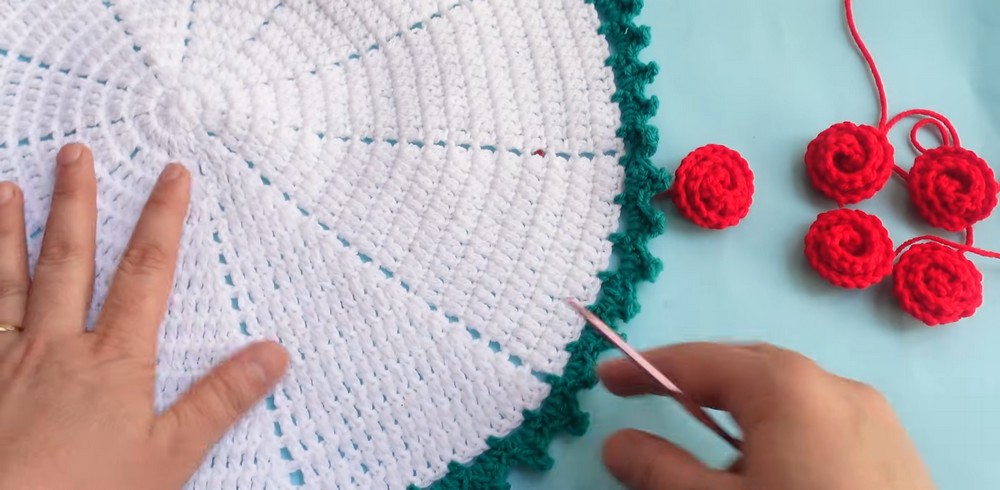
Row 2 (Leaf Petals): Start working directly into the first ch-3 space. In the ch-3 space, work (1 sc, 1 dc, picot [ch 3, sl st into the top of the dc], 1 dc, 1 sc). Repeat from * to * in every ch-3 space around the entire blanket edge. Sl st to the first sc to join and fasten off.
The key placement detail is the ch-3 space: Row 2 is worked into those spaces rather than into the individual stitches of the previous green row.
Make the Red Roses
Each rose begins as a short strip that naturally coils when rolled. Make as many roses as needed to encircle the border.
Row 1: Ch 13.
Row 2: Skip the first 2 chains. In the 3rd ch from the hook, make 1 dc. In the next chain, work 3 dc. Continue to work 3 dc into every single chain across until the end.
Finishing: Cut the yarn, leaving a long tail for sewing.
Roll and Secure Each Flower
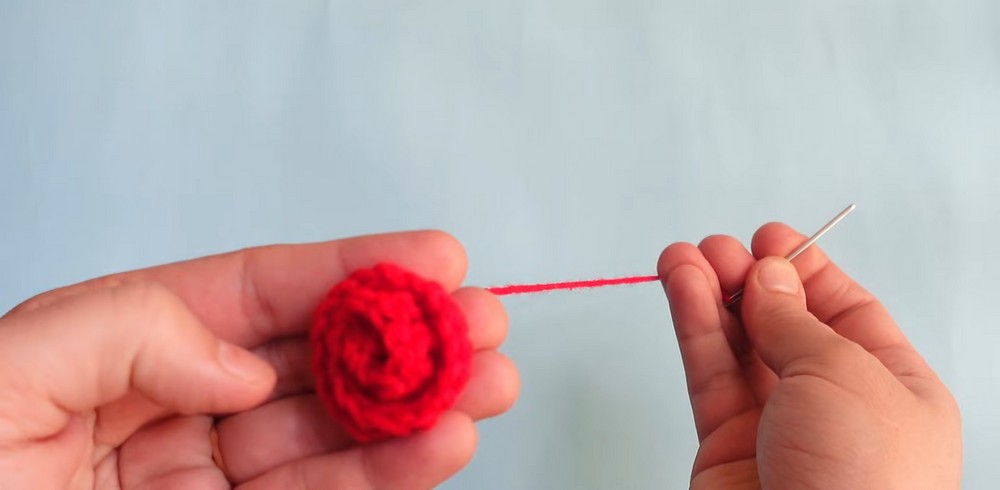
Take one completed red strip and roll it tightly around itself to create the rose shape. The long yarn tail is then used to secure the rolled layers.
Thread the tail onto the yarn needle and sew through the bottom edge on the wrong side of the flower. Pass the needle completely through the middle layers as you sew so the rolled shape stays together rather than loosening.
Once the rose is secure, it is ready to attach to the green border.
Space the Roses Around the Edge
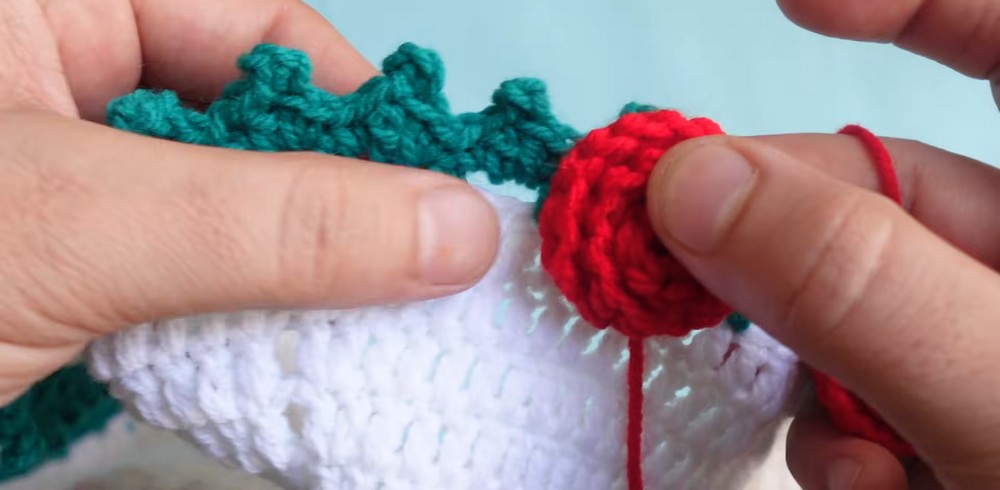
Place the first finished rose directly onto one of the single crochet stitches from Row 1 of the green border and sew it securely in place.
For the spacing, skip the next two single crochet stitches and attach the next rose to the third single crochet stitch. Continue using this same spacing around the border.
This placement is worth keeping consistent because the flowers are intended to form an even floral ring rather than bunching together in one section.
Bouquet-Style Presentation
Once every rose has been securely attached, the piece can be displayed flat as a decorative mat or placemat. For the bouquet-style presentation shown in the tutorial, fold the edges inward and wrap decorative ribbon around the base to bundle the piece together.
The ribbon is optional, so it can be left out when you want to use the crochet piece flat.