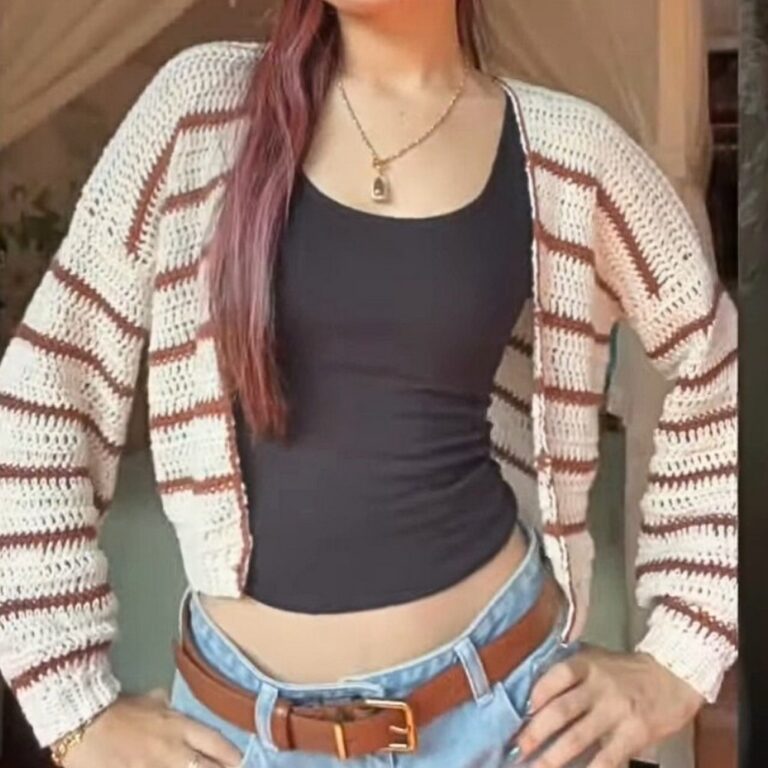
Oversized Crochet Sweater Pattern with V-Neck and Ribbed Texture
Need a cozy oversized crochet sweater with a knitted look? This side-to-side design uses BLO ribbing, a shaped V-neck, and sleeves worked directly onto the armholes.
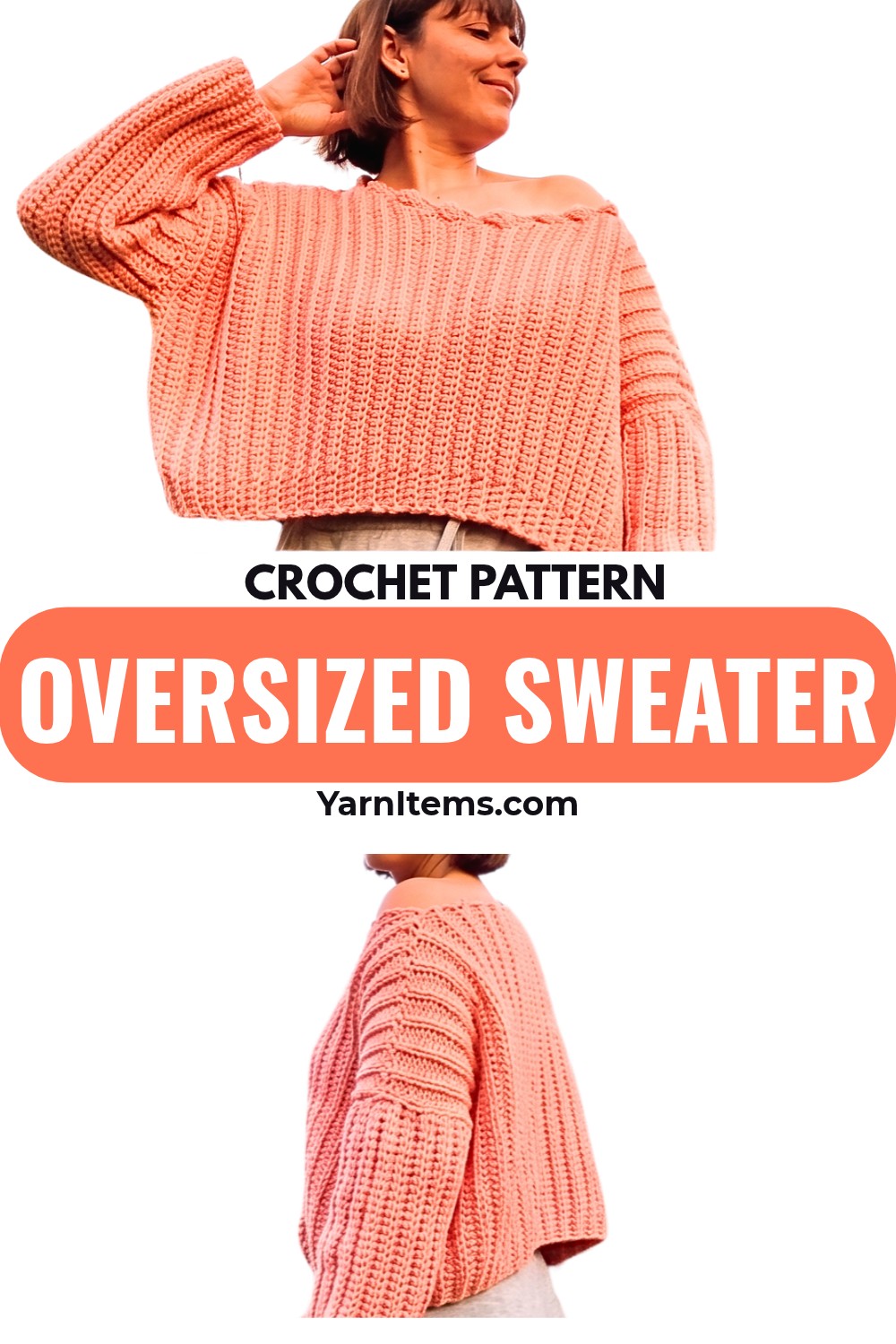
A relaxed oversized silhouette gives this crochet sweater its easy-to-wear appeal, while the back-loop-only stitches create a ribbed texture that closely resembles knitted fabric. The V-neck adds a shaped neckline rather than leaving the front as one straight panel, and the textured cuffs and optional bobble trim give the finished crochet sweater extra character.
The crochet sweater is designed to accommodate approximately S to XL, with the main panels worked vertically from shoulder toward hem. You can adjust the starting chain for a shorter or longer body, and the armhole opening can be kept between 20 and 25 cm. The tutorial takes you through the front shaping, matching back panel, directly worked sleeves, shoulder and side seams, and the final neckline trim, with the key BLO and edge-stitch placements explained along the way.
Credit Maricel Romina
Understand the Side-to-Side Shape First
This sweater is not worked upward from the hem in the usual way. Each main panel is worked vertically, so the foundation chain determines the measurement from the shoulder down toward the hem.
That makes the starting chain your main length adjustment. For the tutorial, the foundation is 50 chains plus 3 additional chains, but you can change that number according to where you want the sweater to end on your body.
The five sc stitches at one end of each row form the ribbed hem section, while the hdc stitches make up the main body. Working these stitches through the back loop only gives the fabric its knit-like ridges.
The front then changes direction at the neckline: first, stitches are decreased to form one side of the V, followed by increases that rebuild the opposite side. Understanding this before beginning makes the row sequence much easier to follow.
Decide the Length and Armhole Opening
The oversized sample is intended to fit approximately sizes S to XL.
For the body length, measure from your shoulder down to your preferred hem position. A shorter starting chain can give you a cropped waist-length sweater, while a longer chain can extend the sweater farther down the body.
For the armhole, allow an opening of approximately 20 to 25 cm. The sample uses a 20 cm opening, which gives a 40 cm circumference.
These measurements are useful to settle before you begin because the panels are worked vertically. Once the foundation chain is established, the finished vertical measurement is largely determined by that starting chain.
Yarn, Hook & Tools
- Yarn: Semi-chunky yarn, approximately 2 mm thick, or semi-thick cotton yarn
- Hook: 6.0 mm crochet hook
- Stitch Markers: Highly recommended for tracking the ribbing and edges
- Scissors
- Tapestry Needle: For weaving in ends
Crochet Terms Used
- Ch: Chain
- St(s): Stitch(es)
- Sl st: Slip stitch
- Sc: Single crochet
- Hdc: Half double crochet
- BLO: Back loop only
- Sc2tog / Hdc2tog: Decrease by crocheting two stitches together
- Bobble: 4-Treble crochet cluster

Crochet the Front Panel
The front panel establishes nearly all of the sweater’s important shaping, so this is where stitch placement deserves the most attention.
The first five stitches are always treated differently from the main hdc section. They create the ribbed hem, and the stitch marker makes that transition easier to locate on every row.
Foundation Chain: Ch 50 + 3 additional chains (adjust this number based on your desired length from shoulder to hem).
The extra three chains provide the height needed to begin the hdc section. Your chosen total should correspond to the vertical body length you want.

Establish the Ribbed Hem
Row 1: Hdc in the 3rd ch from the hook. Continue with 1 hdc in each ch across until 5 chains remain. Place a stitch marker. In the last 5 chs, work 5 sc. This 5-sc section forms the bottom ribbed hem (pretina).
The stitch marker separates the main hdc body from the five-stitch ribbed hem. Keep moving it as the work grows so you do not have to recount the edge on every row.
Row 2: Ch 1, turn. Skip the turning chain. Work 1 sc in BLO in the first 5 sts. Move the marker up. Work 1 hdc in BLO for the rest of the row.
Crucial Tip: For the very last st at the top edge, work through both loops (instead of BLO) for a sturdier neckline edge.
That final stitch is deliberately different. Most of the row is worked in BLO to create the ribbed texture, but the last stitch through both loops gives the top edge additional stability.
Row 3: Ch 1, turn. Skip the turning ch. Hdc in BLO down the row until the marker. Work 1 sc in BLO in the last 5 sts (working the final sc through both loops).
Rows 2 and 3 establish the alternating direction of the ribbed hem. Keep the marker at the boundary between hdc and sc so the five-stitch cuff remains consistent.

Build the First Shoulder
Shoulder Repetition: Repeat Rows 2 and 3 until you have completed 19 rows, which measures approximately 24 cm in width.
At the end of these 19 rows, you have completed the first straight section of the front. The next rows change the top edge because the V-neck shaping begins.
Shape the V-Neck With Decreases
The V-neck is created by gradually removing stitches from the neckline edge. The decrease occurs at the top edge, not randomly across the body, so the opposite edge and five-stitch hem section can continue following their established rhythm.
V-Neck Decrease — Row 20: Work hdc in BLO until 2 sts remain from the top edge. Hdc2tog over the last 2 sts to create a decrease.
The two stitches are combined at the neckline edge, beginning the diagonal line of the V.
Next Row: Ch 1, turn, skip the first st, and hdc in BLO of the next st. Continue down the row normally.
Here the shaping is created by skipping the first stitch at the neckline edge. Together with the previous decrease, this continues narrowing the neckline.
Continue the V-Neck: Continue decreasing in this manner at the neckline edge for 12 rows to form the V-neck.
As you work these rows, the neckline edge should gradually move inward rather than remaining straight. If the diagonal begins appearing on the wrong side of the panel, check that your decrease or skipped stitch is being made at the intended top edge.

Rebuild the Opposite Side of the V
After the 12th decrease row, the front begins increasing so the neckline can mirror itself on the opposite side.
Center Increase: Work from the bottom up. In the very last st at the top edge, work 1 hdc in BLO, then work another hdc through both loops of that exact same space (Increase made). Ch 2, turn.
The two hdc worked into the same space restore one stitch and begin expanding the opposite neckline edge.
Next Row: Work a hdc in the 2nd ch from the hook. Hdc in BLO for all remaining sts down the row.
The new chain provides the stitch needed to continue the row after the increase.
Continue the Increases: Continue these increases at the neckline edge for 12 rows until your stitch count matches the original shoulder count.
Your front should now be widening back toward its original width. The two shaped sections meet to form the V-neck opening.

Complete the Second Shoulder
Final Front Section: Work 19 standard rows (like Rows 2 and 3) without any increases or decreases to complete the second shoulder.
The front panel is now complete, with the neckline dipping through the center and the second shoulder returning to the original width.
Match the Back Panel to the Front
The back uses the same basic vertical construction as the front, but it does not need the full V-neck shaping.
Foundation & Body: Create the exact same foundation chain as the front (50 + 3 chs). Work straight rows (like Rows 2 and 3) for 19 rows.
Keeping the same foundation and initial 19-row section helps the shoulders align when the panels are eventually placed together.
Add the Back Neckline Drop
Back Neckline Drop: On the 20th row, leave the last 2 sts unworked at the top edge. Ch 1, turn, and work normally down the row.
This small drop helps prevent the back neckline from bunching when the front and back are joined.
If you prefer not to shape the back neckline, you can skip the neck drop and work the entire back panel perfectly straight.
Work Across the Back Neckline
Neckline Width: Work 23 rows straight for the back neckline.
The center section now provides the back neck opening. Keep the rows straight during this section rather than adding further shaping.
Step the Neckline Back Up
Ascending Neckline: At the end of a top-up row, ch 3. Hdc in the 2nd ch from the hook, hdc in the next ch, and continue in BLO to step-up the edge back to its original height.
The two hdc created from the chain raise this edge back toward the original shoulder level.
Final Back Section: Work 19 standard rows to complete the back panel.
With this final section finished, the back has the corresponding width and shoulder areas needed for joining to the front.
Join the Main Panels
Place the front and back panels together with the right sides facing inward.
Shoulders: Seam the shoulders using slip stitches, picking up only one loop from each panel to keep the seam invisible.
Working through one loop from each panel helps the joined edge remain neat without creating a bulky seam.
Side Seams: Seam the sides from the bottom hem up towards the shoulder using slip stitches, making sure to leave a 20 to 25 cm opening for the armholes.
The armhole opening is the space that will receive the sleeves. For the sample, the recommended opening is 20 cm, producing a 40 cm circumference.
At this stage, the body of the sweater is joined, but the sleeves are still worked directly onto those open armholes.
Work the Sleeves Directly Onto the Armholes
The sleeve method continues the same ribbed idea as the body, but instead of first making a separate sleeve and attaching it later, the rows are worked directly around the armhole.
Turn the sweater right side out before attaching the yarn.
Foundation: Attach your yarn at the underarm seam. Ch 45 (or your desired sleeve length).
The 45-chain foundation controls the sleeve length, so adjust it if you want a shorter or longer sleeve.
Row 1: 1 sc in the 2nd ch from the hook. Work 4 more sc (5 sc total for the sleeve cuff). Hdc in each remaining ch up to the armhole.
The first five sc create the sleeve cuff section, matching the ribbed treatment used along the sweater body.
Joining to Armhole: Sl st into the first empty st on the armhole edge, sl st into the 2nd st, and sc into the 3rd st. Turn your work.
This connects the new sleeve row to the armhole in three movements: two slip stitches followed by one sc. The sleeve then turns back to begin the next row.
Row 2: Skip the joining sts. Hdc in BLO down the sleeve until 5 sts remain. 5 sc in BLO.
Keep the final five stitches as sc so the sleeve cuff continues to have the same ribbed character.
Row 3: Ch 1, turn. 5 sc in BLO. Hdc in BLO up to the armhole. Join to the armhole edge exactly as before (sl st, sl st, sc).
The sleeve alternates direction while gradually moving around the armhole.
Sleeve Repetition: Repeat Rows 2 and 3 around the entire armhole circumference.
Once one sleeve has traveled around the full armhole, repeat the same sleeve process for the second side.
Close the Sleeve Seams
After a sleeve has been completed around its armhole:
Sleeve Seam: Flip the sweater inside out and seam the sleeve closed using slip stitches.
Repeat all sleeve steps for the second sleeve.
The slip-stitch seam brings the sleeve edges together while keeping the ribbed fabric visually consistent.
Finish the Neckline With Bobbles
The neckline can be finished with the decorative bobble trim from the tutorial, or simplified with a basic single crochet border if you prefer a cleaner edge.
Attach: Attach yarn anywhere along the edge of the neckline.
Bobble Trim: Ch 3. Work a 4-treble crochet cluster in the same space (leave the last loop of each treble on the hook, then yarn over and pull through all 5 loops). Ch 1, skip a small space, and sc in the next space.
The five loops are pulled through together to form each raised bobble. The small skipped space between bobbles keeps the trim from becoming too crowded.
Repeat: Repeat the bobble sequence around the entire neckline. Sl st into the beginning ch 3 to finish.
For a simpler finish, substitute the bobbles with a basic single crochet border.
One Last Fit-Oriented Check
Before weaving in every remaining end, look at the sweater while it is laid naturally rather than stretched flat.
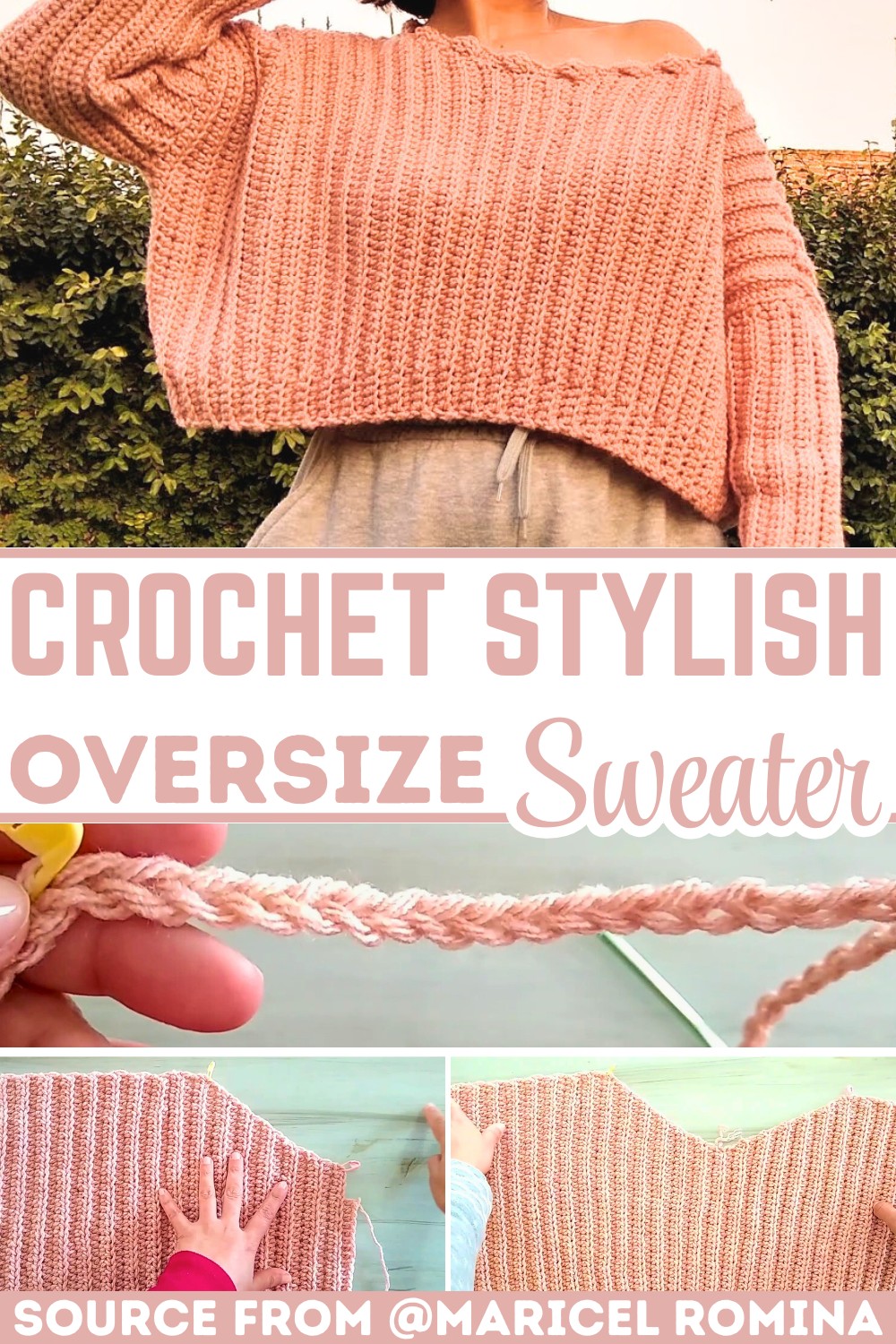
The main body should retain its relaxed oversized shape, the V-neck should form a clear diagonal on each side, and the five-stitch ribbed sections should remain visually distinct along the hem and sleeves. The armholes should retain the intended opening rather than being pulled closed by the sleeve attachment.
Once those areas look right, weave in the loose ends with the tapestry needle and trim the excess yarn.
The finished sweater combines the soft, oversized silhouette with the raised ribbing created by BLO stitches, giving it the visual character of a two-needle knitted garment while using crochet techniques throughout.