
Free Crochet Rose Bouquet Blanket Pattern with 3D Flowers
Bring a bouquet to life in crochet with a growing 12-point blanket base, paired green leaves, and ruffled roses sewn around the edge.
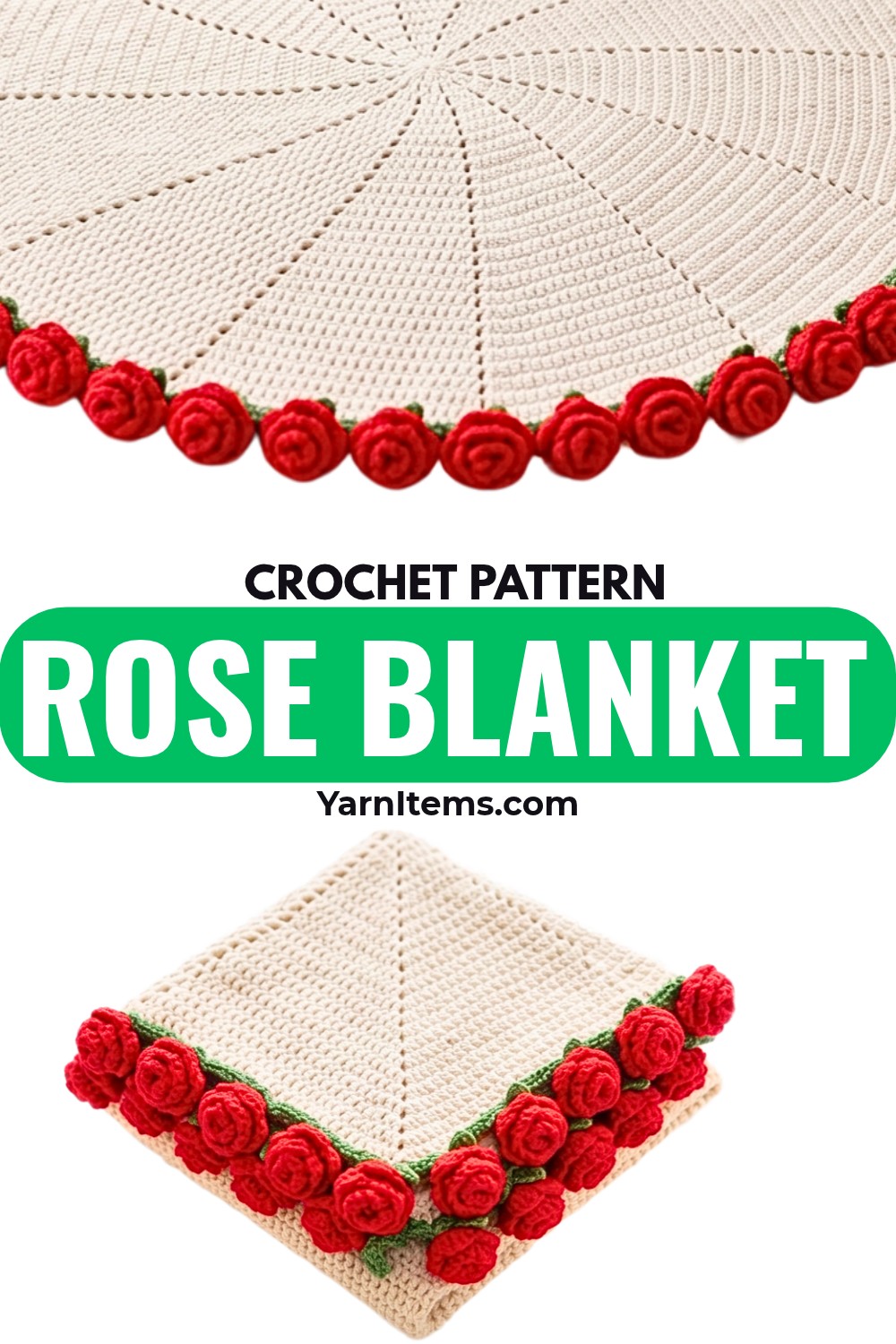
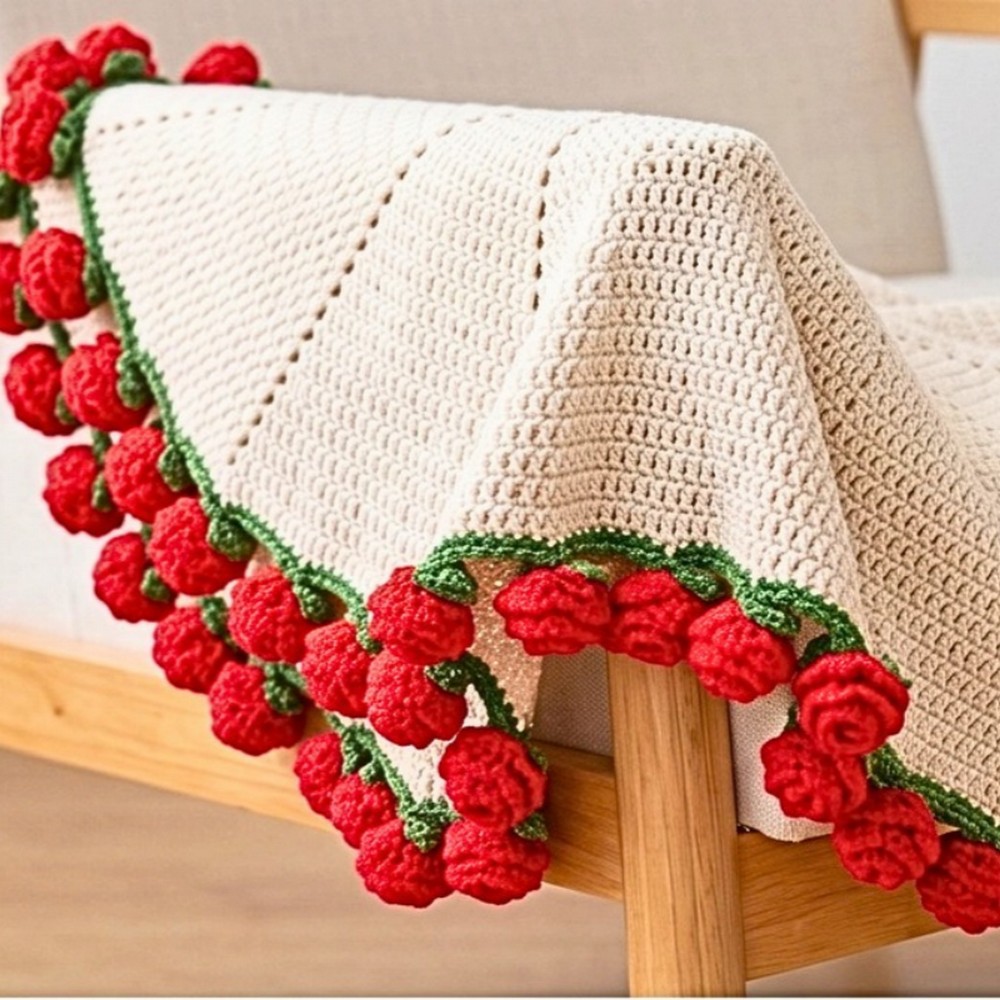
Crochet something that feels like a wrapped bouquet by starting with a beige blanket base that gradually develops twelve distinctive points. The unusual shape gives this crochet blanket its character, while the green leafy edging and raised red roses create a garden-inspired border that feels especially charming for a baby or throw blanket.
Follow the tutorial from the center outward, using the repeating increase formula to decide how large your blanket will become before adding the border. Along the way, you’ll learn how the three green border rounds create paired leaves, how to crochet the ruffled rose crochet pieces, and how to roll and sew each flower securely into place.
Credit Myna Crochet
Choose Your Blanket Size First
Before starting the green border, decide how large you want the beige base to become. The tutorial continues through 30 rounds, creating a generous baby/throw-sized blanket, but the increase formula can continue for additional rounds if you want a larger blanket.
For a smaller lovey or baby blanket, stop after fewer rounds. Since the floral border is added only after the beige base is complete, you have room to make this decision without changing the basic leaf-and-rose design.
Materials & Tools Needed
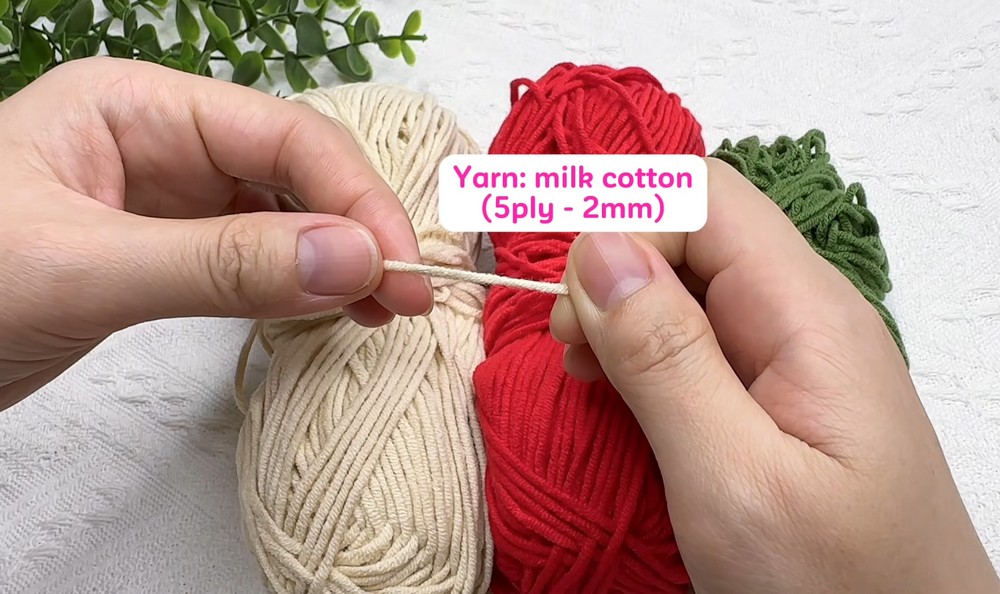
- Milk Cotton Yarn, 5-ply / 2mm
- Beige – blanket base
- Green – leaves and stems border
- Red – roses
- 3.5mm Crochet Hook – a Tulip hook is used in the video
- Scissors
- Stitch markers
- Tapestry/Yarn Needle – for sewing and weaving in ends
Pattern Abbreviations & Terminology
- MR: Magic Ring
- ch: Chain
- sk: Skip
- slst: Slip stitch
- sc: Single crochet
- hdc: Half double crochet
- dc: Double crochet
- tr: Treble crochet
- inc: Increase – 2 stitches in the same stitch
- st(s): Stitch(es)
Build the Beige Star-Shaped Base
Begin with the beige yarn. The important idea here is the repeating increase rhythm: as the rounds become larger, each of the twelve sections gains another dc before its increase.
Keeping that rhythm consistent is what allows the twelve points to develop evenly. Once the first few rounds are established, the later rounds follow the same mathematical idea rather than introducing a completely new stitch sequence.
Round 1: Make a Magic Ring (MR). Work 12 dc into the MR. Join with a slst to the first dc. (12 sts)
Round 2: slst, ch 2. Work (dc inc, ch 1) in each stitch around. Join with a slst. (12 inc clusters)
Round 3: slst, ch 2. Work (dc, dc inc, ch 1, sk 1st) 12 times around. Join with a slst.
Round 4: slst, ch 2. Work (2 dc, dc inc, ch 1, sk 1st) 12 times around. Join with a slst.
Round 5: slst, ch 2. Work (3 dc, dc inc, ch 1, sk 1st) 12 times around. Join with a slst.
Round 6 to Round 30: Continue the repeating formula: slst, ch 2, work [(n-2) dc, dc inc, ch 1, sk 1st] 12 times around. Join with a slst. Continue through Round 30 for the size shown in the tutorial, or stop earlier/continue further according to your desired blanket size.
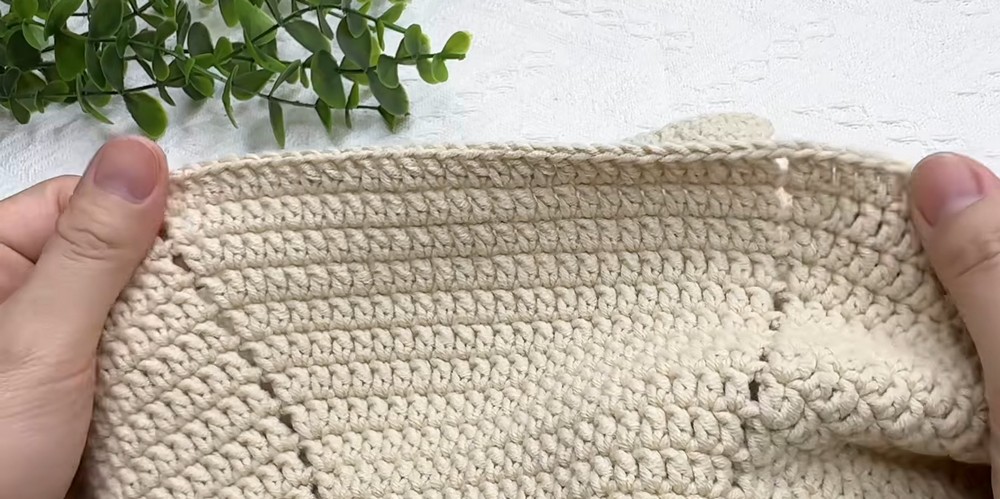
Teaching Check: Watch the Twelve Sections
After several rounds, pause and look at the blanket from above. You should be able to recognize 12 repeating sections spreading outward from the center.
The increase is the part that keeps those sections growing. If one section suddenly looks smaller, wider, or out of rhythm with its neighbors, check the previous round before continuing. Finding that problem here is much easier than trying to correct it after the green border and roses are attached.
When you reach your chosen size, slst to close the final round, tie off, and cut the beige yarn.
Shape the Green Leaf Border
Now the blanket moves from its growing beige center into its floral edging. The first green round creates chain spaces, the second fills those spaces, and the third turns the border into pairs of leaves.
Attach the green yarn to any chain space on the edge and work consistently around the blanket.
Green Border – Round 1: Work (sc, ch 3, sk 2 sts) around the entire edge. Repeat the sequence all the way around and join with a slst.
Round 2: Work [sc in the stitch, 3 sc in the ch-3 space] around the entire edge. Repeat this sequence all the way around and join with a slst.
Round 3: Form the Leaves. Work a slst, ch 8, then from the 2nd stitch from the hook work sc, hdc, dc, tr, dc, hdc, sc; slst back into the edge base, make a second leaf using the same sequence, then work 15 sc along the border edge; repeat [slst, 2 leaves, 15 sc] around the entire blanket.
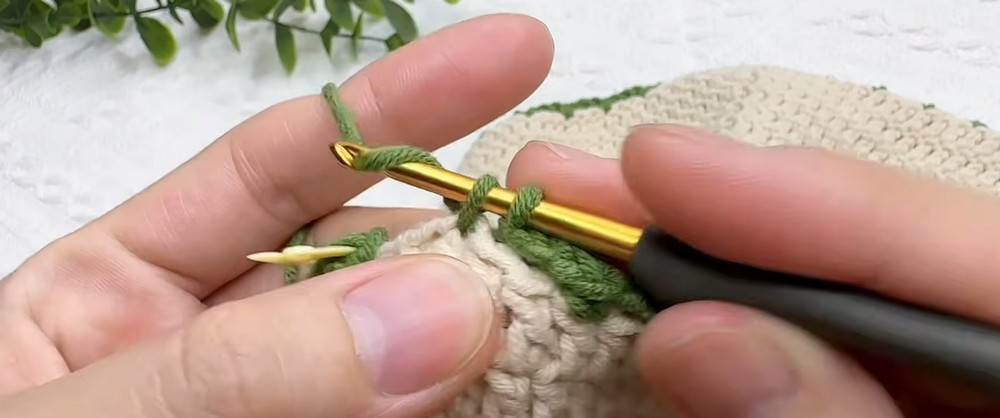
Teaching Check: Look at the Leaf Pairs
Before moving to the roses, inspect the border around the blanket. The leaves should appear in pairs, with the spaces between those pairs becoming the natural locations for the red flowers.
This is also a useful point to check that the green border is sitting evenly on the blanket edge. If the leaves look crowded or the spacing feels inconsistent, it is better to notice it before the roses are sewn on.
To finish the green border, slst into the first stitch, ch 1, cut the green yarn, and weave in the ends.
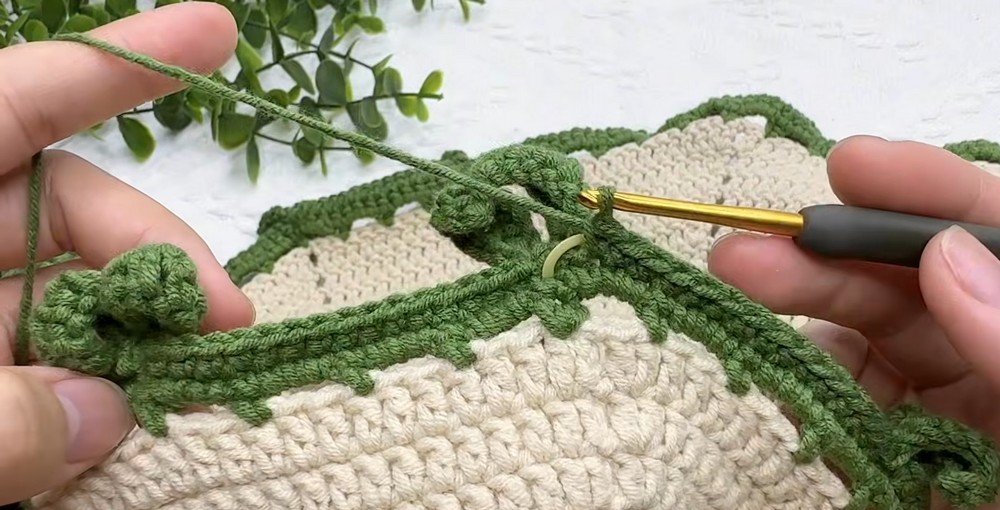
Create the Ruffled Rose Pieces
The roses begin as flat, ruffled red strips. They do not look like flowers yet, so don’t worry if the shape seems more like a wavy petal strip at this stage. Rolling the piece later creates the layered 3D rose.
Plan on making one rose for every pair of green leaves around the blanket.
Prepare the Rose Yarn
Leave a long starting tail of about 15 cm for sewing later, then make a slip knot.
Rose – Base Chain
ch 23.
Row 1: Find the 3rd stitch from the hook and work (3 dc in the 1st st, ch 1, sk 1 st); repeat (3 dc in next st, ch 1, sk 1 st) across the entire chain.
Row 2: ch 2, turn. In the first space, work (dc, dc inc, dc, ch 2, slst); in every following space, work (ch 2, dc, dc inc, dc, ch 2, slst) across the row.
Secure the Rose Piece
ch 1, cut the yarn, leaving another long tail for sewing, and pull through to secure.
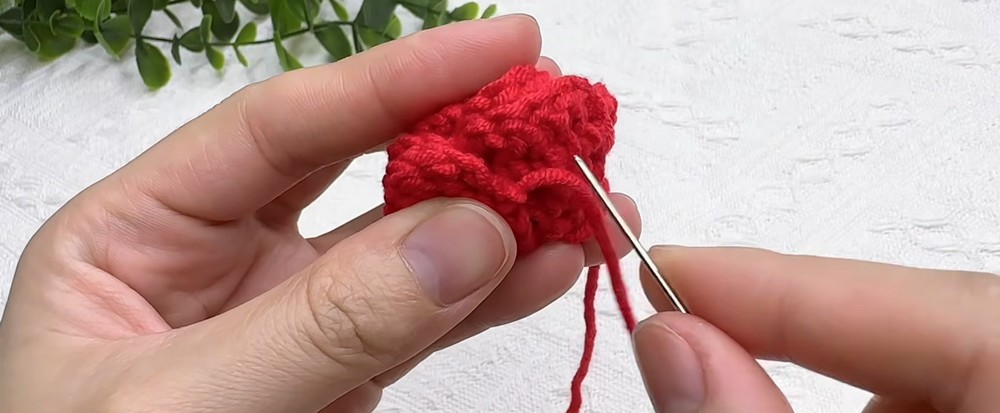
Roll Each Rose Into Shape
Take the finished ruffled red piece and begin rolling it tightly from one end to the other. Keep the flat bottom edge aligned as you roll so the layers stack neatly at the base.
Once the strip has become a spiral flower, use the long starting tail and a tapestry needle to sew through the bottom layers several times. Pass through the base in opposite directions as needed, then tug gently and secure the rose with a knot.
The stitching should hold the rolled layers together without pulling so tightly that the flower loses its open, layered appearance.
Sew the Roses Between the Leaves
With the roses secured, they are ready to become part of the blanket border.
- Position one rose between a pair of green leaves.
- Thread the remaining long red yarn tail onto the tapestry needle.
- Sew through the base of the rose and directly into the green edge of the blanket.
- Secure the flower with a knot, then weave the remaining yarn into the surrounding stitches and hide the excess.
- Continue around the blanket, attaching one rose between every pair of green leaves.
Teaching Check: Keep the Flowers Even
Because these roses have a raised 3D shape, their placement is easy to notice. Before fully securing each flower, look at it together with the neighboring leaves and roses.
Keeping the rose centered between its leaf pair will help the border maintain the intended bouquet-like rhythm. You do not need to flatten the flower against the blanket; let the rolled layers keep their dimensional shape.
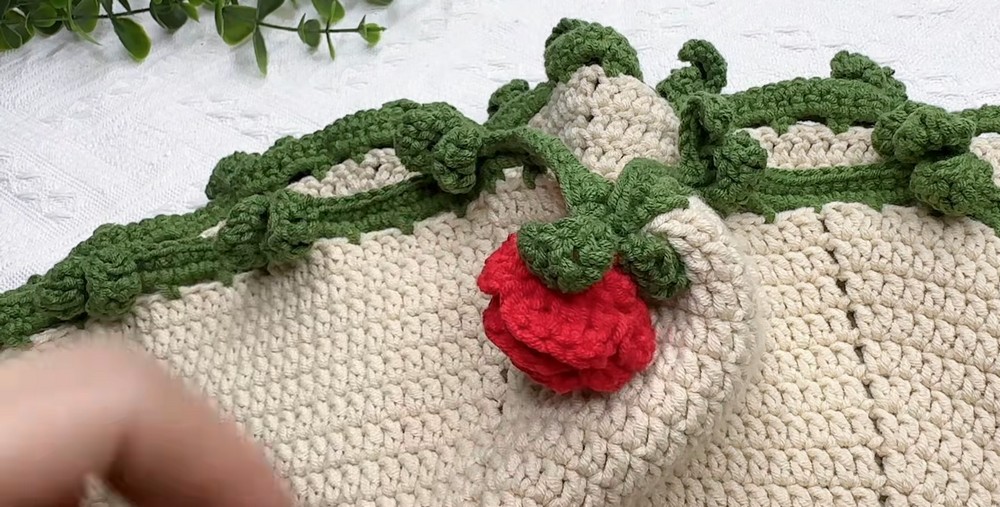
Change the Bouquet Colors
Red roses give the blanket its classic floral appearance, but the flower color can be changed without altering the beige base or green border.
Try yellow for a sunflower-inspired variation or pink for a softer floral look. You can also mix flower colors around the edge to create a more varied bouquet effect.
Once every rose has been sewn securely and the remaining ends have been woven in, the blanket is complete. The twelve-point star shape gives it an unusual silhouette, and when swaddled, the blanket can naturally fold into a cone-like bouquet shape, making the floral theme visible from the center outward.


