Coral Round Yoke Crochet Sweater Pattern with Invisible Increases
Want smooth shaping without obvious increase lines? This coral crochet round sweater combines invisible yoke increases with cross-stitch texture and seamless sleeves.
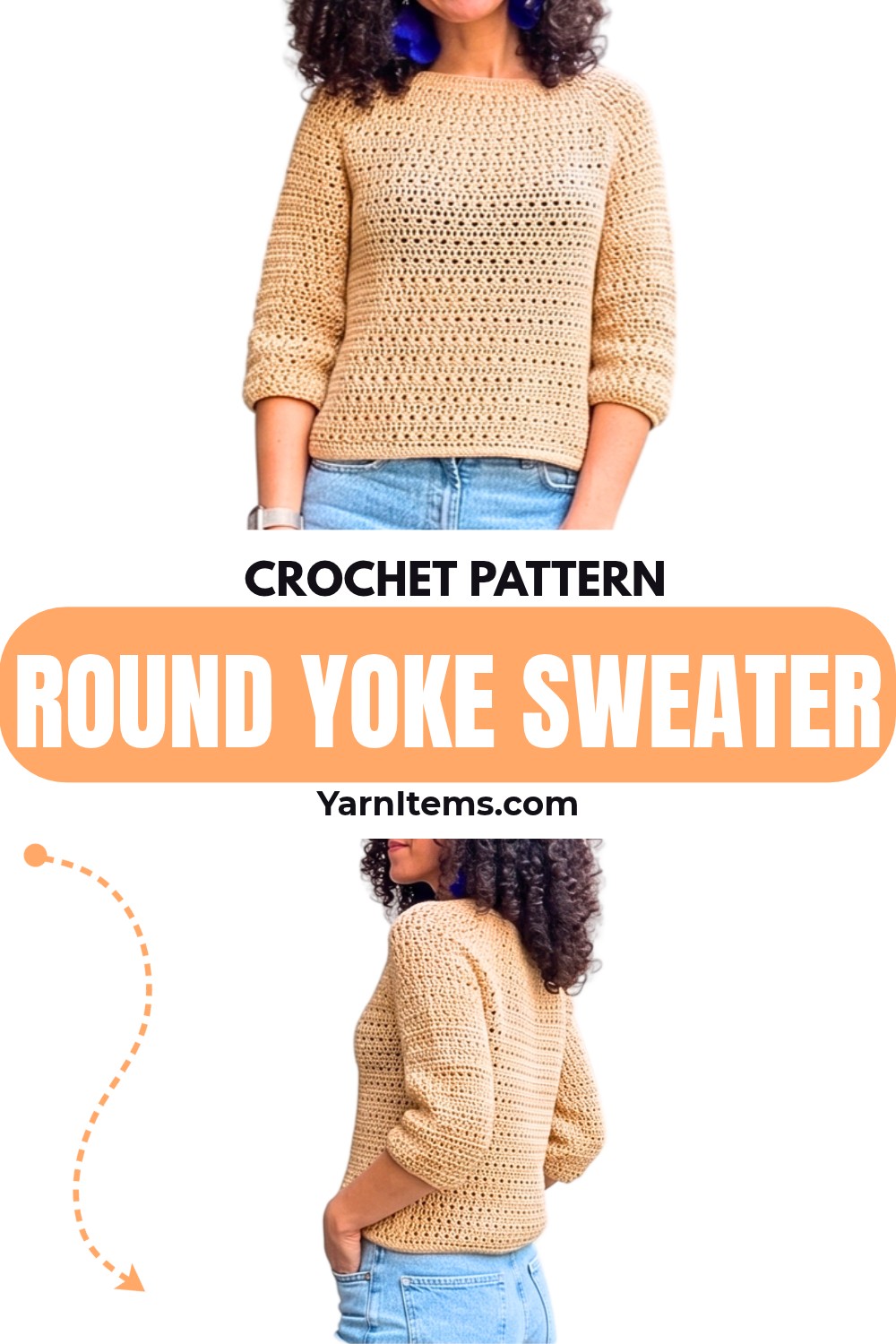
Mercerized coral cotton gives this round-yoke sweater beautiful drape, while alternating cross stitches and double crochet create texture without making the fabric feel overly busy. Hidden increases keep yoke shaping smooth, so the finished crochet garment has clean lines from neckline through shoulders.
Worked top-down, this crochet sweater lets you check yoke depth before separating sleeves from body. Careful stitch counting, invisible joins, and special attention around underarm corners help keep shaping even and prevent unwanted gaps.
Credit ByKaterina Designs
Materials & Tools
- Yarn: Durable Coral Mercerized Cotton, Size 2 Sport weight
- Hook: 4.5 mm, or hook size needed to obtain gauge
- Stitch markers: At least 4
- Tapestry needle
- Scissors
Finished Size & Customization
Pattern is written for Extra Small (XS).
For different sizes, increase the starting chain to suit your neckline. Keep final stitch count compatible with even stitch distribution for the cross-stitch pattern.
Yoke depth can be increased by adding more alternating rounds before sleeve separation. Keep increases on every 5th yoke round so additional depth follows the same shaping rhythm.
Body length can be changed by adding or removing rounds after sleeve separation. Sleeves are written to 21 rounds, giving approximately 3/4-length coverage, but additional rounds can be worked for wrist length.
Abbreviations
- ch: Chain
- st(s): Stitch(es)
- sc: Single crochet
- dc: Double crochet
- sl st: Slip stitch
- inc: Increase, 2 dc in same stitch
- sk: Skip
- Cross-st: Cross Stitch
- Stacked sc: Used at start of dc rounds to prevent gaps
- dc3tog: Double crochet 3 together, used for closing underarm gaps

Cross Stitch
Skip 1 st, work 1 dc in next st, yarn over, return to skipped stitch and work 1 dc into it.
Stacked Single Crochet
Work 1 sc in first stitch. Insert hook into left leg of same sc and work another sc on top. This creates height similar to dc while keeping beginning seam less noticeable.
Invisible Slip-Stitch Join
Remove hook from working loop. Insert hook from back to front into first stitch of round. Grab dropped loop and pull it through toward back of work.
Underarm dc3tog
Work partial dc into underarm chain, partial dc into side-row gap, and partial dc into first sleeve stitch. Yarn over and pull through all loops together to close corner gap.
Build Round Yoke Pattern
Foundation begins with single crochet rather than working directly into chain. This creates a stable starting edge and reduces the risk of twisting.
Foundation Row: Ch 99; ch 1; work 1 sc in every ch across; alternatively, work 99 Foundation Single Crochets.
Establish First Increase Round
Round 1 – Increase Round 1: Work stacked sc in first st, counting as first dc; work 1 dc in next st; work 1 inc in 3rd st; repeat sequence of 1 dc in next 2 sts, inc in next st around entire round; join with invisible sl st; 132 sts.
Count completed stitches before moving on. This first increase establishes initial yoke expansion, so correct count gives later rounds enough room for even pattern placement.
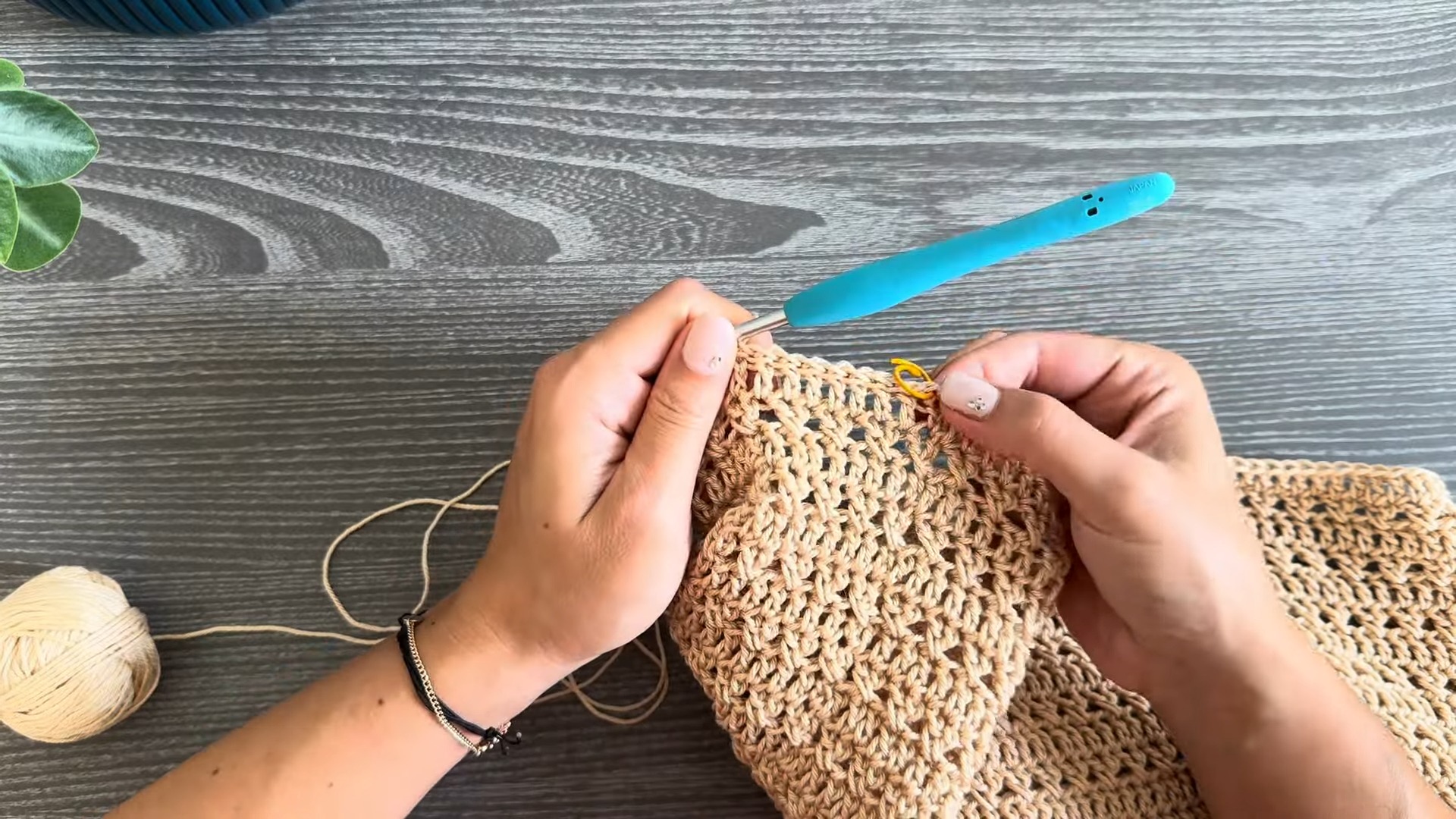
Add Cross-Stitch Texture
Round 2 – Cross Stitch: Skip first st; work 1 dc in 2nd st, then return to skipped first st and work 1 dc there to complete first cross; repeat sk 1 st, dc in next st, dc in skipped st around; join with invisible sl st.
Starting in the second stitch helps keep the join seam visually straight instead of creating an obvious diagonal shift.
Round 3 – Double Crochet: Work stacked sc in first st, or begin in 2nd st when needed to maintain a straight seam; work 1 dc in every st around; join with invisible sl st.
Round 4: Repeat Round 2 Cross-st pattern.
Continue Yoke Increases
Round 5 – Increase Round 2: Work stacked sc in first st; work 1 dc in next 2 sts, giving 3 dc total; work 1 inc in 4th st; repeat sequence of 1 dc in next 3 sts, inc in next st around; join with invisible sl st.
Rounds 6–8: Continue alternating pattern with Round 6 Cross-st, Round 7 dc, and Round 8 Cross-st.
Round 9 – Increase Round 3: Work increase on every 5th stitch by working 1 dc in next 4 sts, inc in next st; continue around and join with invisible sl st.
Rounds 10–12: Continue alternating Cross-st and dc rounds without changing established texture sequence.
Rounds 13–14: Work final two yoke rounds in pattern, using 1 dc round followed by 1 Cross-st round, with no increases.
For larger sizes, continue alternating yoke pattern before sleeve separation. Increase on every 5th round rather than increasing randomly. This keeps round-yoke expansion balanced and helps prevent visible shaping lines.
Before splitting sleeves, check yoke depth across shoulders. If shoulder area still feels too shallow, add another 5-round increase cycle. If fit already reaches desired shoulder and armhole depth, move to separation.

Separate Sleeves from Body
Round 15 creates body and armhole openings. Place markers first so section counts remain easy to verify.
Round 15 – Splitting Round: Divide yoke into 4 sections: 60 sts Back Panel, 39 sts Sleeve, 60 sts Front Panel, 39 sts Sleeve; work 1 dc in each of the first 60 sts for Back Panel; ch 14 for first underarm; skip next 39 sleeve sts; work 1 dc in each of the next 60 sts for Front Panel; ch 14 for second underarm; skip final 39 sleeve sts; join to first st with invisible sl st.
Underarm chains replace skipped sleeve stitches and create body width. Keep both chains equal so front and back remain centered.
Work Main Body
Round 16 – Cross Stitch: Work Cross-st pattern across Back Panel; when reaching first ch-14 underarm, continue same Cross-st sequence directly into chains by skipping 1 ch, dc in next ch, then dc into skipped ch; continue across Front Panel and second underarm chain; join with invisible sl st.
Rounds 17–27: Alternate 1 dc round and 1 Cross-st round until 27 total body rounds are complete from splitting round, or continue until desired body length is reached.
Check Body Stitch Count
Before repeating many rounds, confirm body stitch count is a multiple of 6 when required by your Cross-st pattern. If count is short by several stitches, add increases by working 2 hdc in selected stitches, preferably near underarm areas where increases can blend into shaping.
This check prevents the pattern repeat from drifting later in the body.
Finish Body Edging
Keep slip-stitch tension loose. Tight slip stitches can pull hem inward and create puckering.
Body Edging – Round 1: Ch 1; work 1 sl st in every st around; place stitch marker in first ch to mark round beginning.
Body Edging – Round 2: Ch 1; work sl sts into back V of previous round’s slip stitches; locate V slightly behind top front loops, lying against back side of fabric.
Body Edging – Round 3: Ch 1; continue working sl sts into back V of previous round’s slip stitches; join and fasten off.
Check hem after Round 3. If edging appears tight, loosen working tension rather than pulling stitches into place.

Shape Collar Edging
Neckline receives the same clean slip-stitch treatment used at the hem.
Collar Round 1: Attach yarn at gap where foundation row meets; ch 1; work 1 sc in every neckline st around to create solid base; join.
Collar Round 2: Ch 1; work 1 sl st in every st around; join.
Collar Rounds 3–4: Ch 1; work loose sl sts strictly into back V of previous round’s slip stitches; fasten off after Round 4.
This creates a neat neckline finish without adding bulky ribbing.
Form First Sleeve
Sleeve begins at center of 14-chain underarm gap. First round closes both corners carefully so no open holes remain where body meets sleeve.
Sleeve Round 1: Rejoin yarn at exact center of underarm ch-14; work stacked sc, then dc across underarm chains until reaching side-row gap; work dc3tog by working partial dc into last underarm chain, partial dc into side-row body gap, and partial dc into first sleeve st, then yarn over and pull through all loops; work 1 dc in each of 39 sleeve sts; work second gap-closing dc3tog at opposite corner; work dc across remaining underarm chains; join with invisible sl st.
Treat each dc3tog as one normal stitch when counting later rounds.
Sleeve Rounds 2–21: Alternate Cross-st rounds and dc rounds for 21 total sleeve rounds, or continue until desired sleeve length is reached; treat each dc3tog from Round 1 as one stitch when following pattern repeat.
Finish Sleeve Edge
Sleeve Edging – Round 1: Because the final sleeve round is dc, ch 1 and work 1 sc in every st around; join.
Sleeve Edging – Round 2: Ch 1; work 1 sl st in every st around; join.
Sleeve Edging – Rounds 3–4: Ch 1; work loose sl sts into back V of previous round’s slip stitches; fasten off.
Repeat complete sleeve process for second armhole.

Close Underarm Gaps Carefully
Underarm corners deserve one extra check before finishing. Look inside both sleeves and confirm that each dc3tog has closed side-row gap cleanly without pulling body fabric upward.
If one corner looks more open than its matching corner, check whether partial stitches were worked into correct three locations: final underarm chain, side-row gap, and first sleeve stitch. These three points create a smooth transition between body and sleeve.
Finish and Block
Because the sweater is worked seamlessly from top down, no structural sewing is required.
Weave in all loose ends on the inside of the sweater using a tapestry needle.
Lightly block the finished garment. Mercerized cotton responds especially well to blocking: it can improve drape, open cross-stitch texture, and help slip-stitch edges settle into clean alignment.
Allow garment to dry fully in desired shape before wearing.